
World
Great British Railways Set to Transform UK’s Rail Network

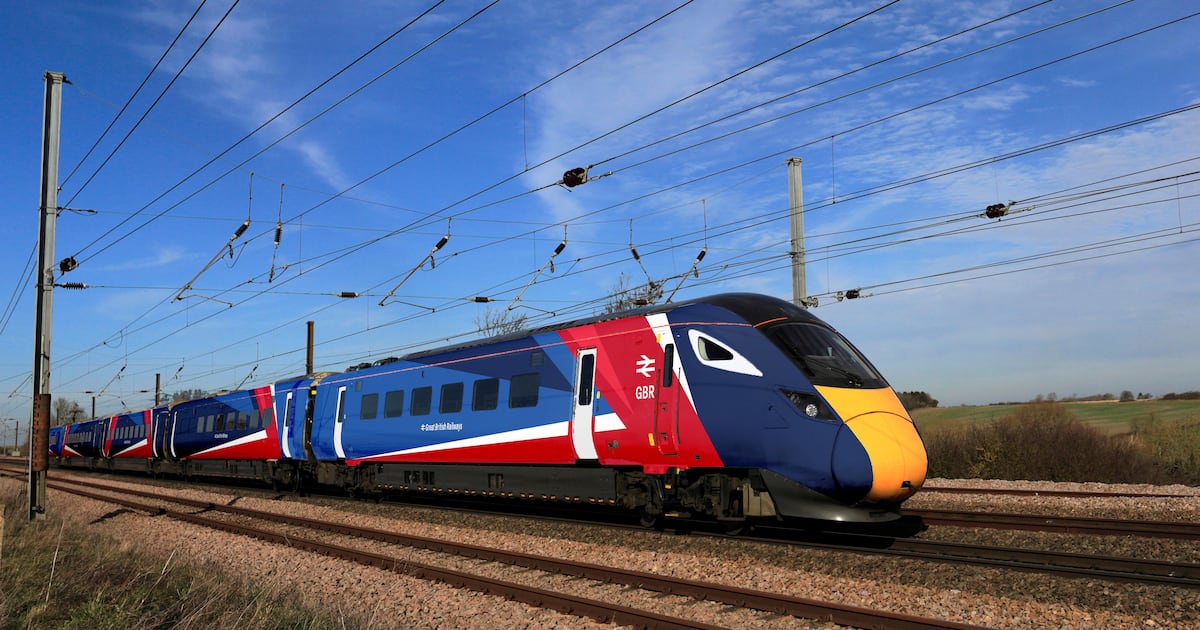
The unveiling of the new train livery and brand design for Great British Railways (GBR) marks a significant step in the UK’s efforts towards national renewal. The Labour government, led by Prime Minister Keir Starmer, presented this initiative as a crucial element of its vision for the future of the country and the role of state intervention in revitalising public services.
On the same day as the livery reveal, Heidi Alexander, the UK’s Secretary of State for Transport, addressed the House of Commons to introduce the critical second reading of the new Railways Bill. This legislation aims to formally establish GBR, which the government hopes will restore public confidence in the rail system. Alexander highlighted the historical significance of railways within British national identity, noting that their current state reflects broader societal issues.
“Two centuries ago, the first passenger railway services to run in the UK signified the hope and ambition of a confident nation,” Alexander stated. “Yet today, the same railway symbolises something rather different. Every cancelled service, every cramped carriage, every dodgy wifi connection… represents a transport system, economy and indeed a whole country that is in desperate need of renewal.”
The phrase “national renewal” has been central to Starmer’s agenda since his election approximately 18 months ago. The government views the nationalisation of railways as a pivotal opportunity to demonstrate its capability in addressing pressing public concerns. Alexander asserted, “This isn’t just a paint job. [GBR] represents a new railway, casting off the frustrations of the past and focused entirely on delivering a proper public service.”
The UK’s railway system was privatised in the 1990s, but it has since become synonymous with decline. Ticket prices remain high, with a standard one-way journey from London to Manchester often exceeding €100 if purchased without advance booking. Reliability is another major issue, with around one in 25 services cancelled in the year leading up to February 1, 2024. Despite the system being operated by approximately 16 different train companies, the reliance on public subsidies has persisted, with one quarter of the sector’s income sourced from taxpayer contributions.
The government asserts that full nationalisation will lower costs for taxpayers, enhance service performance, and simplify the booking process for passengers through a new mobile application. Nationalisation efforts have already begun, with the previous Conservative government taking ownership of struggling companies like London North Eastern Railway (LNER), which operates flagship routes such as the London-Edinburgh service.
Transport is a devolved power in the UK, with nationalisation already implemented in Scotland and Wales, where services were rebranded as ScotRail and nationalised, respectively. GBR is set to manage the entire railway infrastructure across the island, as well as the train operators in England. To date, seven operators have been nationalised, including Greater Anglia in October and South Western Railways in May. Among those yet to be nationalised is Avanti West Coast, known for delayed services on routes like London-Manchester.
The Railways Bill, if successfully passed, will solidify the establishment of GBR. “Today we kick-start the biggest shake-up of railways in a generation,” Alexander declared. As the government moves forward with these ambitious plans, the outcome will be closely watched by the public, who are eager for improvements in one of the nation’s most cherished public services.
Through the nationalisation of rail services, the Labour government hopes to pave the way for broader reforms in critical areas such as the National Health Service and public finances, showcasing its commitment to revitalising the nation’s infrastructure and services.

Storm Bram Knocks Out Power to 54,000 as Travel Chaos Ensues

Heroic Act: 90-Year-Old Man Sacrifices Life to Save Woman

Trinity College Dublin Launches International Research Node for JOINER

Donegal Community Games Celebrates Successful Year at AGM

Great British Railways Set to Transform UK’s Rail Network

Brother of Missing Woman Makes Urgent Plea for Information

ASL Airlines Pilots Plan Strike, Threatening Christmas Deliveries

Understanding Urine Colors: When to Seek Medical Attention

Urgent Update: Sean Little Murder Probe Sees New Progress in Hunt

Tributes Surge for 9-Year-Old Leon Briody After Cancer Battle

Aimee Osbourne Joins Family for Emotional Tribute to Ozzy

Danny Healy-Rae Considers Complaint After Altercation with Garda

Ireland Enjoys Summer Heat as Hurricane Erin Approaches Atlantic

Hawaii Commemorates 80 Years Since Hiroshima Bombing with Ceremony

Newcastle West Woman Patricia Foley Found Safe After Urgent Search

Fianna Fáil TDs Urgently Consider Maire Geoghegan-Quinn for Presidency

Couple Convicted of Murdering Two-Year-Old Grandson in Wales

Gaza Aid Distribution Tragedy: 20 Killed Amid Ongoing Violence
-
 Top Stories3 months ago
Tributes Surge for 9-Year-Old Leon Briody After Cancer Battle
-
 Entertainment4 months ago
Aimee Osbourne Joins Family for Emotional Tribute to Ozzy
-
 Politics5 months ago
Danny Healy-Rae Considers Complaint After Altercation with Garda
-
 Top Stories4 months ago
Ireland Enjoys Summer Heat as Hurricane Erin Approaches Atlantic
-
 World5 months ago
Hawaii Commemorates 80 Years Since Hiroshima Bombing with Ceremony
-
 Top Stories3 months ago
Newcastle West Woman Patricia Foley Found Safe After Urgent Search
-
 Top Stories5 months ago
Fianna Fáil TDs Urgently Consider Maire Geoghegan-Quinn for Presidency
-
 World5 months ago
Couple Convicted of Murdering Two-Year-Old Grandson in Wales
-
 World5 months ago
Gaza Aid Distribution Tragedy: 20 Killed Amid Ongoing Violence
-

 World5 months ago
Aristocrat Constance Marten and Partner Convicted of Infant Murder
-

 Top Stories4 months ago
Climbing Errigal: A Must-Do Summer Adventure in Donegal
-

 Top Stories4 months ago
Hike Donegal’s Errigal Mountain NOW for Unforgettable Summer Views