
Science
NASA Reveals Stunning Images of Comet 3I/ATLAS, Sparks Speculation

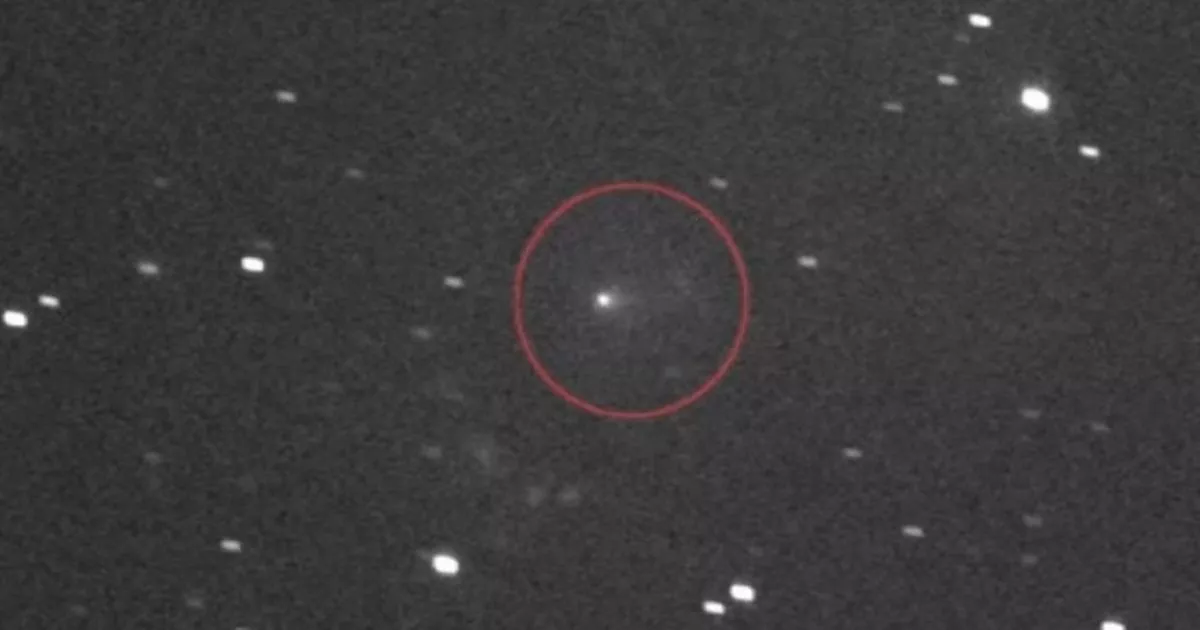
NASA has provided a significant update regarding the enigmatic comet 3I/ATLAS, which has intrigued scientists and the public alike. During a press conference held on November 19, the space agency unveiled new images of the comet, captured by the Mars rover, marking the first time these visuals have been shared with the public. The images were broadcast on NASA’s official website and YouTube channel.
The comet, now recognized as an interstellar object, has been a subject of intense interest since its confirmation in early June. While NASA describes it as a comet, some experts, including theoretical physicist Avi Loeb, have stirred speculation by suggesting it could be an alien “mothership.” Loeb posits that its unusual attributes might indicate extraterrestrial origins, particularly given its extraordinary speed of 130,000 mph.
Loeb’s assessments reflect his ongoing interest in the object, which he ranks at a level two on his UFO scale, where zero indicates phenomena consistent with natural explanations and ten represents confirmed extraterrestrial origins. He emphasized that 3I/ATLAS warrants further investigation due to its peculiar behavior, stating, “I will never be able to rule out the possibility it is an alien craft.”
The recent press conference followed a period of limited communication from NASA due to a government shutdown that lasted from October 1 to November 12. During this time, many of NASA’s staff were placed on furlough, preventing the agency from publicly releasing significant data, including photos from telescopes that Loeb had requested 40 days prior.
As 3I/ATLAS continues its trajectory through the Solar System, it has returned to Earth’s view after making a slingshot around the sun. The comet is approaching its closest pass to Earth, which will occur next month at a distance of approximately 170 million miles (273 million kilometers). In early 2024, it will also pass close enough to Jupiter, allowing spacecraft near the planet to gather additional observations before 3I/ATLAS exits the solar system.
Dozens of observatories worldwide are preparing to monitor the comet closely as it nears Earth. The combination of new imagery and ongoing analysis will likely fuel both scientific inquiry and public fascination regarding the true nature of 3I/ATLAS. As this story develops, further updates from NASA and the scientific community are expected.

Mother Reveals Daughter’s Meningitis Seizure After Night Out

Major Oil Spill Disrupts Traffic in Donegal on March 16, 2026

Discovering Literature: The Joys of Rejoining a Public Library

Ted Season 2 Announced: Release Date & Trailer Updates Revealed

Research Ireland and UKRI Forge New Collaboration Agreement

David McGoldrick’s Impressive Scoring Streak Sparks World Cup Talk

Plane Crash Claims Lives of Publishing Heir, Pregnant Wife, and Pilot

Oscars Snub Brigitte Bardot Sparks Controversy Over In Memoriam

Meta Plans Major Layoffs to Offset Rising AI Investment Costs

Tributes Surge for 9-Year-Old Leon Briody After Cancer Battle

Aimee Osbourne Joins Family for Emotional Tribute to Ozzy

Danny Healy-Rae Considers Complaint After Altercation with Garda

Hawaii Commemorates 80 Years Since Hiroshima Bombing with Ceremony

Ireland Enjoys Summer Heat as Hurricane Erin Approaches Atlantic

Couple Convicted of Murdering Two-Year-Old Grandson in Wales

Gaza Aid Distribution Tragedy: 20 Killed Amid Ongoing Violence

Newcastle West Woman Patricia Foley Found Safe After Urgent Search

Fianna Fáil TDs Urgently Consider Maire Geoghegan-Quinn for Presidency
-
 Top Stories11 months ago
Tributes Surge for 9-Year-Old Leon Briody After Cancer Battle
-
 Entertainment1 year ago
Aimee Osbourne Joins Family for Emotional Tribute to Ozzy
-
 Politics1 year ago
Danny Healy-Rae Considers Complaint After Altercation with Garda
-
 World1 year ago
Hawaii Commemorates 80 Years Since Hiroshima Bombing with Ceremony
-
 Top Stories12 months ago
Ireland Enjoys Summer Heat as Hurricane Erin Approaches Atlantic
-
 World1 year ago
Couple Convicted of Murdering Two-Year-Old Grandson in Wales
-
 World1 year ago
Gaza Aid Distribution Tragedy: 20 Killed Amid Ongoing Violence
-
 Top Stories11 months ago
Newcastle West Woman Patricia Foley Found Safe After Urgent Search
-
 Top Stories1 year ago
Fianna Fáil TDs Urgently Consider Maire Geoghegan-Quinn for Presidency
-

 World1 year ago
Aristocrat Constance Marten and Partner Convicted of Infant Murder
-

 Top Stories12 months ago
Climbing Errigal: A Must-Do Summer Adventure in Donegal
-

 Top Stories12 months ago
Hike Donegal’s Errigal Mountain NOW for Unforgettable Summer Views