
Science
New Research Traces Origin of Moon’s Precursor Planet Theia

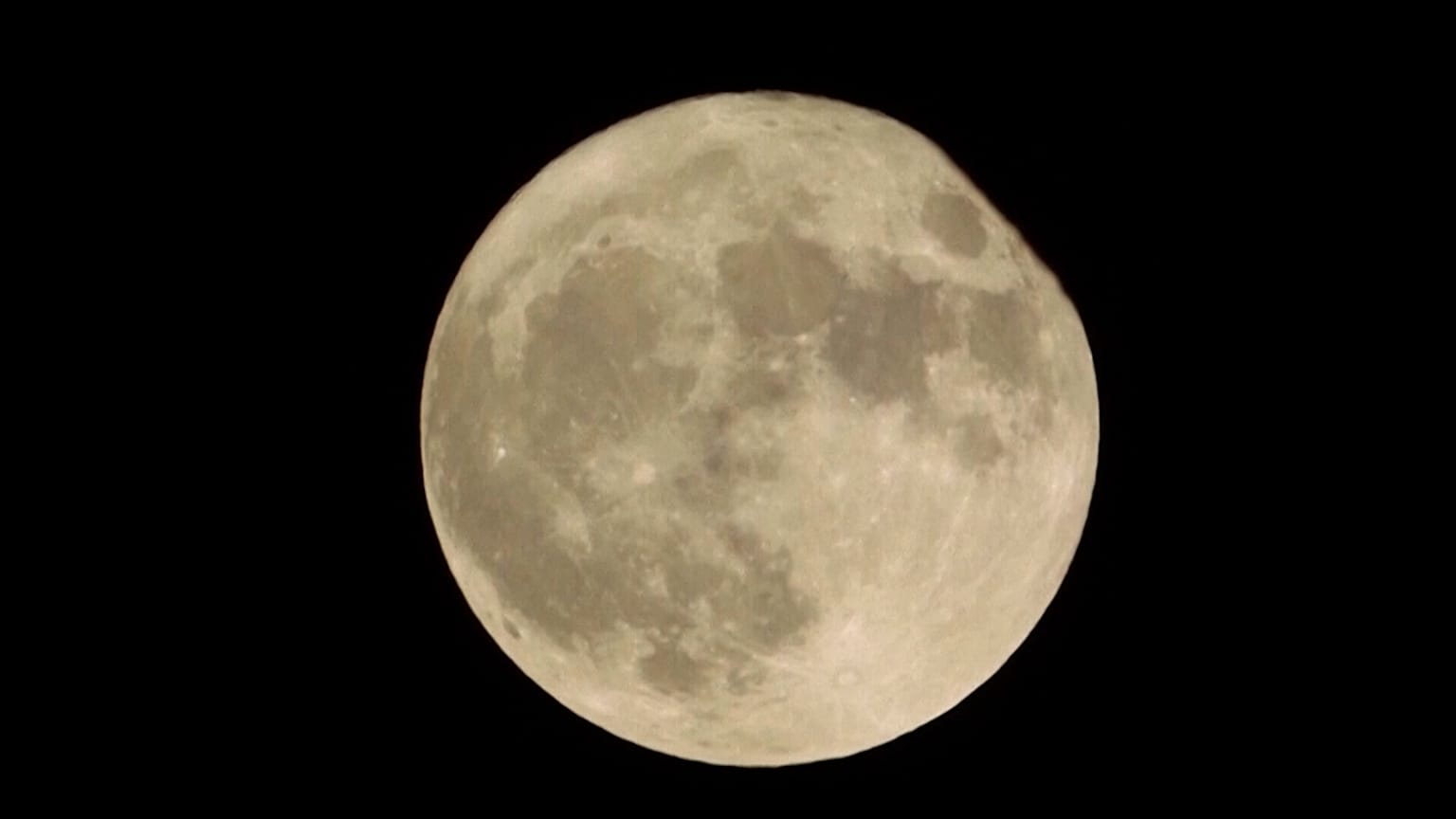
A recent study has revealed new insights into the origins of Theia, the long-lost planet believed to have played a crucial role in the formation of the Moon. This research suggests that Theia likely formed much closer to the Sun than previously thought, challenging long-held assumptions about the early Solar System.
According to a research team from France, Germany, and the United States, Theia is believed to have originated from the inner Solar System. For decades, the prevailing theory has been that Theia collided with the early Earth approximately 4.5 billion years ago, resulting in debris that ultimately formed the Moon. This hypothesis, known as the giant impact theory, has been a topic of discussion since the analysis of the first Apollo samples more than 50 years ago.
The disappearance of Theia billions of years ago has left scientists without direct chemical evidence to support the theory. As a result, pinpointing its exact origin and composition has remained a significant challenge for researchers. To address this, the team analyzed ancient lunar and terrestrial rocks to trace Theia’s origins.
Jake Foster, an astronomer at the Royal Observatory Greenwich in the UK, who was not involved in the study, commented on the significance of the research: “One of the things about this research that does make it so exciting is not only is it helping to paint a picture of what happened to the Earth four and a half billion years ago, but also it’s able to almost exactly pinpoint where this object came from.”
The research team adopted a reverse engineering approach to investigate Theia’s origins. They examined isotopes from rocks collected on Earth and samples returned from the Moon by Apollo astronauts. These isotopes act like chemical fingerprints, providing vital information about the materials involved in the formation of both the Earth and the Moon.
Scientists had previously identified that Earth and Moon rocks share nearly identical metal isotope ratios. This similarity complicated efforts to distinguish between materials from early Earth and those from Theia. The new study tackled this challenge by analyzing isotopes of iron, chromium, zirconium, and molybdenum. The researchers modeled hundreds of potential scenarios for early Earth and Theia, assessing which combinations could produce the observed isotope signatures.
The findings indicate that materials forming closer to the Sun exhibit different temperatures and conditions than those further away. By comparing these isotope patterns, the researchers concluded that Theia likely formed in the inner Solar System, potentially even closer to the Sun than Earth itself. This marks a shift from earlier beliefs that Theia may have originated further out in the Solar System.
The implications of this research extend beyond understanding the Moon’s formation. It offers valuable insights into how planets grow, collide, and evolve during the early stages of a solar system. As scientists continue to explore the mysteries of planetary formation, this analysis may pave the way for further investigations into the dynamics of our cosmic neighborhood.
For those interested in visual content related to this research, a video is available in the media player above.

Mother Reveals Daughter’s Meningitis Seizure After Night Out

Major Oil Spill Disrupts Traffic in Donegal on March 16, 2026

Discovering Literature: The Joys of Rejoining a Public Library

Ted Season 2 Announced: Release Date & Trailer Updates Revealed

Research Ireland and UKRI Forge New Collaboration Agreement

David McGoldrick’s Impressive Scoring Streak Sparks World Cup Talk

Plane Crash Claims Lives of Publishing Heir, Pregnant Wife, and Pilot

Oscars Snub Brigitte Bardot Sparks Controversy Over In Memoriam

Meta Plans Major Layoffs to Offset Rising AI Investment Costs

Tributes Surge for 9-Year-Old Leon Briody After Cancer Battle

Aimee Osbourne Joins Family for Emotional Tribute to Ozzy

Danny Healy-Rae Considers Complaint After Altercation with Garda

Hawaii Commemorates 80 Years Since Hiroshima Bombing with Ceremony

Ireland Enjoys Summer Heat as Hurricane Erin Approaches Atlantic

Couple Convicted of Murdering Two-Year-Old Grandson in Wales

Gaza Aid Distribution Tragedy: 20 Killed Amid Ongoing Violence

Newcastle West Woman Patricia Foley Found Safe After Urgent Search

Fianna Fáil TDs Urgently Consider Maire Geoghegan-Quinn for Presidency
-
 Top Stories11 months ago
Tributes Surge for 9-Year-Old Leon Briody After Cancer Battle
-
 Entertainment1 year ago
Aimee Osbourne Joins Family for Emotional Tribute to Ozzy
-
 Politics1 year ago
Danny Healy-Rae Considers Complaint After Altercation with Garda
-
 World1 year ago
Hawaii Commemorates 80 Years Since Hiroshima Bombing with Ceremony
-
 Top Stories12 months ago
Ireland Enjoys Summer Heat as Hurricane Erin Approaches Atlantic
-
 World1 year ago
Couple Convicted of Murdering Two-Year-Old Grandson in Wales
-
 World1 year ago
Gaza Aid Distribution Tragedy: 20 Killed Amid Ongoing Violence
-
 Top Stories11 months ago
Newcastle West Woman Patricia Foley Found Safe After Urgent Search
-
 Top Stories1 year ago
Fianna Fáil TDs Urgently Consider Maire Geoghegan-Quinn for Presidency
-

 World1 year ago
Aristocrat Constance Marten and Partner Convicted of Infant Murder
-

 Top Stories12 months ago
Climbing Errigal: A Must-Do Summer Adventure in Donegal
-

 Top Stories12 months ago
Hike Donegal’s Errigal Mountain NOW for Unforgettable Summer Views