
World
Japan’s Takaichi Faces China Backlash Over Taiwan Comments

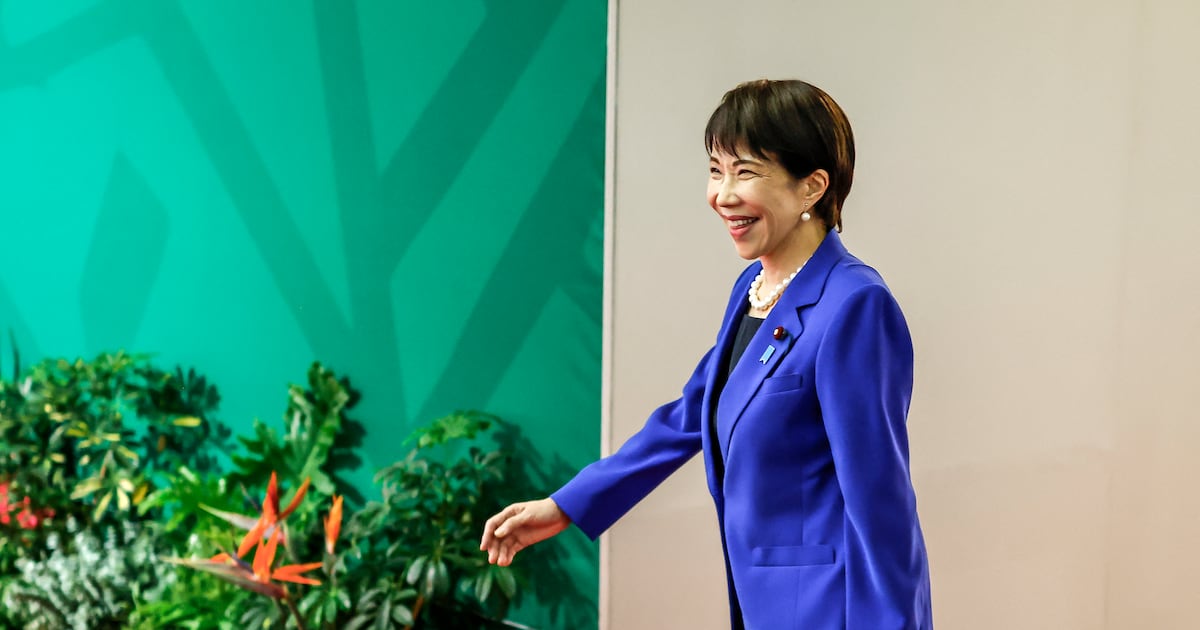
Japanese Prime Minister Sanae Takaichi is embroiled in a significant diplomatic conflict with China following her comments on Taiwan, a self-governing island Beijing claims as its own. Just a month into her tenure, Takaichi stated on November 7 that a military attack on Taiwan could pose a “survival-threatening situation” for Japan, potentially warranting a military response from Tokyo. This declaration has escalated tensions with China, a country that has reacted with vehement criticism.
The diplomatic fallout has been swift. The consul general of China in Osaka issued a now-deleted online threat directed at Takaichi, vowing to “cut off” her “dirty neck.” The repercussions for Japan have been tangible, as reports indicate an 80% decline in tourist bookings from China. In light of these developments, the Japanese government has advised its citizens to exercise caution when traveling to China, and numerous cultural events in Japan have been suspended or cancelled.
Takaichi’s remarks have drawn sharp responses from Chinese officials. On Sunday, Wang Yi, China’s foreign minister, demanded she retract her statements, asserting that military intervention threats regarding Taiwan had “crossed a red line.” Despite this, Takaichi faces significant political pressure to maintain a firm stance against what her supporters view as Chinese bullying.
Her comments reference a legal principle established in 2015, which permits Japan to deploy its Self-Defense Forces (SDF) in response to an armed attack against a country with which Japan has close ties. This means that if U.S. military forces were to intervene against a Chinese blockade of Taiwan, Japan could also engage. The legitimacy of such a response is now the subject of intense debate, with critics like Takaichi’s predecessor, Shigeru Ishiba, accusing her of exaggerating the threat to Japan’s security.
Taiwan, historically significant as Japan’s first colony, has been a focal point of Chinese ambitions for years. China has utilized various tactics to bring Taiwan under its control without resorting to war. Japan has traditionally adhered to a policy of “strategic ambiguity,” often refraining from strong public statements on the issue, yet the rising assertiveness of the Japanese political right has shifted this stance. In 2021, former deputy prime minister Taro Aso explicitly stated that Japan would defend Taiwan in collaboration with U.S. forces in the event of a Chinese invasion.
China perceives Taiwan as a critical strategic challenge, described by analyst Zhu Tingchang as “the lock around the neck of a great dragon.” This metaphor underscores Taiwan’s role in the broader geopolitical dynamics involving the U.S. and its allies, including Japan. Takaichi’s comments come at a time when some analysts suggest a potential shift in U.S.-China relations, particularly under the administration of former President Donald Trump, which may embolden Beijing to test the resolve of Western nations.
In response to the rising tensions, Taiwan has announced plans to increase its defense spending to 5% of its gross domestic product by 2030. Observers note that the current U.S. administration has yet to publicly support Japan’s position regarding Taiwan, leaving Tokyo somewhat isolated in its stance.
The ongoing diplomatic crisis has already had economic ramifications. Shares listed on the Tokyo Stock Exchange have seen billions wiped off their value since the dispute escalated. According to the Nomura Research Institute, Japan could face annual losses of approximately 2.2 trillion yen (about €12.35 billion) due to the Chinese boycott. Additionally, China controls the supply of many critical minerals essential for Japan’s automotive industry, further complicating the situation.
While Takaichi’s popularity remains relatively strong for now, the pressure to navigate these turbulent waters is mounting. Unlike Chinese President Xi Jinping, who operates in a system with fewer checks, Takaichi must contend with the realities of democratic accountability. As public sentiment may eventually sway against her if the economic impact worsens, the outcome of this diplomatic standoff will be closely watched both in Japan and internationally.

Rape Crisis Mid-West Launches Urgent Strategic Plan for Survivors

UK Scraps Jury Trials for Most Crimes; Ireland’s System Remains

WPP Media Study Uncovers Challenges in Irish Language Advertising

Verstappen Secures Pole in Abu Dhabi, Norris Eyes First Title

Russia Launches Major Missile and Drone Attack Amid Peace Talks

Øresund Bridge: A £3.4 Billion Link Between Sweden and Denmark

Øresund Bridge Connects Sweden and Denmark with £3.4 Billion Link

Ryan Tubridy and Dr. Clare Kambamettu Set to Marry This Weekend

Eighteen Firefighters Graduate from NIFRS Training College Today!

Tributes Surge for 9-Year-Old Leon Briody After Cancer Battle

Aimee Osbourne Joins Family for Emotional Tribute to Ozzy

Danny Healy-Rae Considers Complaint After Altercation with Garda

Ireland Enjoys Summer Heat as Hurricane Erin Approaches Atlantic

Hawaii Commemorates 80 Years Since Hiroshima Bombing with Ceremony

Newcastle West Woman Patricia Foley Found Safe After Urgent Search

Fianna Fáil TDs Urgently Consider Maire Geoghegan-Quinn for Presidency

Couple Convicted of Murdering Two-Year-Old Grandson in Wales

Gaza Aid Distribution Tragedy: 20 Killed Amid Ongoing Violence
-
 Top Stories3 months ago
Tributes Surge for 9-Year-Old Leon Briody After Cancer Battle
-
 Entertainment4 months ago
Aimee Osbourne Joins Family for Emotional Tribute to Ozzy
-
 Politics4 months ago
Danny Healy-Rae Considers Complaint After Altercation with Garda
-
 Top Stories4 months ago
Ireland Enjoys Summer Heat as Hurricane Erin Approaches Atlantic
-
 World5 months ago
Hawaii Commemorates 80 Years Since Hiroshima Bombing with Ceremony
-
 Top Stories3 months ago
Newcastle West Woman Patricia Foley Found Safe After Urgent Search
-
 Top Stories5 months ago
Fianna Fáil TDs Urgently Consider Maire Geoghegan-Quinn for Presidency
-
 World5 months ago
Couple Convicted of Murdering Two-Year-Old Grandson in Wales
-
 World5 months ago
Gaza Aid Distribution Tragedy: 20 Killed Amid Ongoing Violence
-

 World5 months ago
Aristocrat Constance Marten and Partner Convicted of Infant Murder
-

 Top Stories4 months ago
Climbing Errigal: A Must-Do Summer Adventure in Donegal
-

 Top Stories4 months ago
Hike Donegal’s Errigal Mountain NOW for Unforgettable Summer Views