
Lifestyle
Pope Leo XIV Urges Christian Unity at Historic Nicaea Ceremony

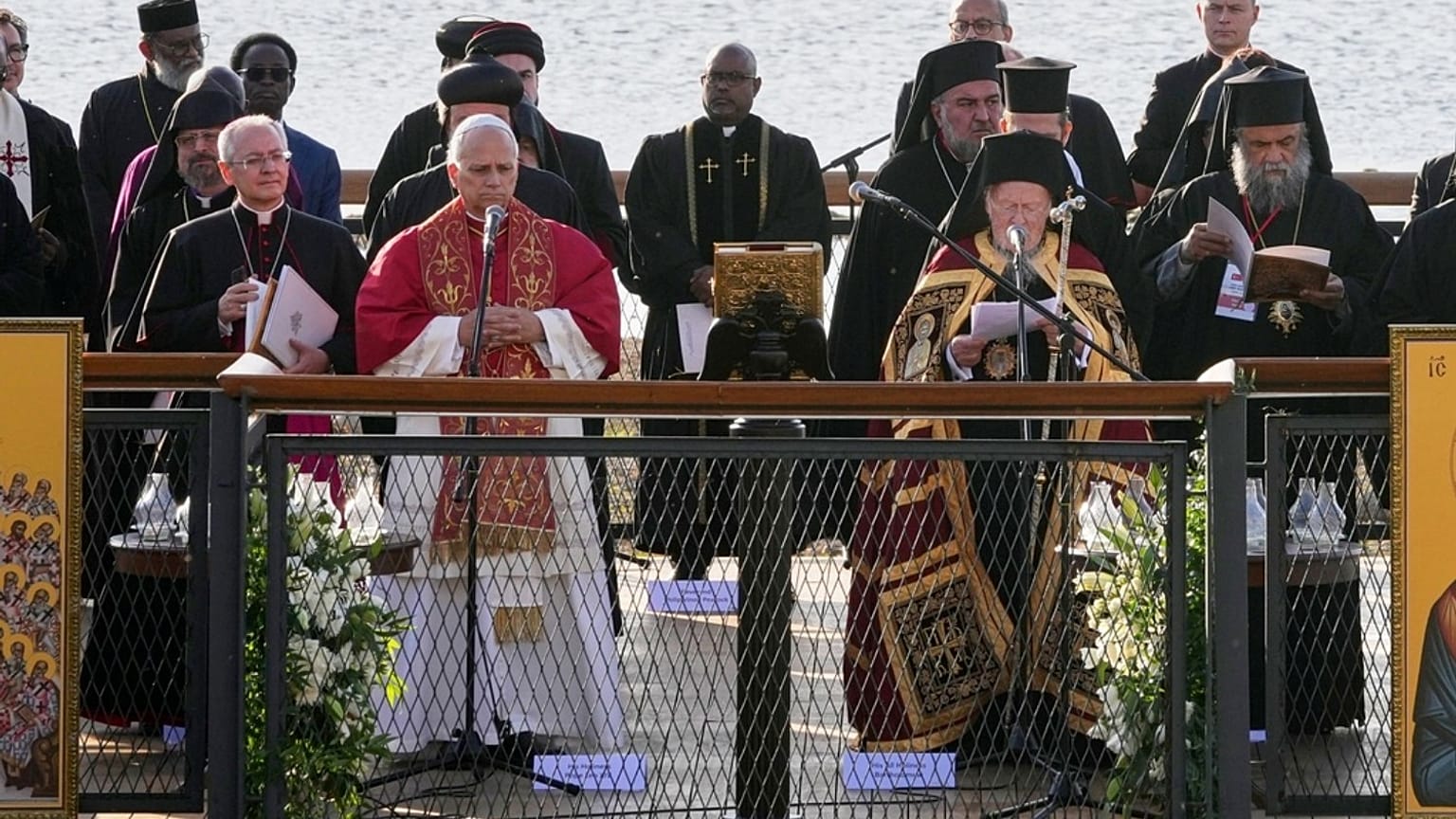
On Friday, Pope Leo XIV called for unity among Christians during a ceremonial event held in Iznik, Turkey, a site of profound historical significance in Christianity. The ceremony took place at the site where the remains of the Basilica of St. Neophytos have recently been uncovered due to declining water levels. The event featured alternating hymns from both Catholic and Orthodox traditions, symbolizing the hope for reconciliation among the divided branches of Christianity.
The gathering included Patriarch Bartholomew I, the head of the Greek Orthodox Church, alongside other prominent religious leaders. They convened on the shore of Lake Nicaea, the location of the First Council held in 325 AD, which produced the Nicene Creed — a foundational statement of Christian faith. This creed is still recited by millions of Christians worldwide.
During the ceremony, the leaders collectively recited the Nicene Creed, with Pope Leo XIV emphasizing its continued relevance. He remarked, “This declaration of faith is of fundamental importance for Christians moving towards full unity,” urging participants to transcend centuries of division within the Christian community. His words resonated with the historical significance of the location, as the original council represented a time when Eastern and Western churches were united.
Historical Context of the Nicaea Council
The First Council of Nicaea is viewed as a pivotal moment in Christian history. It was convened when the Eastern and Western churches were still in communion, prior to the Great Schism of 1054, which led to their separation. Despite this division, the Nicene Creed has endured, uniting Catholic, Orthodox, and many Protestant churches in a shared expression of faith.
Patriarch Bartholomew I described the legacy of the council as “the seed of Christian existence.” He stressed the importance of the gathering, stating, “We are gathered here not only to remember the past but also to bear witness to the same faith in a living way today.” His remarks highlighted the ongoing relevance of the council’s decisions in contemporary Christian practice.
The ceremony attracted a diverse assembly of religious figures, including clergy from various denominations such as Syriac, Coptic, Armenian, Malankara, Protestant, and Anglican churches. This inclusive participation illustrated a collective desire for dialogue and cooperation among different Christian traditions.
A Call for Peace and Dialogue
Pope Leo XIV addressed the misuse of religious motivations to justify violence and conflict, firmly stating that such justifications “must be rejected.” He reiterated the importance of dialogue as a means to foster understanding and peace among different faith communities. His call for cooperation among Christians aims to encourage a unified approach to addressing global challenges.
Meanwhile, a small protest organized by members of the New Welfare Party occurred prior to the prayer ceremony in Iznik. This protest was monitored by police and concluded peacefully, indicating the complexities surrounding the event and the broader societal context.
The ceremony at Nicaea not only commemorated a significant historical event but also served as a contemporary reminder of the ongoing quest for unity within Christianity. As leaders from various denominations came together, the hope for reconciliation and shared faith continues to resonate in the hearts of millions around the world.

Urgent Hack to Prevent Bedroom Condensation This Winter

Irish Stone Lifting Revolution Gains Momentum Amid Covid Recovery

Health Insurers Hike Prices Again; Average Premiums Near €2,000

Health Insurers Hike Prices Again: Average Premiums Soar 8%

Dublin Man Gets 20-Month Suspended Sentence for Money Laundering

Transforming Teen Anxiety: Building Self-Belief Through Experience

Helen Flanagan Dazzles in Red Lingerie Amid Online Criticism

Former Councillor Receives Suspended Sentence for Harassment

New Research Reveals Connection’s Role in Audio Consumption

Tributes Surge for 9-Year-Old Leon Briody After Cancer Battle

Aimee Osbourne Joins Family for Emotional Tribute to Ozzy

Danny Healy-Rae Considers Complaint After Altercation with Garda

Ireland Enjoys Summer Heat as Hurricane Erin Approaches Atlantic

Hawaii Commemorates 80 Years Since Hiroshima Bombing with Ceremony

Newcastle West Woman Patricia Foley Found Safe After Urgent Search

Fianna Fáil TDs Urgently Consider Maire Geoghegan-Quinn for Presidency

Couple Convicted of Murdering Two-Year-Old Grandson in Wales

Gaza Aid Distribution Tragedy: 20 Killed Amid Ongoing Violence
-
 Top Stories3 months ago
Tributes Surge for 9-Year-Old Leon Briody After Cancer Battle
-
 Entertainment4 months ago
Aimee Osbourne Joins Family for Emotional Tribute to Ozzy
-
 Politics4 months ago
Danny Healy-Rae Considers Complaint After Altercation with Garda
-
 Top Stories4 months ago
Ireland Enjoys Summer Heat as Hurricane Erin Approaches Atlantic
-
 World5 months ago
Hawaii Commemorates 80 Years Since Hiroshima Bombing with Ceremony
-
 Top Stories3 months ago
Newcastle West Woman Patricia Foley Found Safe After Urgent Search
-
 Top Stories5 months ago
Fianna Fáil TDs Urgently Consider Maire Geoghegan-Quinn for Presidency
-
 World5 months ago
Couple Convicted of Murdering Two-Year-Old Grandson in Wales
-
 World5 months ago
Gaza Aid Distribution Tragedy: 20 Killed Amid Ongoing Violence
-

 World5 months ago
Aristocrat Constance Marten and Partner Convicted of Infant Murder
-

 Top Stories4 months ago
Climbing Errigal: A Must-Do Summer Adventure in Donegal
-

 Top Stories4 months ago
Hike Donegal’s Errigal Mountain NOW for Unforgettable Summer Views