
Politics
Macron Urges Caution on Ukraine Peace Talks Amid U.S. Pressure

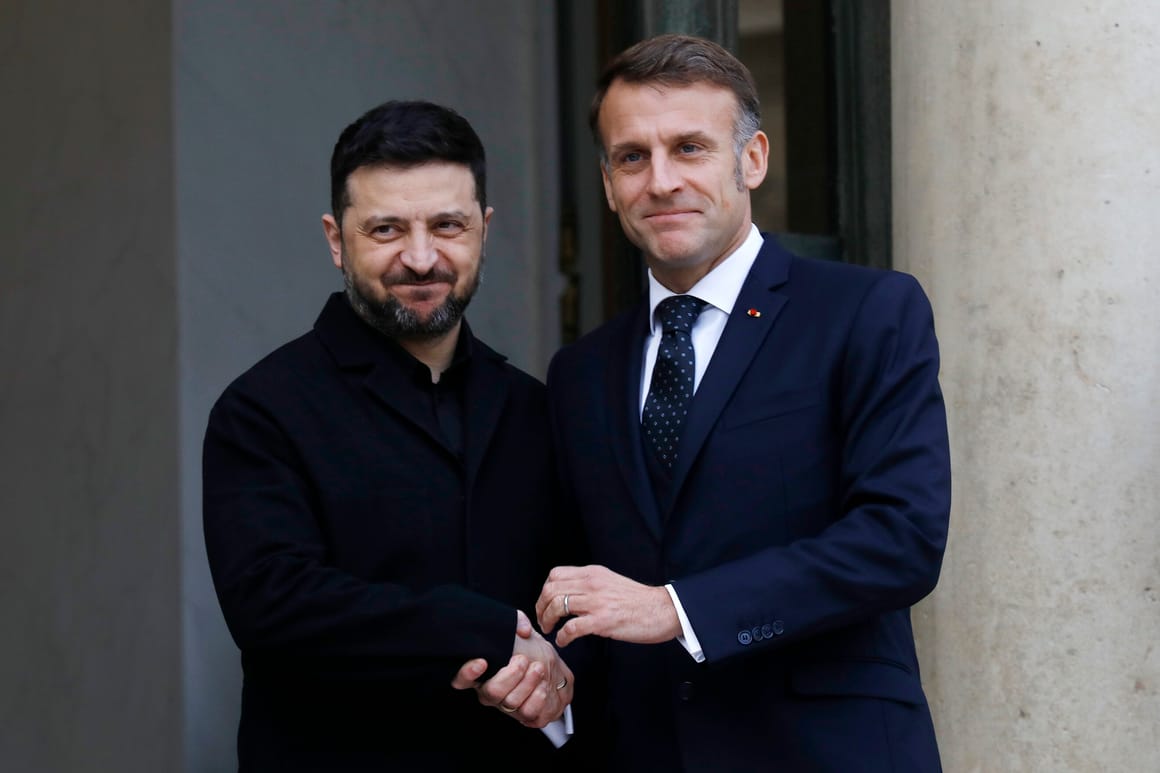
French President Emmanuel Macron emphasized the challenges ahead in achieving a lasting peace agreement for Ukraine during a press conference in Paris on Monday. Despite growing calls from Washington for a resolution to the ongoing conflict, Macron stated that significant work remains before any comprehensive plan can be finalized.
At the press conference alongside Ukrainian President Volodymyr Zelenskyy, Macron noted, “Today, there isn’t a finalized plan on territorial questions. These can only be finalized by President Zelenskyy.” He further highlighted that discussions surrounding frozen Russian assets and security guarantees are still in a preliminary phase, complicating potential resolutions.
The European Union (EU) faces difficulties in utilizing €140 billion in frozen Russian reserves to provide reparations to Ukraine, largely due to opposition from Belgium. This financial stalemate reflects broader concerns regarding the approach to peace negotiations.
Zelenskyy’s visit to Paris comes as he faces increasing pressure from the administration of former U.S. President Donald Trump to make concessions in order to expedite a peace settlement. In comments regarding the proposed U.S. peace plan, which initially included territorial concessions and limitations on Ukraine’s military, Zelenskyy stated that the plan has “improved,” but insisted that the territorial issues remain the most complex to resolve. He reiterated that Ukraine’s constitution prohibits him from ceding any part of the country to Russia.
During the press conference, Zelenskyy stressed the need for any peace deal to incorporate robust security guarantees to safeguard Ukraine against future aggression from Russia. He remarked, “Peace must become truly durable,” underlining the importance of lasting protections for Ukraine.
U.S. Secretary of State Marco Rubio has reiterated that Washington seeks a peace agreement before discussing potential security assurances for Ukraine. The initial 28-point plan developed by U.S. special envoy Steve Witkoff and Russian negotiator Kirill Dmitriev did not include provisions for Ukraine’s NATO membership, a crucial topic in the discussions.
The Macron-Zelenskyy summit occurred just before an anticipated meeting in Moscow between Witkoff and Russian President Vladimir Putin. Kremlin spokesperson Dmitry Peskov expressed optimism, stating, “I believe the visit will be very useful, as it will focus on outlining a peace settlement for Ukraine.”
Concerns about the pressure on Kyiv are mounting, especially as Zelenskyy navigates a politically sensitive landscape following the resignation of his chief aide, Andriy Yermak, amid a corruption investigation. EU diplomatic chief Kaja Kallas voiced apprehension about the potential for pressure to be unfairly directed at Ukraine, stating, “I am afraid that all the pressure will be directed at the victim… to make concessions.”
Zelenskyy, Macron, and U.K. Prime Minister Keir Starmer recently held a call with Witkoff and Rustem Umerov, head of Ukraine’s National Security and Defense Council. They shared insights with other European leaders to align their positions before Witkoff’s discussions in Moscow. A European diplomat noted that Witkoff would likely address previously discussed points from meetings in Geneva and Florida, but the outcome remains uncertain.
On the ground in Brussels, EU defense ministers convened, where many stressed the importance of maintaining military support for Ukraine, including the use of frozen Russian assets. Kallas stated, “Ministers agreed we need to agree on the funding options as a matter of urgency.” Swedish Defense Minister Pål Jonson called for intensified sanctions against Russia and the strategic use of frozen assets to fortify Ukraine’s negotiating stance.
In a notable announcement, the Netherlands pledged €250 million to the Prioritized Ukraine Requirements List initiative, which is backed by NATO. This funding aims to secure U.S. air defense systems and ammunition for F-16 fighter jets. Additionally, Dutch Defense Minister Ruben Brekelmans and Ukrainian counterpart Denys Shmyhal formalized an agreement to co-produce drones, further solidifying defense cooperation between the two nations.
The European Commission indicated that 15 of the 19 member countries that requested funds under the EU’s €150 billion SAFE loans-for-weapons scheme have included support for Ukraine in their plans, involving “billions, not millions.” Latvia’s Deputy Defense Minister Liene Gātere stated, “We made a decision to contribute at least 0.25 percent of GDP for aid to Ukraine and are looking at SAFE to do even more,” urging other European nations to increase their support.
As negotiations persist, the path to a stable peace in Ukraine remains fraught with challenges, and the international community watches closely to see how these dynamics unfold.

Mother Reveals Daughter’s Meningitis Seizure After Night Out

Major Oil Spill Disrupts Traffic in Donegal on March 16, 2026

Discovering Literature: The Joys of Rejoining a Public Library

Ted Season 2 Announced: Release Date & Trailer Updates Revealed

Research Ireland and UKRI Forge New Collaboration Agreement

David McGoldrick’s Impressive Scoring Streak Sparks World Cup Talk

Plane Crash Claims Lives of Publishing Heir, Pregnant Wife, and Pilot

Oscars Snub Brigitte Bardot Sparks Controversy Over In Memoriam

Meta Plans Major Layoffs to Offset Rising AI Investment Costs

Tributes Surge for 9-Year-Old Leon Briody After Cancer Battle

Aimee Osbourne Joins Family for Emotional Tribute to Ozzy

Danny Healy-Rae Considers Complaint After Altercation with Garda

Hawaii Commemorates 80 Years Since Hiroshima Bombing with Ceremony

Ireland Enjoys Summer Heat as Hurricane Erin Approaches Atlantic

Couple Convicted of Murdering Two-Year-Old Grandson in Wales

Gaza Aid Distribution Tragedy: 20 Killed Amid Ongoing Violence

Newcastle West Woman Patricia Foley Found Safe After Urgent Search

Fianna Fáil TDs Urgently Consider Maire Geoghegan-Quinn for Presidency
-
 Top Stories10 months ago
Tributes Surge for 9-Year-Old Leon Briody After Cancer Battle
-
 Entertainment12 months ago
Aimee Osbourne Joins Family for Emotional Tribute to Ozzy
-
 Politics12 months ago
Danny Healy-Rae Considers Complaint After Altercation with Garda
-
 World12 months ago
Hawaii Commemorates 80 Years Since Hiroshima Bombing with Ceremony
-
 Top Stories11 months ago
Ireland Enjoys Summer Heat as Hurricane Erin Approaches Atlantic
-
 World12 months ago
Couple Convicted of Murdering Two-Year-Old Grandson in Wales
-
 World12 months ago
Gaza Aid Distribution Tragedy: 20 Killed Amid Ongoing Violence
-
 Top Stories10 months ago
Newcastle West Woman Patricia Foley Found Safe After Urgent Search
-
 Top Stories12 months ago
Fianna Fáil TDs Urgently Consider Maire Geoghegan-Quinn for Presidency
-

 World1 year ago
Aristocrat Constance Marten and Partner Convicted of Infant Murder
-

 Top Stories12 months ago
Climbing Errigal: A Must-Do Summer Adventure in Donegal
-

 Top Stories12 months ago
Hike Donegal’s Errigal Mountain NOW for Unforgettable Summer Views