
Politics
Greek Farmers Block Border Crossings Over Delayed EU Subsidies

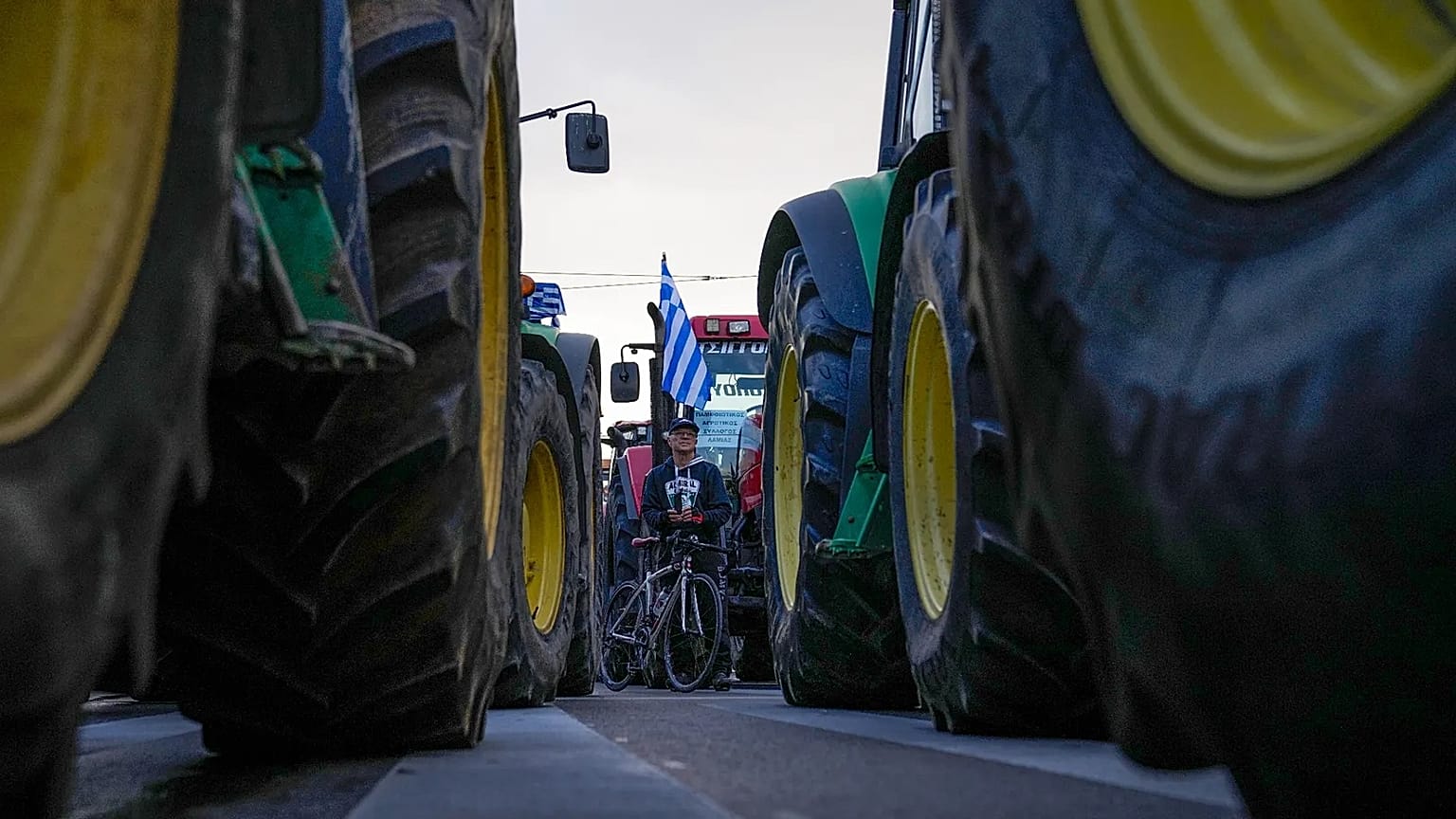
Farmers in northern Greece have intensified their protests over delayed subsidy payments from the European Union, disrupting traffic at key border crossings on Wednesday. The protests stem from an investigation into a significant corruption scandal that has delayed the distribution of EU-backed funds.
Convoys of tractors blocked routes to North Macedonia, Bulgaria, and Turkey, causing significant traffic disruptions for drivers, who were forced to take lengthy detours. In the central city of Larissa, farmers poured milk into the main square before continuing their demonstration, further reinforcing local motorway blockades. In Serres, farmers established road blockades and some circumvented police checkpoints to march on the customs office in Promahona, near the Bulgarian border.
Prime Minister Kyriakos Mitsotakis has expressed a willingness to engage in dialogue with the farmers but cautioned against the disruptive nature of their protests. He stated, “I think that our farmers also understand that extreme actions, prolonged closures of highways, customs closures, airport closures, these are actions that do not help their efforts.” Mitsotakis emphasized that such actions create challenges for other groups, especially as the government plans to provide substantial income support to farmers in December.
Recent unrest among farmers has been triggered by delays in subsidy payments following revelations of widespread fraudulent claims for EU agricultural funds. The scandal has led to the resignation of five senior government officials and the gradual closure of a state agency responsible for managing these subsidies. According to the European Public Prosecutor’s Office (EPPO), approximately 324 individuals have been identified as recipients of fraudulent subsidy claims totalling €19.6 million. The EPPO has described the investigation as linked to a “systematic large-scale subsidy fraud scheme and money-laundering activities.”
Greece’s Minister for Public Order, Michalis Chrysochoidis, has reiterated the government’s stance against the closure of major transit points, which include ports and railway hubs.
The wave of protests commenced on Sunday, marked by serious incidents in the villages of Nikaia and Platykampos in Larissa, where farmers clashed with riot police while attempting to approach the motorway. Reports indicate that two demonstrators and two police officers sustained injuries during these confrontations. Police have made multiple arrests, with charges including violence against officials and resistance to law enforcement.
As the protests continue, farmers from the Nikaia blockade have renewed their call for the release of those arrested, following a mobilization outside the Larissa Police Directorate. The protests are anticipated to escalate across Greece until Friday, with additional road blockades planned as farmers employ this tactic to exert pressure on the authorities.
This situation highlights the ongoing tension between farmers and the government regarding agricultural subsidies and the impact of corruption on essential funding. As the protests unfold, the government faces the challenge of addressing the farmers’ grievances while maintaining public order and ensuring that vital transit routes remain open.

Mother Reveals Daughter’s Meningitis Seizure After Night Out

Major Oil Spill Disrupts Traffic in Donegal on March 16, 2026

Discovering Literature: The Joys of Rejoining a Public Library

Ted Season 2 Announced: Release Date & Trailer Updates Revealed

Research Ireland and UKRI Forge New Collaboration Agreement

David McGoldrick’s Impressive Scoring Streak Sparks World Cup Talk

Plane Crash Claims Lives of Publishing Heir, Pregnant Wife, and Pilot

Oscars Snub Brigitte Bardot Sparks Controversy Over In Memoriam

Meta Plans Major Layoffs to Offset Rising AI Investment Costs

Tributes Surge for 9-Year-Old Leon Briody After Cancer Battle

Aimee Osbourne Joins Family for Emotional Tribute to Ozzy

Danny Healy-Rae Considers Complaint After Altercation with Garda

Hawaii Commemorates 80 Years Since Hiroshima Bombing with Ceremony

Ireland Enjoys Summer Heat as Hurricane Erin Approaches Atlantic

Couple Convicted of Murdering Two-Year-Old Grandson in Wales

Gaza Aid Distribution Tragedy: 20 Killed Amid Ongoing Violence

Newcastle West Woman Patricia Foley Found Safe After Urgent Search

Fianna Fáil TDs Urgently Consider Maire Geoghegan-Quinn for Presidency
-
 Top Stories10 months ago
Tributes Surge for 9-Year-Old Leon Briody After Cancer Battle
-
 Entertainment12 months ago
Aimee Osbourne Joins Family for Emotional Tribute to Ozzy
-
 Politics12 months ago
Danny Healy-Rae Considers Complaint After Altercation with Garda
-
 World12 months ago
Hawaii Commemorates 80 Years Since Hiroshima Bombing with Ceremony
-
 Top Stories11 months ago
Ireland Enjoys Summer Heat as Hurricane Erin Approaches Atlantic
-
 World12 months ago
Couple Convicted of Murdering Two-Year-Old Grandson in Wales
-
 World12 months ago
Gaza Aid Distribution Tragedy: 20 Killed Amid Ongoing Violence
-
 Top Stories10 months ago
Newcastle West Woman Patricia Foley Found Safe After Urgent Search
-
 Top Stories12 months ago
Fianna Fáil TDs Urgently Consider Maire Geoghegan-Quinn for Presidency
-

 World12 months ago
Aristocrat Constance Marten and Partner Convicted of Infant Murder
-

 Top Stories11 months ago
Climbing Errigal: A Must-Do Summer Adventure in Donegal
-

 Top Stories11 months ago
Hike Donegal’s Errigal Mountain NOW for Unforgettable Summer Views