
Politics
New Evidence Suggests Ancient Celts Practiced Human Sacrifice

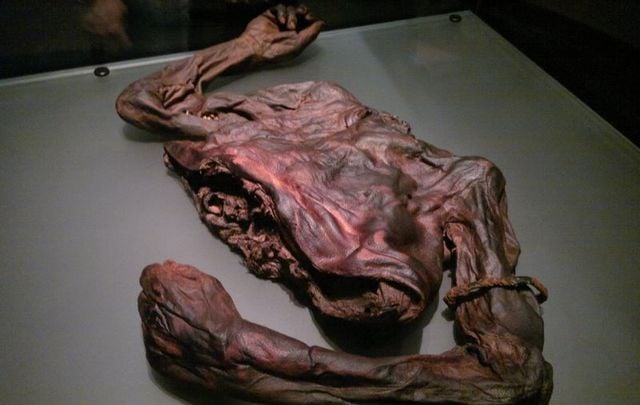
Archaeological discoveries continue to shed light on the ancient Celts, a civilization that left behind no written records. Recent findings, particularly bog bodies found in Ireland, suggest that the Celts may have engaged in ritual human sacrifice. This practice appears to have been especially linked to the sacrificial deaths of kings during periods of crisis.
In 2011, a bog body dating back to at least 2,000 BC was discovered near Portlaoise by a diligent bog worker. This body exhibited signs of ritual torture, aligning with findings from other notable bog bodies, such as Old Croghan Man and Clonycavan Man. According to Ned Kelly, keeper of antiquities at the National Museum of Ireland, the evidence suggests that these individuals suffered gruesome fates during ritualistic killings.
Kelly remarked, “We do not think of these bog bodies in the same way as we do axes or implements that are found. You have to remember that these are individuals, and it is essential to deal with their remains in a dignified manner.” He indicated that the presence of cut marks and other signs on the body points to a ritual killing rather than mere murder.
The association between these bodies underscores a troubling pattern. Kelly highlighted that human sacrifice was likely a common aspect of Celtic rituals, particularly during times of hardship. He stated, “The killings tend to be excessive… more is done to the bodies than would be required to bring about their deaths.”
Old Croghan Man, standing at an imposing 6’6”, was believed to have been a nobleman. His remains show signs of extreme violence, including stab wounds and mutilation. In contrast, Clonycavan Man, measuring just over 5 feet, also underwent brutal treatment, including disembowelment.
The notion of a king being held accountable for the welfare of his people is central to these rituals. According to Kelly, kings were believed to guarantee the land’s fertility and prosperity through their connection with the goddess of the land. If prosperity faltered, the king faced the dire consequence of sacrifice.
Historical records also support the idea of human sacrifice among the Celts. In Irish mythology, the High King of Teamhair, Tigernmas, is said to have established a cult requiring child sacrifices to the idol Cromm Cruach. Interestingly, it was the druids, who were the priestly class, that ultimately dismantled this practice by killing Tigernmas during a frenzied ceremony.
Evidence from across Europe suggests that the Celts performed human sacrifices as part of their religious practices. Ancient Roman accounts, including those by Julius Caesar, indicate that the Celts believed the gods reveled in the slaughter of captives and criminals. Such accounts describe a willingness to sacrifice even the innocent when captives were scarce.
Archaeological findings in locations like Alveston, south Gloucestershire, further substantiate these claims. Remains of individuals with disabilities and illnesses were found alongside animal bones, suggesting a ritualistic context where both humans and animals were sacrificed together, possibly to accompany them to the afterlife.
Research by experts like Emma Oxenby Wohlfart highlights the dual nature of evidence regarding human sacrifice in Celtic culture. Excavations in France reveal sanctuaries containing human remains, often showing signs of mutilation. However, the absence of clear indicators of violent death raises questions about whether these remains resulted from ritual killings or other causes.
Despite the compelling evidence, the interpretation of these findings remains contentious. The first records of Ireland’s oral histories, penned by Gaelic Christian monks, may carry biases that obscure the more brutal aspects of pre-Christian rituals. These early writers, while part of Celtic culture, were unlikely to portray their spiritual ancestors in a negative light.
As research progresses, the question of whether the ancient Celts engaged in human sacrifice continues to linger. With only fragments of evidence remaining, it is a mystery that may never be fully resolved. The legacy of these practices, however, invites further exploration into the spiritual and societal dynamics of one of history’s most enigmatic civilizations.

Galway Man Sentenced to 1 Year for Disturbing Child Abuse Material

Supreme Court Rejects Conor McGregor’s Appeal in Assault Case

Supreme Court Rejects Conor McGregor’s Appeal in Assault Case

Security for Former Garda Commissioner’s Home Cost Over €212,000

Eurovision Faces Boycott as Four Countries Withdraw Over Israel’s Participation

Urgent Vaccination Call as Flu Hospitalizations Surge 100%

Aer Lingus Pilot’s Demotion Sparks Controversy Over Safety Reporting

US Envoys to Hold Urgent Peace Talks with Ukraine in Florida

Urgent: Gardai Recover Multiple Firearms in Co Cork Today

Tributes Surge for 9-Year-Old Leon Briody After Cancer Battle

Aimee Osbourne Joins Family for Emotional Tribute to Ozzy

Danny Healy-Rae Considers Complaint After Altercation with Garda

Ireland Enjoys Summer Heat as Hurricane Erin Approaches Atlantic

Hawaii Commemorates 80 Years Since Hiroshima Bombing with Ceremony

Newcastle West Woman Patricia Foley Found Safe After Urgent Search

Fianna Fáil TDs Urgently Consider Maire Geoghegan-Quinn for Presidency

Couple Convicted of Murdering Two-Year-Old Grandson in Wales

Gaza Aid Distribution Tragedy: 20 Killed Amid Ongoing Violence
-
 Top Stories3 months ago
Tributes Surge for 9-Year-Old Leon Briody After Cancer Battle
-
 Entertainment4 months ago
Aimee Osbourne Joins Family for Emotional Tribute to Ozzy
-
 Politics4 months ago
Danny Healy-Rae Considers Complaint After Altercation with Garda
-
 Top Stories4 months ago
Ireland Enjoys Summer Heat as Hurricane Erin Approaches Atlantic
-
 World5 months ago
Hawaii Commemorates 80 Years Since Hiroshima Bombing with Ceremony
-
 Top Stories3 months ago
Newcastle West Woman Patricia Foley Found Safe After Urgent Search
-
 Top Stories5 months ago
Fianna Fáil TDs Urgently Consider Maire Geoghegan-Quinn for Presidency
-
 World5 months ago
Couple Convicted of Murdering Two-Year-Old Grandson in Wales
-
 World5 months ago
Gaza Aid Distribution Tragedy: 20 Killed Amid Ongoing Violence
-

 World5 months ago
Aristocrat Constance Marten and Partner Convicted of Infant Murder
-

 Top Stories4 months ago
Climbing Errigal: A Must-Do Summer Adventure in Donegal
-

 Top Stories4 months ago
Hike Donegal’s Errigal Mountain NOW for Unforgettable Summer Views