
Business
Kazakhstan and EU Strengthen Ties for Sustainable Supply Chains

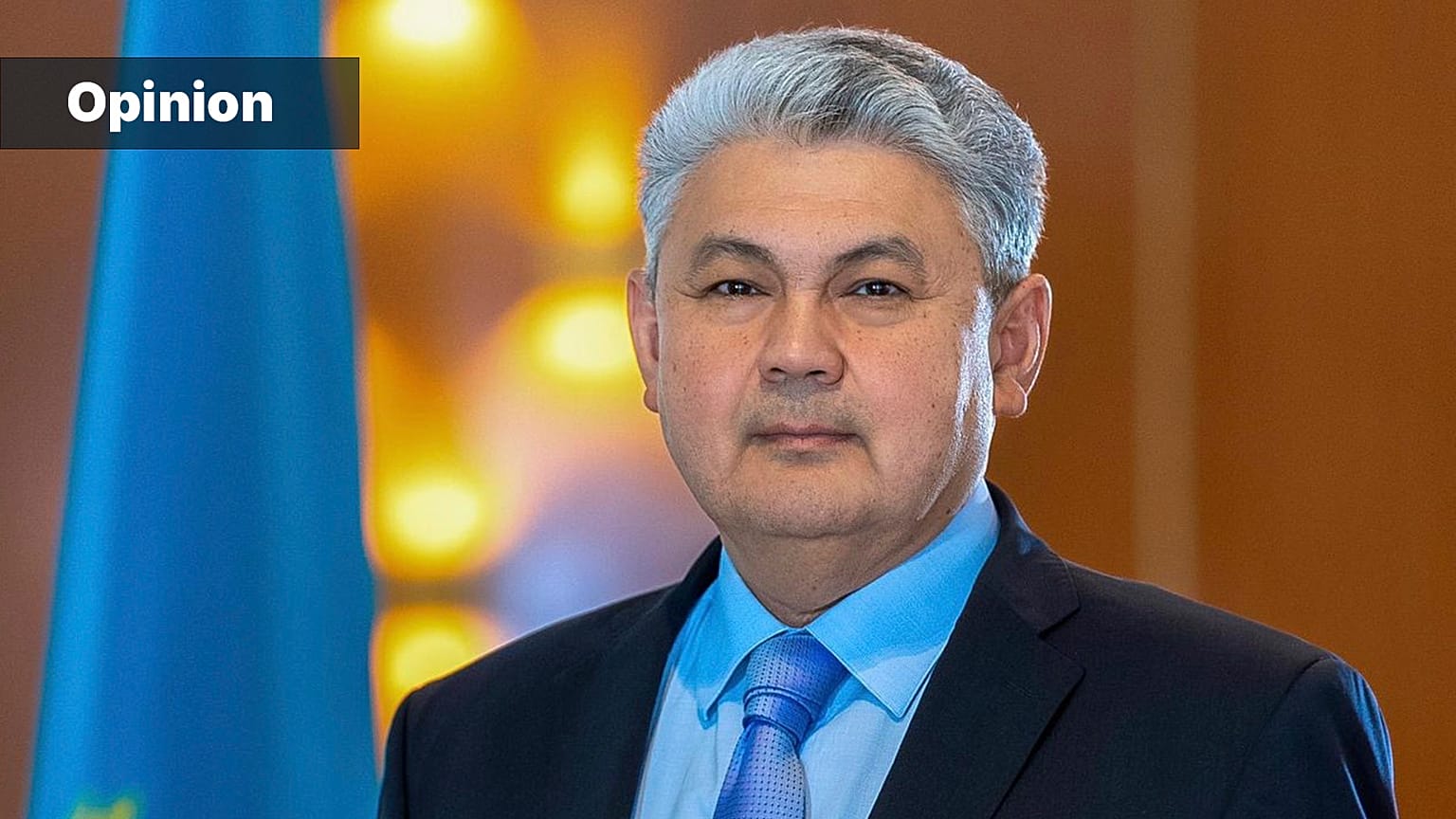
Kazakhstan and the European Union (EU) are enhancing their collaboration to create stable and sustainable supply chains essential for economic growth and environmental technologies. In an opinion piece, Kazakhstan’s Foreign Affairs Minister Yermek Kosherbayev highlighted that December 2023 marks a decade since the signing of the Enhanced Partnership and Cooperation Agreement (EPCA), which laid the groundwork for a robust partnership between the two entities.
Over the past ten years, cooperation has broadened significantly, encompassing various sectors such as political dialogue, security, investment, education, and connectivity. The EU has invested over €200 billion in Kazakhstan since 2005, solidifying its position as the largest trade and investment partner for the Central Asian nation. This partnership is firmly anchored in shared values, particularly the principles of the UN Charter, and the understanding that global challenges can only be effectively addressed through enhanced collaboration.
Kazakhstan is poised to play a pivotal role in addressing Europe’s pressing need for critical raw materials, which are vital for achieving the continent’s green and digital transitions. The EU’s reliance on a limited number of suppliers for these materials raises significant concerns regarding competitiveness. As Minister Kosherbayev noted, stable access to these essential inputs has evolved into a strategic issue.
To mitigate risks, the European Commission has emphasized the importance of diversifying sources for critical raw materials. In 2024, bilateral trade between Kazakhstan and the EU reached $48.8 billion, with over 80% of Kazakhstan’s oil exports directed to European markets. Kazakhstan’s resources are crucial for developing secure and diversified supply chains, particularly in sectors such as copper, graphite, and rare earth elements.
The EU’s Critical Raw Materials Act underscores the urgency of the situation, as Europe aims to increase its self-sufficiency in raw materials by 2030. Recent disruptions in supply chains due to geopolitical tensions have highlighted the vulnerability of relying on specific external suppliers. Kazakhstan stands out as a key player, with the capacity to provide 21 of the 34 raw materials deemed critical by the EU, including several classified as strategic.
Kazakhstan’s Sarytogan graphite project is officially recognized by the EU as a Strategic Project under the Critical Raw Materials Act, reinforcing the collaborative framework established by the EPCA. Presently, more than 4,000 European companies operate in Kazakhstan, demonstrating the depth of this partnership. The 2022 Strategic Partnership Memorandum of Understanding (MoU) between Kazakhstan and the EU concerning critical raw materials, batteries, and renewable hydrogen has further solidified economic ties.
Looking ahead, the joint 2025–2026 Roadmap sets clear priorities for collaboration, focusing on geological exploration, value-chain development, and the production of green hydrogen. The next steps involve translating this strong foundation into actionable outcomes, particularly by identifying high-impact projects in key sectors.
Kazakhstan’s resources extend beyond raw materials; the nation possesses the infrastructure and capabilities to support Europe’s processing and refining objectives. By expanding cooperation in processing, Kazakhstan can help establish a more diversified and predictable supply base for Europe.
Transportation and logistics also play a critical role in this equation. The Trans-Caspian International Transport Route, known as the Middle Corridor, has emerged as a vital link between Central Asia and Europe. With over €10 billion in investments from the European Commission and international financial institutions, this route is becoming more efficient and reducing transit times. Continued investment in infrastructure and digital systems will enhance this corridor, further securing Europe’s clean energy supply chains.
Additionally, advancements in innovation and skills are essential for developing secure supply chains. Kazakhstan’s participation in programs like Horizon Europe and Erasmus+ illustrates its commitment to fostering technological collaboration. With anticipated visa facilitation for Kazakh citizens, deeper cooperation in areas such as geological surveying and battery recycling will support Europe’s climate goals while aiding Kazakhstan’s industrial transformation.
As Kazakhstan and the EU celebrate a decade of the Enhanced Partnership and Cooperation Agreement, the path forward is clear. Both parties are committed to ensuring stable, resilient, and predictable supply chains that underpin sustainable economic growth. The next decade must focus on implementing strategic projects, strengthening value chains, modernizing infrastructure, and deepening technological cooperation. With thoughtful collaboration, Kazakhstan is ready to work alongside the European Union to transform shared challenges into collective strengths.

Dublin Man Gets 20-Month Suspended Sentence for Money Laundering

Transforming Teen Anxiety: Building Self-Belief Through Experience

Helen Flanagan Dazzles in Red Lingerie Amid Online Criticism

Former Councillor Receives Suspended Sentence for Harassment

New Research Reveals Connection’s Role in Audio Consumption

Neville Critiques Manchester United’s Softness After West Ham Draw

U.S. Lawmakers Demand Clarity on Controversial Boat Strikes

Man’s Sentence for Stepdaughters’ Abuse More Than Doubled to 10 Years

Driver Receives Extended Jail Sentence After High-Speed Garda Chase

Tributes Surge for 9-Year-Old Leon Briody After Cancer Battle

Aimee Osbourne Joins Family for Emotional Tribute to Ozzy

Danny Healy-Rae Considers Complaint After Altercation with Garda

Ireland Enjoys Summer Heat as Hurricane Erin Approaches Atlantic

Hawaii Commemorates 80 Years Since Hiroshima Bombing with Ceremony

Newcastle West Woman Patricia Foley Found Safe After Urgent Search

Fianna Fáil TDs Urgently Consider Maire Geoghegan-Quinn for Presidency

Couple Convicted of Murdering Two-Year-Old Grandson in Wales

Gaza Aid Distribution Tragedy: 20 Killed Amid Ongoing Violence
-
 Top Stories3 months ago
Tributes Surge for 9-Year-Old Leon Briody After Cancer Battle
-
 Entertainment4 months ago
Aimee Osbourne Joins Family for Emotional Tribute to Ozzy
-
 Politics4 months ago
Danny Healy-Rae Considers Complaint After Altercation with Garda
-
 Top Stories4 months ago
Ireland Enjoys Summer Heat as Hurricane Erin Approaches Atlantic
-
 World5 months ago
Hawaii Commemorates 80 Years Since Hiroshima Bombing with Ceremony
-
 Top Stories3 months ago
Newcastle West Woman Patricia Foley Found Safe After Urgent Search
-
 Top Stories5 months ago
Fianna Fáil TDs Urgently Consider Maire Geoghegan-Quinn for Presidency
-
 World5 months ago
Couple Convicted of Murdering Two-Year-Old Grandson in Wales
-
 World5 months ago
Gaza Aid Distribution Tragedy: 20 Killed Amid Ongoing Violence
-

 World5 months ago
Aristocrat Constance Marten and Partner Convicted of Infant Murder
-

 Top Stories4 months ago
Climbing Errigal: A Must-Do Summer Adventure in Donegal
-

 Top Stories4 months ago
Hike Donegal’s Errigal Mountain NOW for Unforgettable Summer Views