
Politics
Researchers Explore the Black Stork’s Possible Irish Origins

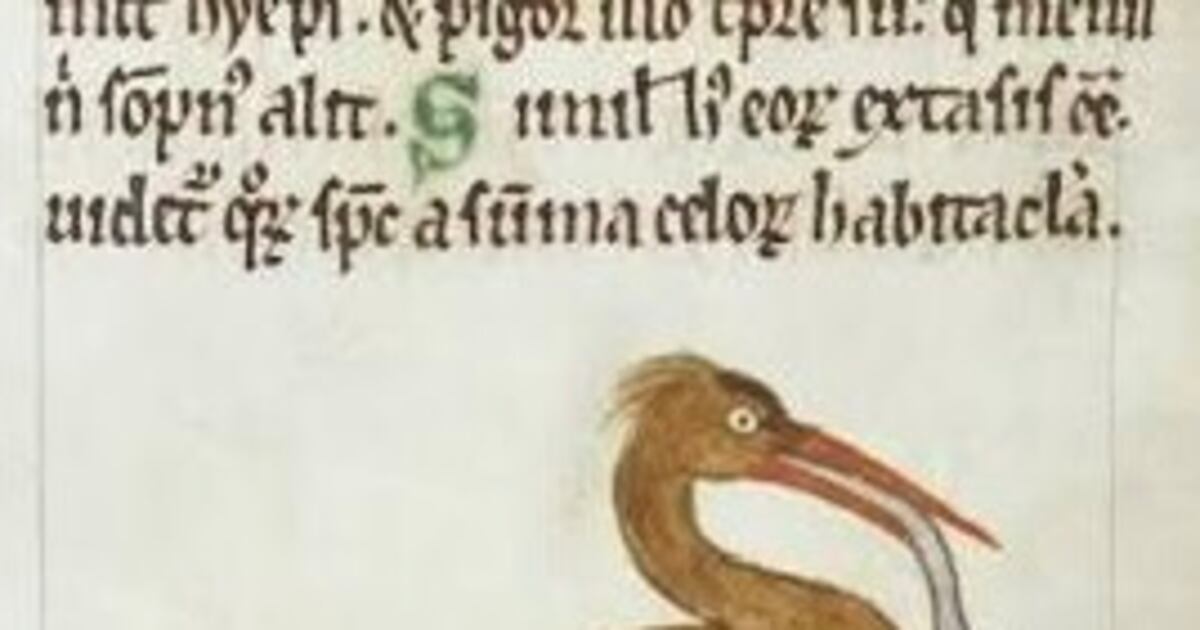
The question of whether the black stork was once indigenous to Ireland has captured the attention of researchers, notably Andrew Tighe, a biologist at University College Dublin (UCD). Tighe’s research, published in the recent edition of Irish Birds, an annual journal by BirdWatch Ireland, delves into the historical presence of this elusive migratory bird in the region.
Currently, the black stork is a rare visitor to Ireland, predominantly found across vast regions of Europe and Asia. These birds migrate south during winter, often taking indirect routes that allow them to soar on thermal air currents. Tighe’s paper suggests that historical accounts might indicate a past presence of the black stork in Ireland, drawing evidence from surprising sources.
Historical Insights from Giraldus Cambrensis
A key figure in Tighe’s research is Giraldus Cambrensis, also known as Gerald of Wales, who lived from 1146 to 1223. As an official historian during the Norman invasion, his work, Topographia Hiberniae, has long been regarded as a primary historical text about Ireland. While Cambrensis often portrayed the Irish as “barbarians,” he provided valuable observations about the native wildlife.
In his writings, Cambrensis noted that storks were “very seldom seen anywhere in Ireland,” but when they were, they were black. He accurately described their seasonal disappearance during winter, assuming they were hiding locally. His later edition, published in 1220, even included a drawing of a stork, which closely resembles the black stork, although its depiction appears faded to a brown hue.
Place Names and Cultural Significance
Beyond historical accounts, Tighe’s research posits that the black stork may also have influenced place names across Ireland. For instance, the Irish word “corr,” meaning crane, leads to several townlands named Corduff, particularly in counties Leitrim, Cavan, and Monaghan. Tighe suggests these names could be remnants of the black stork’s presence in dense woodlands that once characterized those areas.
While the theory is intriguing, some experts express skepticism regarding the etymology of these names. The word “corr” can also refer to a type of hill, which raises questions about the origins of Corduff. Local knowledge points to the topographical significance of the suffix “duff” or “dubh,” which historically indicated land characteristics. For instance, Art Agnew, a former neighbour, explained that land associated with “duff” was often north-facing and less fertile.
In light of these insights, the exploration of the black stork’s history in Ireland remains ongoing. As researchers like Tighe continue to unravel the connections between historical narratives and present-day wildlife, the mystery of these graceful birds adds another layer to Ireland’s rich ecological tapestry.
The ongoing investigation not only highlights the importance of historical documentation but also invites a broader discussion about conservation efforts and the potential for reintroducing species once native to the Irish landscape.

Donegal Eateries Win Prestigious Food Awards—Winners Announced!

Urgent Recall: Children’s Tableware Labeled Microwavable Unsafe

Flu Cases Surge in Ireland: Nine Dead and Hundreds Hospitalised

Eleanor McEvoy Reflects on Christmas Joy After Daughter’s Birth

Researchers Explore the Black Stork’s Possible Irish Origins

WPP Media Study Uncovers Challenges in Irish Language Advertising

FIFA Unveils Groups for 2026 World Cup in Washington Ceremony

Modi Hosts Putin in Delhi to Strengthen Bilateral Ties

Woodberry Grill at Arena7 Reopens for Christmas Lunches Dec 8!

Tributes Surge for 9-Year-Old Leon Briody After Cancer Battle

Aimee Osbourne Joins Family for Emotional Tribute to Ozzy

Danny Healy-Rae Considers Complaint After Altercation with Garda

Ireland Enjoys Summer Heat as Hurricane Erin Approaches Atlantic

Hawaii Commemorates 80 Years Since Hiroshima Bombing with Ceremony

Newcastle West Woman Patricia Foley Found Safe After Urgent Search

Fianna Fáil TDs Urgently Consider Maire Geoghegan-Quinn for Presidency

Couple Convicted of Murdering Two-Year-Old Grandson in Wales

Gaza Aid Distribution Tragedy: 20 Killed Amid Ongoing Violence
-
 Top Stories3 months ago
Tributes Surge for 9-Year-Old Leon Briody After Cancer Battle
-
 Entertainment4 months ago
Aimee Osbourne Joins Family for Emotional Tribute to Ozzy
-
 Politics4 months ago
Danny Healy-Rae Considers Complaint After Altercation with Garda
-
 Top Stories4 months ago
Ireland Enjoys Summer Heat as Hurricane Erin Approaches Atlantic
-
 World5 months ago
Hawaii Commemorates 80 Years Since Hiroshima Bombing with Ceremony
-
 Top Stories3 months ago
Newcastle West Woman Patricia Foley Found Safe After Urgent Search
-
 Top Stories5 months ago
Fianna Fáil TDs Urgently Consider Maire Geoghegan-Quinn for Presidency
-
 World5 months ago
Couple Convicted of Murdering Two-Year-Old Grandson in Wales
-
 World5 months ago
Gaza Aid Distribution Tragedy: 20 Killed Amid Ongoing Violence
-

 World5 months ago
Aristocrat Constance Marten and Partner Convicted of Infant Murder
-

 Top Stories4 months ago
Climbing Errigal: A Must-Do Summer Adventure in Donegal
-

 Top Stories4 months ago
Hike Donegal’s Errigal Mountain NOW for Unforgettable Summer Views