
Politics
When Boston Banned Christmas: A Historical Perspective

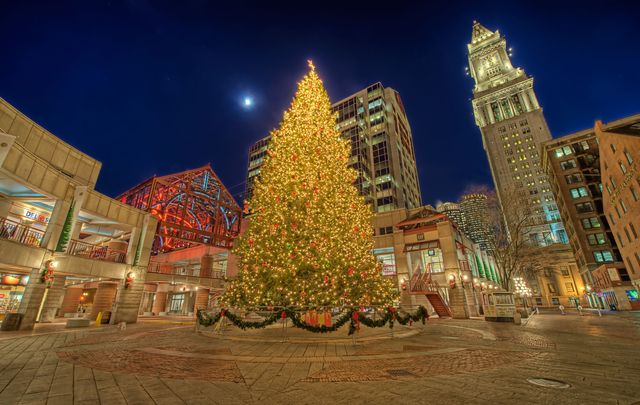
In a surprising chapter of American history, Christmas was officially banned in Boston from 1659 until 1681. During this period, celebrating the holiday, taking a day off work, or even wishing someone a Merry Christmas could result in a stiff fine of five shillings. This ban reflected the prevailing Puritan beliefs among the colony’s majority, who viewed Christmas as a fundamentally un-Christian celebration.
The roots of the prohibition lie in the stringent religious views held by the Puritans, who had settled in New England to escape the perceived excesses of the Church of England. They rejected the traditions associated with Christmas, which they considered to be deeply rooted in paganism. For the Puritans, the date of December 25 was not only unbiblical but also linked to the Roman festival of Saturnalia, a time associated with revelry and indulgence.
Religious Roots of the Ban
The Puritans firmly believed that there was no scriptural basis for celebrating the birth of Jesus on December 25. They objected to the celebration as a construct of the Catholic Church, established by Pope Julius I in the fourth century. The Puritan community maintained that the observance of Christmas was a distraction from true religious practice. Instead of feasting and merriment, they emphasized sobriety and reflection.
In addition to its religious implications, the holiday was seen as an opportunity for the lower classes to engage in disruptive behavior. The traditional practice of “wassailing,” where people went door-to-door requesting food and drink, was particularly contentious. Those who refused hospitality risked facing mischief from the revelers. This practice, viewed as a threat to social order, was one of the many reasons the Puritans sought to suppress Christmas celebrations.
Political Context and Resistance
The colonial population’s resentment towards the English Crown also played a significant role in the Christmas ban. By the late 1600s, tensions between the colonists and their government were escalating. Many New Englanders perceived Christmas as an imposition of English customs on their lives, contributing to their growing desire for independence. In a notable incident in 1686, Bostonians even attempted to overthrow an English governor who mandated the closure of shops and schools on Christmas Day.
Initially, the ban on Christmas enjoyed considerable support among Bostonians. The Puritan community viewed working on Christmas as a form of defiance against what they saw as foreign interference. However, the English government, seeking to uphold traditional customs, appointed governors sympathetic to English practices, which ultimately led to the lifting of the ban in 1681. Despite this, many Puritans continued to express their disapproval of the holiday, often marching in the streets on Christmas Eve and chanting, “No Christmas! No Christmas!”
As the years progressed, the social stigma surrounding Christmas gradually diminished, particularly as non-Puritan immigrants began to settle in the area. By the 19th century, Christmas celebrations had become more widespread across the United States. In regions outside the Puritan-dominated Northeast, colonists had celebrated the holiday since the early 1600s.
In 1870, President Ulysses S. Grant officially declared Christmas a national holiday. This shift was influenced in part by the publication of Charles Dickens’ “A Christmas Carol,” which rekindled interest in Christmas traditions and values.
The evolution of Christmas in America is a testament to the changing cultural landscape of the nation. From its suppression in Puritan Boston to its eventual recognition as a national holiday, the journey of Christmas reflects broader themes of religious freedom, cultural integration, and the quest for identity in a diverse society. Today, Christmas remains a widely celebrated occasion, embodying various traditions and meanings across different communities.

Israel Strikes Hezbollah in Lebanon Following Direct Talks

Man Appeals Conviction in Dublin Park Strangulation Case

Man Appeals Conviction for Attempted Strangulation in Dublin

Extended Christmas Public Transport Services Launch Across Dublin

George Clooney Reflects on Family and Directing in New Film

Empowering Teens: Transforming Anxiety into Self-Belief

RSA Urges Caution on E-Scooter Gifts for Children This Christmas

Inquiry Reveals Fisheries Agency Allowed False Insurance Claims

Urgent Warning: E-Scooters Top Cause of Child Brain Injuries

Tributes Surge for 9-Year-Old Leon Briody After Cancer Battle

Aimee Osbourne Joins Family for Emotional Tribute to Ozzy

Danny Healy-Rae Considers Complaint After Altercation with Garda

Ireland Enjoys Summer Heat as Hurricane Erin Approaches Atlantic

Hawaii Commemorates 80 Years Since Hiroshima Bombing with Ceremony

Newcastle West Woman Patricia Foley Found Safe After Urgent Search

Fianna Fáil TDs Urgently Consider Maire Geoghegan-Quinn for Presidency

Couple Convicted of Murdering Two-Year-Old Grandson in Wales

Gaza Aid Distribution Tragedy: 20 Killed Amid Ongoing Violence
-
 Top Stories3 months ago
Tributes Surge for 9-Year-Old Leon Briody After Cancer Battle
-
 Entertainment4 months ago
Aimee Osbourne Joins Family for Emotional Tribute to Ozzy
-
 Politics4 months ago
Danny Healy-Rae Considers Complaint After Altercation with Garda
-
 Top Stories4 months ago
Ireland Enjoys Summer Heat as Hurricane Erin Approaches Atlantic
-
 World5 months ago
Hawaii Commemorates 80 Years Since Hiroshima Bombing with Ceremony
-
 Top Stories3 months ago
Newcastle West Woman Patricia Foley Found Safe After Urgent Search
-
 Top Stories5 months ago
Fianna Fáil TDs Urgently Consider Maire Geoghegan-Quinn for Presidency
-
 World5 months ago
Couple Convicted of Murdering Two-Year-Old Grandson in Wales
-
 World5 months ago
Gaza Aid Distribution Tragedy: 20 Killed Amid Ongoing Violence
-

 World5 months ago
Aristocrat Constance Marten and Partner Convicted of Infant Murder
-

 Top Stories4 months ago
Climbing Errigal: A Must-Do Summer Adventure in Donegal
-

 Top Stories4 months ago
Hike Donegal’s Errigal Mountain NOW for Unforgettable Summer Views