
Politics
Zelenskyy Rejects Ceasefire That Leaves Ukraine Vulnerable to Russia

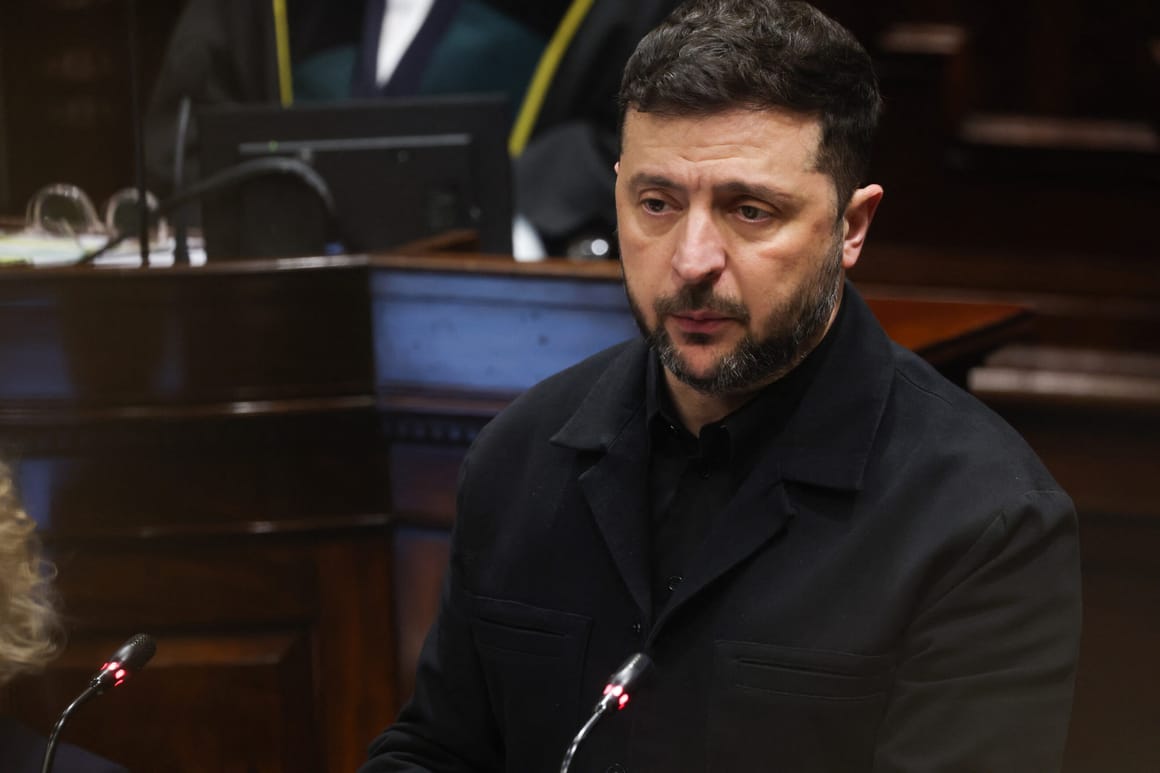
Ukrainian President Volodymyr Zelenskyy stated that Ukraine cannot accept any ceasefire agreement that would allow Russia to potentially launch a third invasion. This declaration came during his visit to Ireland, where he received strong support from Irish Taoiseach Micheál Martin. Zelenskyy emphasized that any truce must include robust security guarantees from the United States and European allies to prevent further aggression.
During a joint press conference in Dublin, Martin condemned Russian actions, highlighting the need for accountability for Vladimir Putin‘s regime. “Putin has shown a complete indifference to the value of human life and to international laws and norms,” Martin remarked, adding, “He must never be allowed to succeed.” Zelenskyy’s visit included a standing ovation from the Irish Parliament and meetings with Ireland’s newly elected President Catherine Connolly, who has been critical of NATO.
The visit coincided with renewed talks in Moscow involving Putin and U.S. special envoy Steve Witkoff. Zelenskyy confirmed he spoke with Witkoff on the same day and anticipated a follow-up call regarding the discussions. Despite these diplomatic efforts, Zelenskyy expressed skepticism about a swift resolution to the ongoing conflict, citing the need for guarantees to ensure that Russia would not return to its aggressive tactics.
“We have to stop the war in such a manner that in one year Russia would not come back with a third invasion,” he stated, referencing Russia’s earlier incursions into Crimea and eastern Ukraine, as well as its full-scale offensive that began in 2022.
Martin pointed out that any permanent ceasefire would necessitate that Russia faces significant consequences for its actions, particularly concerning the financial burden of Ukraine’s postwar reconstruction. He advocated for the European Commission’s proposal to utilize frozen Russian assets, which are primarily held in Belgium, to fund these efforts. Martin expressed hope that Belgium would reconsider its objections at the upcoming European Council meeting.
“When the U.N. charter is violated in such a brutal manner,” Martin said, “there has to be a deterrence of such behavior. There has to be some responsibility on the aggressor who has wreaked such devastation.” He emphasized the practical implications of Ukraine’s reconstruction, stating that the costs should not fall solely on European taxpayers, insisting that Europe did not instigate this war.
In a demonstration of solidarity, Ireland announced additional financial support for Ukraine during Zelenskyy’s visit. Martin signed an agreement committing €100 million for non-lethal military equipment, which includes resources for minefield clearance, and €25 million to assist in revitalizing Ukraine’s energy infrastructure. Despite being a non-NATO member with limited defense capabilities, Ireland has maintained its commitment to aid Ukraine.
Ireland currently hosts over 80,000 Ukrainian refugees, though it is facing increasing pressure regarding housing and welfare support amidst growing anti-immigrant sentiment. Zelenskyy acknowledged these challenges but expressed gratitude for the continued support from Ireland. “The question is not about the size of assistance. It’s about the choice,” he said, highlighting the importance of international solidarity in addressing the humanitarian crisis caused by the conflict.

Irish Stone Lifting Revolution Gains Momentum Amid Covid Recovery

Health Insurers Hike Prices Again; Average Premiums Near €2,000

Health Insurers Hike Prices Again: Average Premiums Soar 8%

Dublin Man Gets 20-Month Suspended Sentence for Money Laundering

Transforming Teen Anxiety: Building Self-Belief Through Experience

Helen Flanagan Dazzles in Red Lingerie Amid Online Criticism

Former Councillor Receives Suspended Sentence for Harassment

New Research Reveals Connection’s Role in Audio Consumption

Neville Critiques Manchester United’s Softness After West Ham Draw

Tributes Surge for 9-Year-Old Leon Briody After Cancer Battle

Aimee Osbourne Joins Family for Emotional Tribute to Ozzy

Danny Healy-Rae Considers Complaint After Altercation with Garda

Ireland Enjoys Summer Heat as Hurricane Erin Approaches Atlantic

Hawaii Commemorates 80 Years Since Hiroshima Bombing with Ceremony

Newcastle West Woman Patricia Foley Found Safe After Urgent Search

Fianna Fáil TDs Urgently Consider Maire Geoghegan-Quinn for Presidency

Couple Convicted of Murdering Two-Year-Old Grandson in Wales

Gaza Aid Distribution Tragedy: 20 Killed Amid Ongoing Violence
-
 Top Stories3 months ago
Tributes Surge for 9-Year-Old Leon Briody After Cancer Battle
-
 Entertainment4 months ago
Aimee Osbourne Joins Family for Emotional Tribute to Ozzy
-
 Politics4 months ago
Danny Healy-Rae Considers Complaint After Altercation with Garda
-
 Top Stories4 months ago
Ireland Enjoys Summer Heat as Hurricane Erin Approaches Atlantic
-
 World5 months ago
Hawaii Commemorates 80 Years Since Hiroshima Bombing with Ceremony
-
 Top Stories3 months ago
Newcastle West Woman Patricia Foley Found Safe After Urgent Search
-
 Top Stories5 months ago
Fianna Fáil TDs Urgently Consider Maire Geoghegan-Quinn for Presidency
-
 World5 months ago
Couple Convicted of Murdering Two-Year-Old Grandson in Wales
-
 World5 months ago
Gaza Aid Distribution Tragedy: 20 Killed Amid Ongoing Violence
-

 World5 months ago
Aristocrat Constance Marten and Partner Convicted of Infant Murder
-

 Top Stories4 months ago
Climbing Errigal: A Must-Do Summer Adventure in Donegal
-

 Top Stories4 months ago
Hike Donegal’s Errigal Mountain NOW for Unforgettable Summer Views