
Science
China Returns Experimental Lunar Soil Bricks from Space Mission

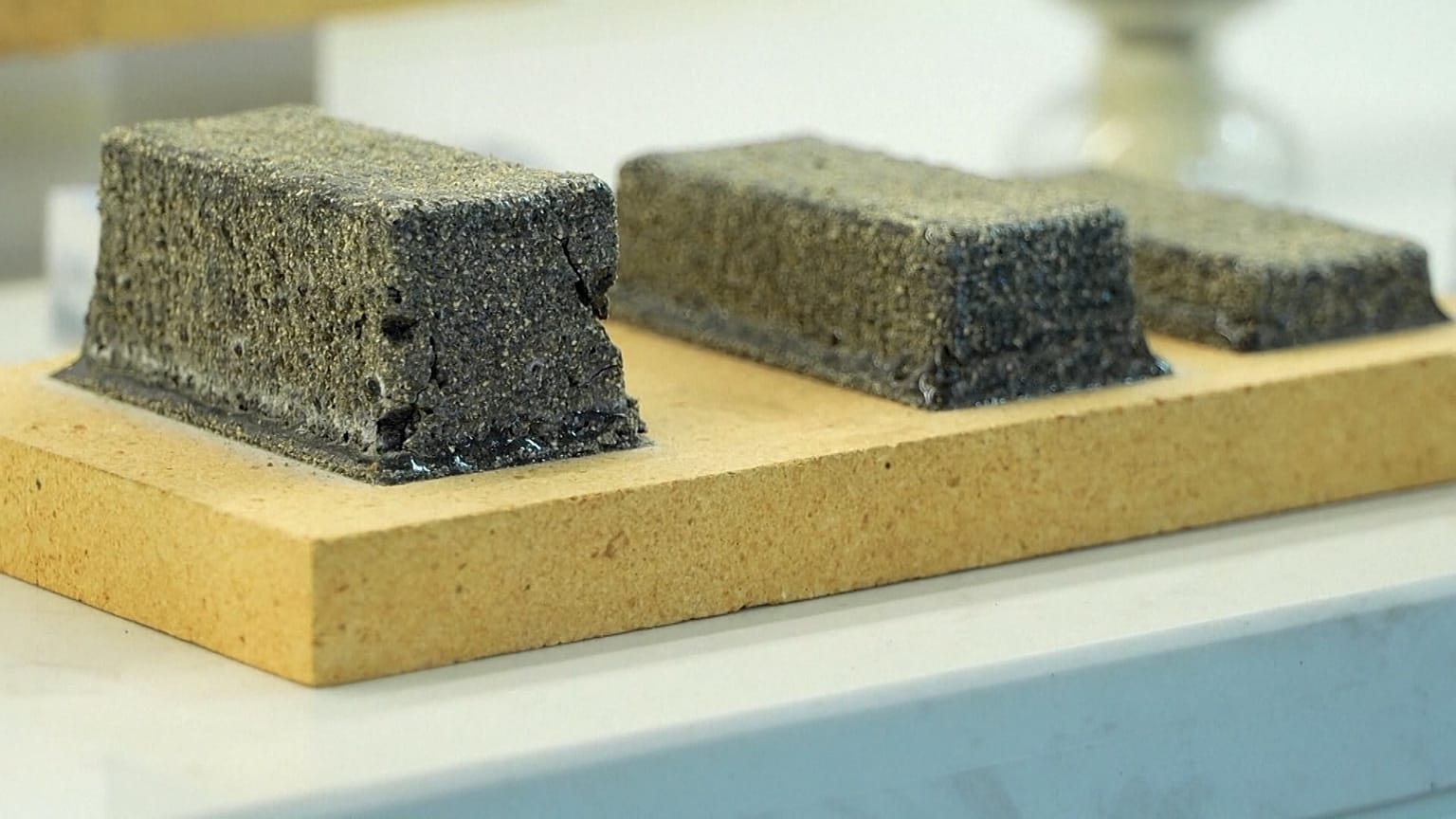
China has made significant strides toward its goal of establishing a permanent presence on the Moon. The first set of experimental lunar soil bricks has returned to Earth after a year in orbit aboard the Shenzhou-21 spacecraft. This mission, which included three astronauts completing a six-month journey, marks a pivotal step in developing infrastructure for lunar exploration.
Bricks Survive Harsh Space Conditions
The specially engineered bricks, designed to mimic the composition of lunar regolith, were recovered last week. Initial assessments indicate that they withstood the extreme conditions of space remarkably well. “Upon opening the lid, we found that the samples were in good condition. There were no dents, holes, or other visible defects that we thought they might have because of impacts by meteorites or space debris,” stated Zhou Yan, an associate professor at Huazhong University of Science and Technology in Wuhan.
Each of the 34 bricks, weighing approximately 100 grams, underwent a series of advanced manufacturing techniques, including hot pressing, electromagnetic induction, and microwave sintering. These methods enhanced their compressive strength to roughly three times that of typical bricks, making them more suitable for the harsh lunar environment.
Understanding Longevity and Performance
Researchers are particularly interested in how these bricks will age over time. “Some of the samples that we sent into space were complete, while some had 45-degree symmetrical seams that we made in advance. By doing so, we wanted to see what changes they will undergo in terms of their mechanical properties after a year on the space station,” explained Qin Yiheng, a graduate student involved in the project.
This investigation will not only assess mechanical strength but also evaluate thermal behaviour and radiation resistance after extended exposure to space conditions. A parallel control group on Earth will allow scientists to compare the effects of the lunar environment against those on Earth, helping to establish a comprehensive understanding of how these materials perform over time.
“After the return of the third batch of samples, based on more horizontal comparisons, we may be able to discover a pattern and ultimately build a model, so that we can predict what they will look like after five, 10, or 20 years of service,” Zhou added.
China’s lunar programme aims to land astronauts on the Moon by 2030 and construct a basic version of its planned International Lunar Research Station by 2035. To achieve these goals, the country plans to leverage in-situ resources, such as lunar soil and surface minerals, to minimize the costs associated with transporting materials from Earth.
The successful return of these experimental bricks not only brings China closer to its ambitious lunar objectives but also contributes to the broader understanding of construction materials suited for extraterrestrial environments. As research progresses, the implications for future lunar infrastructure development become increasingly promising.

Urgent Fire Erupts in Edenderry, Co Offaly; Fears of Trapped Residents

Limerick Farmer Eamonn Sheehan, 58, Dies in Tragic Accident

Senator Demands Emergency Meeting After Drones Disrupt Zelensky Visit

HSE Issues Apology After Wrongful Diagnosis Leads to Termination

Maximize Your 20 Days of Annual Leave for Extended Breaks in 2026

March Reopening of Bray to Greystones Cliff Walk Faces Challenges

WPP Media Reveals Key Insights on Irish Language Advertising

Mo Salah Criticizes Liverpool Management Amid Exit Speculation

Israel Set for Eurovision 2026 After Vote Withdrawal by Broadcasters

Tributes Surge for 9-Year-Old Leon Briody After Cancer Battle

Aimee Osbourne Joins Family for Emotional Tribute to Ozzy

Danny Healy-Rae Considers Complaint After Altercation with Garda

Ireland Enjoys Summer Heat as Hurricane Erin Approaches Atlantic

Hawaii Commemorates 80 Years Since Hiroshima Bombing with Ceremony

Newcastle West Woman Patricia Foley Found Safe After Urgent Search

Fianna Fáil TDs Urgently Consider Maire Geoghegan-Quinn for Presidency

Couple Convicted of Murdering Two-Year-Old Grandson in Wales

Gaza Aid Distribution Tragedy: 20 Killed Amid Ongoing Violence
-
 Top Stories3 months ago
Tributes Surge for 9-Year-Old Leon Briody After Cancer Battle
-
 Entertainment4 months ago
Aimee Osbourne Joins Family for Emotional Tribute to Ozzy
-
 Politics4 months ago
Danny Healy-Rae Considers Complaint After Altercation with Garda
-
 Top Stories4 months ago
Ireland Enjoys Summer Heat as Hurricane Erin Approaches Atlantic
-
 World5 months ago
Hawaii Commemorates 80 Years Since Hiroshima Bombing with Ceremony
-
 Top Stories3 months ago
Newcastle West Woman Patricia Foley Found Safe After Urgent Search
-
 Top Stories5 months ago
Fianna Fáil TDs Urgently Consider Maire Geoghegan-Quinn for Presidency
-
 World5 months ago
Couple Convicted of Murdering Two-Year-Old Grandson in Wales
-
 World5 months ago
Gaza Aid Distribution Tragedy: 20 Killed Amid Ongoing Violence
-

 World5 months ago
Aristocrat Constance Marten and Partner Convicted of Infant Murder
-

 Top Stories4 months ago
Climbing Errigal: A Must-Do Summer Adventure in Donegal
-

 Top Stories4 months ago
Hike Donegal’s Errigal Mountain NOW for Unforgettable Summer Views