
Science
Scholars Challenge Popular Beliefs About Vikings and Their Culture

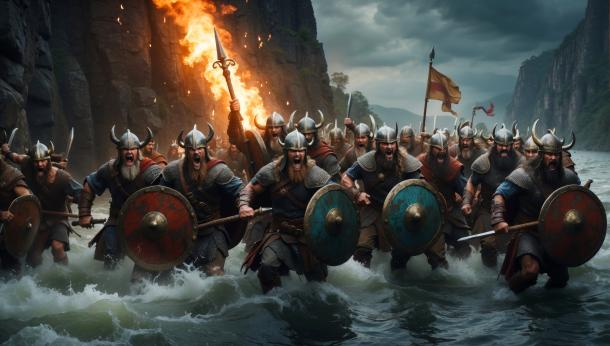
Recent research from the University of Münster has cast doubt on widely held beliefs about Vikings, revealing that much of what modern audiences perceive is rooted in medieval fiction rather than historical fact. Scholars at the university’s Cluster of Excellence “Religion and Politics” argue that the romanticized image of Norse warriors and their pagan mythology lacks scientific verification.
Roland Scheel, a leading Scandinavian scholar involved in the research, highlighted the limitations of existing primary sources. Most written records about the Viking Age were penned by Christian scholars long after the era had concluded, primarily over a century later. The absence of contemporary accounts means that our understanding of this period is largely shaped by what Scheel describes as “memorialized history.”
Historical Context and Documentation Limitations
The Viking Age, which lasted from approximately 793 to 1066 CE, is often depicted through tales of fierce warriors and mythical gods. However, the research team at the University of Münster underscores that aside from brief runic inscriptions, no written texts from the period itself have survived. This gap in documentation raises critical questions about the accuracy of Viking narratives that have persisted through centuries.
According to Scheel, the narratives constructed by later writers were influenced by their Christian beliefs and agendas, which often distorted the realities of Viking life and culture. These medieval accounts contributed to a skewed perception of the Norse civilization, emphasizing violence and barbarism, while neglecting aspects of their social structure, trade, and cultural achievements.
The team’s findings encourage a reassessment of how Viking history is taught and understood today. By examining the origins of these narratives, scholars aim to provide a clearer picture of the Viking Age that aligns more closely with archaeological evidence and historical analysis.
Implications for Viking Studies
The implications of this research are significant for both academics and enthusiasts of Viking culture. As interest in Norse mythology and Viking heritage continues to grow, the need for accurate historical representation becomes increasingly vital. By challenging long-held beliefs, scholars like Scheel advocate for a more nuanced understanding of Viking society that recognizes its complexities.
This research not only affects the academic community but also influences popular culture, where Viking imagery has been prominently featured in literature, film, and television. As audiences engage with these representations, the distinction between fact and fiction becomes increasingly important.
The work conducted at the University of Münster serves as a reminder that our understanding of history is often shaped by the perspectives of those who document it. As such, it may be time to revisit the narratives surrounding the Vikings and consider how they have been influenced by the biases of later interpreters.
As the study of Vikings evolves, it invites both scholars and the public to explore the realities of this fascinating civilization, encouraging a deeper appreciation for its historical significance. The ongoing research at the Cluster of Excellence “Religion and Politics” stands as a pivotal step in redefining the legacy of the Vikings, steering the narrative away from medieval fantasy towards a more accurate historical account.

Urgent: University Hospital Galway Faces Flu Surge, Issues Warning

Stars Gather to Celebrate Life of Hugh Wallace at Funeral

Donegal Secures Over €300,000 for Local Enhancement Programme 2026

Friends and Stars Pay Tribute to Hugh Wallace at Heartfelt Funeral

Young Woman Confronts Tongue Cancer and Transforms Life Outlook

Architect Hugh Wallace Remembered as Charismatic Leader

Trump’s Popularity Surges in Italy, Stumbles in Denmark

Donegal Secures Over €300,000 in Urgent Local Enhancement Fund

Justice Minister O’Callaghan Launches €2 Million Electronic Tagging Trial

Tributes Surge for 9-Year-Old Leon Briody After Cancer Battle

Aimee Osbourne Joins Family for Emotional Tribute to Ozzy

Danny Healy-Rae Considers Complaint After Altercation with Garda

Ireland Enjoys Summer Heat as Hurricane Erin Approaches Atlantic

Hawaii Commemorates 80 Years Since Hiroshima Bombing with Ceremony

Newcastle West Woman Patricia Foley Found Safe After Urgent Search

Fianna Fáil TDs Urgently Consider Maire Geoghegan-Quinn for Presidency

Couple Convicted of Murdering Two-Year-Old Grandson in Wales

Gaza Aid Distribution Tragedy: 20 Killed Amid Ongoing Violence
-
 Top Stories3 months ago
Tributes Surge for 9-Year-Old Leon Briody After Cancer Battle
-
 Entertainment4 months ago
Aimee Osbourne Joins Family for Emotional Tribute to Ozzy
-
 Politics4 months ago
Danny Healy-Rae Considers Complaint After Altercation with Garda
-
 Top Stories4 months ago
Ireland Enjoys Summer Heat as Hurricane Erin Approaches Atlantic
-
 World5 months ago
Hawaii Commemorates 80 Years Since Hiroshima Bombing with Ceremony
-
 Top Stories3 months ago
Newcastle West Woman Patricia Foley Found Safe After Urgent Search
-
 Top Stories5 months ago
Fianna Fáil TDs Urgently Consider Maire Geoghegan-Quinn for Presidency
-
 World5 months ago
Couple Convicted of Murdering Two-Year-Old Grandson in Wales
-
 World5 months ago
Gaza Aid Distribution Tragedy: 20 Killed Amid Ongoing Violence
-

 World5 months ago
Aristocrat Constance Marten and Partner Convicted of Infant Murder
-

 Top Stories4 months ago
Climbing Errigal: A Must-Do Summer Adventure in Donegal
-

 Top Stories4 months ago
Hike Donegal’s Errigal Mountain NOW for Unforgettable Summer Views