
Top Stories
Drones Threaten Security During Zelenskiy’s Visit to Ireland

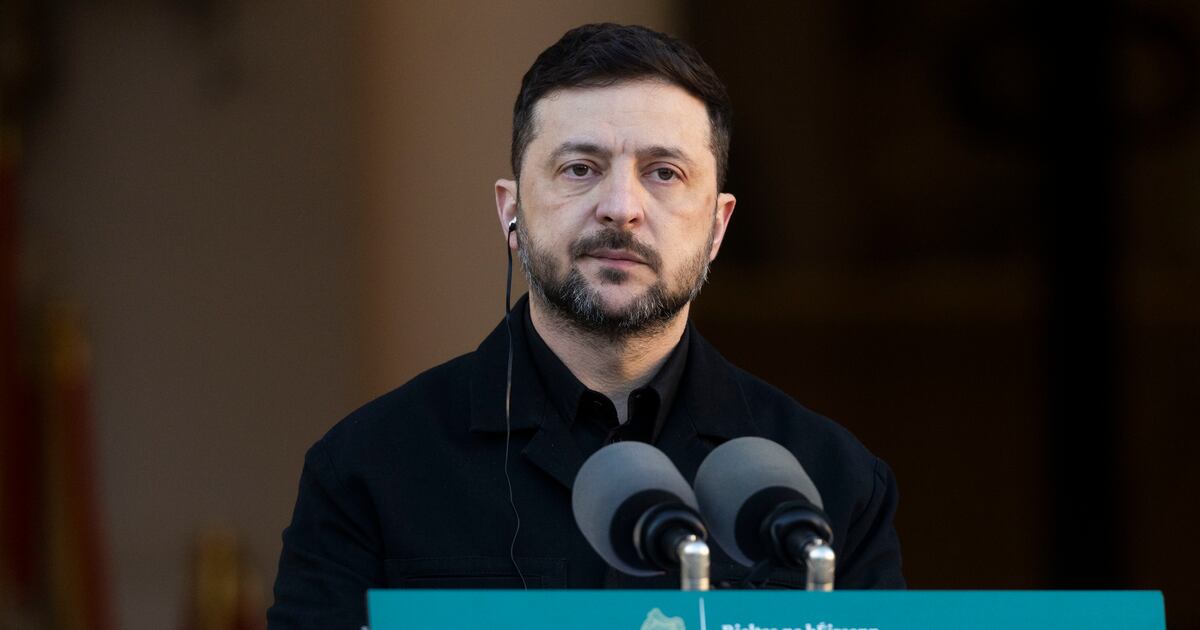
Multiple drones appeared off the coast of Ireland as Ukrainian President Volodymyr Zelenskiy arrived on March 9, 2024, raising alarms about a potential coordinated threat to European security. The presence of these unmanned aerial vehicles shortly before Zelenskiy’s landing has prompted concerns regarding the State’s ability to manage foreign interference. Minister for Justice Jim O’Callaghan stated that the drones were not operated by casual hobbyists but were part of a more significant, organized threat.
The drones reportedly flew into the path of Zelenskiy’s aircraft approximately 13 nautical miles off the coast, triggering immediate security investigations. Commenting on the incident, O’Callaghan emphasized the seriousness of the situation, saying, “We think this is part of a coordinated threat to EU and Ukrainian interests.” He indicated that the operations were likely designed to exert pressure on both the European Union and Ukraine.
The Irish Naval Service ship LE William Butler Yeats captured footage of the drones during the incident, which has raised questions about the adequacy of Ireland’s defense capabilities. This event comes as Ireland prepares to assume the presidency of the EU Council in six months, which will involve hosting high-level international meetings.
The emergence of drones as a disruptive force is not confined to Ireland; similar incidents have occurred in various European capitals, necessitating the temporary closure of major airports. Observers suspect that Russia may be behind these drone activities, aiming to undermine pro-Ukrainian governments and create embarrassment for EU nations.
O’Callaghan praised the efforts of An Garda Síochána, the national police service, for their effective management of security during Zelenskiy’s visit. “There’s an investigation ongoing in respect of the presence of drones out in Dublin Bay,” he noted, underscoring that the issue extends beyond Ireland to the broader European context. He acknowledged that the rise of drone technology poses new security challenges across the EU.
Looking ahead, the Irish government is expected to announce plans for a significant investment in defense, amounting to €1.7 billion under a revised National Development Plan. This budget is set to cover defense equipment and infrastructure improvements through 2030, with approximately €300 million allocated for the upcoming year. Among the initiatives is a commitment to invest between €15 million and €17 million in technology focused on tracking and intercepting drones, marking the start of a comprehensive military radar program anticipated to be the most costly defense project in Irish history.
O’Callaghan acknowledged the importance of enhancing the Defense Forces’ capabilities to counteract malicious drone activities, especially in light of recent events. His remarks came during a meeting in Brussels with other EU justice ministers to discuss migration policy, highlighting that security concerns are increasingly intertwined with broader geopolitical issues.
The situation underscores the urgent need for European nations to bolster their defense strategies against emerging threats, as the use of drones continues to evolve and pose challenges to national security across the continent.

Instagram Orders US Employees Back to Office Full-Time by February

Storm Bram Triggers Urgent Status Orange Wind Warning for Limerick

Urgent: Glenamaddy Ulster Bank Accommodation Plans REJECTED

Urgent Appeal for Witnesses After Cyclist Strikes Pedestrian in Fermanagh

Lando Norris Crowned F1 World Champion After Thrilling Race

Thailand Strikes Cambodian Military Amid Escalating Border Tensions

Drones Threaten Security During Zelenskiy’s Visit to Ireland

Wrightbus Welcomes New CEO Axel J. Maschka to Lead Expansion

Paudie Moloney Joins 2026 Dancing with the Stars Line-Up

Tributes Surge for 9-Year-Old Leon Briody After Cancer Battle

Aimee Osbourne Joins Family for Emotional Tribute to Ozzy

Danny Healy-Rae Considers Complaint After Altercation with Garda

Ireland Enjoys Summer Heat as Hurricane Erin Approaches Atlantic

Hawaii Commemorates 80 Years Since Hiroshima Bombing with Ceremony

Newcastle West Woman Patricia Foley Found Safe After Urgent Search

Fianna Fáil TDs Urgently Consider Maire Geoghegan-Quinn for Presidency

Couple Convicted of Murdering Two-Year-Old Grandson in Wales

Gaza Aid Distribution Tragedy: 20 Killed Amid Ongoing Violence
-
 Top Stories3 months ago
Tributes Surge for 9-Year-Old Leon Briody After Cancer Battle
-
 Entertainment4 months ago
Aimee Osbourne Joins Family for Emotional Tribute to Ozzy
-
 Politics4 months ago
Danny Healy-Rae Considers Complaint After Altercation with Garda
-
 Top Stories4 months ago
Ireland Enjoys Summer Heat as Hurricane Erin Approaches Atlantic
-
 World5 months ago
Hawaii Commemorates 80 Years Since Hiroshima Bombing with Ceremony
-
 Top Stories3 months ago
Newcastle West Woman Patricia Foley Found Safe After Urgent Search
-
 Top Stories5 months ago
Fianna Fáil TDs Urgently Consider Maire Geoghegan-Quinn for Presidency
-
 World5 months ago
Couple Convicted of Murdering Two-Year-Old Grandson in Wales
-
 World5 months ago
Gaza Aid Distribution Tragedy: 20 Killed Amid Ongoing Violence
-

 World5 months ago
Aristocrat Constance Marten and Partner Convicted of Infant Murder
-

 Top Stories4 months ago
Climbing Errigal: A Must-Do Summer Adventure in Donegal
-

 Top Stories4 months ago
Hike Donegal’s Errigal Mountain NOW for Unforgettable Summer Views