
Top Stories
G20 Summit Diverted by Ukraine Peace Proposal from Trump

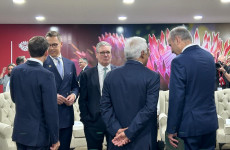
The G20 summit held in Johannesburg this weekend was intended as a platform for South Africa and its Global South allies to propose a new approach to global issues. However, discussions soon shifted focus when former US President Donald Trump unveiled a controversial 28-point proposal aimed at ending the ongoing conflict in Ukraine, drawing attention away from the summit’s original agenda.
Trump, who had chosen to boycott the summit, announced his plan which has received a mixed response. The proposal suggests significant concessions from Ukraine, including territorial compromises, a reduction in military capacity, and a pledge against joining NATO. Vladimir Putin, the President of Russia, welcomed the plan, while Volodymyr Zelenskyy, President of Ukraine, expressed strong opposition. Analysts are questioning Trump’s motives, speculating whether he intends to challenge the collective diplomatic efforts of world leaders by presenting a unilateral solution to the crisis.
As news of the proposal spread, leaders at the summit began informal discussions to formulate counter-proposals ahead of Trump’s deadline for Ukraine to respond by Thursday. A photograph of the meeting captured leaders seated in a circle, including Keir Starmer, the Prime Minister of the UK, alongside Friedrich Merz of Germany and Emmanuel Macron of France, who was flanked by Ursula von der Leyen, President of the European Commission, and Giorgia Meloni, Prime Minister of Italy.
Among the attendees was Micheál Martin, the Taoiseach of Ireland, who remarked on the urgent need for a unified response to Trump’s plan. The outcome of the leaders’ meeting was a statement indicating that Trump’s proposal “required additional work,” reflecting a cautious approach. Following the discussions, leaders including Starmer and Macron took to social media to express solidarity with Ukraine, echoing a sense of urgency as they navigated the evolving geopolitical landscape.
Despite the diversion caused by Trump’s announcement, discussions surrounding Ukraine were not entirely sidelined during the summit. Calls for peace in Ukraine, as well as in Gaza and Sudan, resonated throughout the sessions. In his closing remarks, South African President Cyril Ramaphosa emphasized the necessity of ending all conflicts, underlining the summit’s broader themes.
In an interview with The Journal, Martin noted the swift response from the coalition of leaders present, asserting that the emergence of Trump’s plan did not detract from the core objectives of the summit. He emphasized that the divide between the Global North and South may not be as pronounced as perceived, advocating for the use of global financial institutions to foster equality and sustainable development.
One of the key issues highlighted at the G20 was debt reform, which emerged as a significant topic overshadowing even climate change discussions. African nations are expected to incur nearly $89 billion in debt servicing this year, a burden that stifles their developmental ambitions. In the final declaration, leaders acknowledged high debt levels as an “obstacle to inclusive growth,” recognizing its detrimental impact on infrastructure investment.
Martin characterized the heightened focus on debt restructuring as a pivotal achievement for South Africa’s presidency of the G20. Elissa Mionle, an analyst with Devrex, noted that the issue of debt has increasingly burdened developing nations, particularly in Africa, where high borrowing costs hinder essential services like education and healthcare.
As Cyril Ramaphosa concluded the summit, he urged fellow leaders to prioritize debt reform and to enhance climate finance initiatives to mitigate the catastrophic impacts of climate change. He stressed the importance of these measures for global stability and security, particularly in a world where millions lack basic access to resources like clean water and energy.
The G20 summit, while momentarily overshadowed by Trump’s Ukraine proposal, highlighted critical issues facing developing countries and underscored the need for cooperative solutions to achieve sustainable growth and stability.

Urgent Weather Warnings: Hail, Thunder, and Flooding Expected

Festive Preparations Begin as Families Tackle Holiday Tasks

Kilkenny Greenway Projects Set for Major Progress in 2026

RTE’s Late Late Toy Show Delights Viewers with Heartwarming Moments

Expert Warns Christmas Trees May Trigger Skin Irritation

Embracing Festive Preparations Amid Home Renovations

Kaja Kallas Defends EU Unity Amid Trump’s Criticism at Doha Forum

Ulster Championship Results: Dramatic Matches Unfold Today

Urgent Warning: Christmas Trees Linked to Skin Irritation Risk

Tributes Surge for 9-Year-Old Leon Briody After Cancer Battle

Aimee Osbourne Joins Family for Emotional Tribute to Ozzy

Danny Healy-Rae Considers Complaint After Altercation with Garda

Ireland Enjoys Summer Heat as Hurricane Erin Approaches Atlantic

Hawaii Commemorates 80 Years Since Hiroshima Bombing with Ceremony

Newcastle West Woman Patricia Foley Found Safe After Urgent Search

Fianna Fáil TDs Urgently Consider Maire Geoghegan-Quinn for Presidency

Couple Convicted of Murdering Two-Year-Old Grandson in Wales

Gaza Aid Distribution Tragedy: 20 Killed Amid Ongoing Violence
-
 Top Stories3 months ago
Tributes Surge for 9-Year-Old Leon Briody After Cancer Battle
-
 Entertainment4 months ago
Aimee Osbourne Joins Family for Emotional Tribute to Ozzy
-
 Politics4 months ago
Danny Healy-Rae Considers Complaint After Altercation with Garda
-
 Top Stories4 months ago
Ireland Enjoys Summer Heat as Hurricane Erin Approaches Atlantic
-
 World5 months ago
Hawaii Commemorates 80 Years Since Hiroshima Bombing with Ceremony
-
 Top Stories3 months ago
Newcastle West Woman Patricia Foley Found Safe After Urgent Search
-
 Top Stories5 months ago
Fianna Fáil TDs Urgently Consider Maire Geoghegan-Quinn for Presidency
-
 World5 months ago
Couple Convicted of Murdering Two-Year-Old Grandson in Wales
-
 World5 months ago
Gaza Aid Distribution Tragedy: 20 Killed Amid Ongoing Violence
-

 World5 months ago
Aristocrat Constance Marten and Partner Convicted of Infant Murder
-

 Top Stories4 months ago
Climbing Errigal: A Must-Do Summer Adventure in Donegal
-

 Top Stories4 months ago
Hike Donegal’s Errigal Mountain NOW for Unforgettable Summer Views