
World
Bangladesh Faces Climate Crisis as Rising Waters Displace Thousands

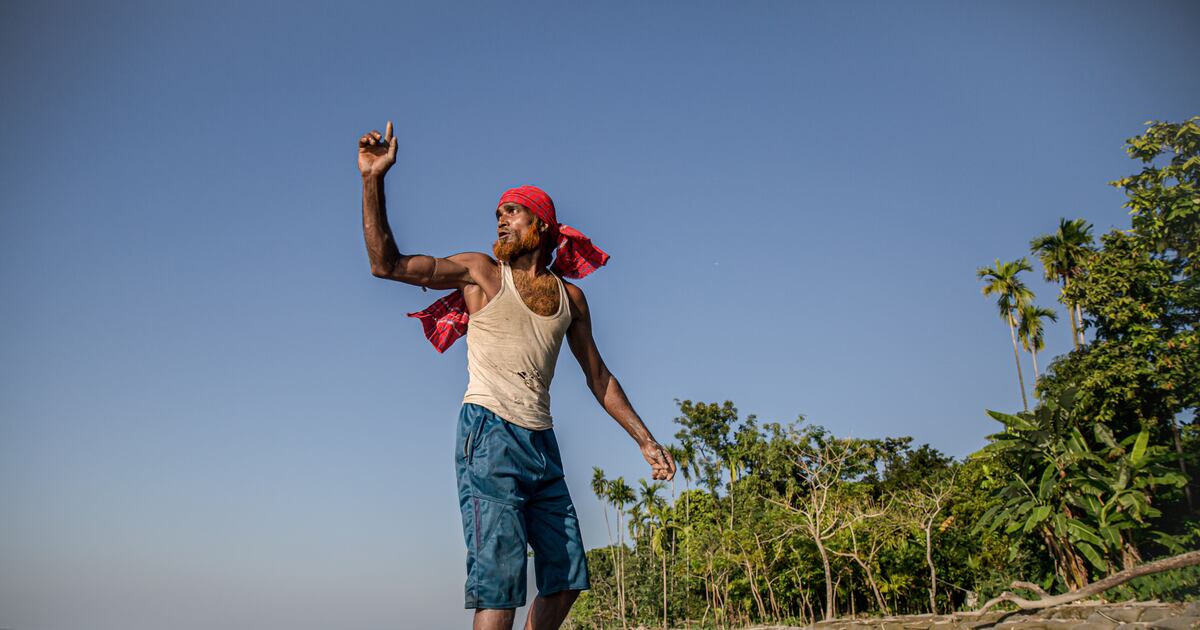
Residents of Bangladesh’s southern region are grappling with the devastating impacts of climate change as rising waters displace thousands of families. In the coastal district of Bhola, an area known for its intricate network of rivers, the effects of erosion and flooding have forced many to abandon their homes, leaving them vulnerable and uncertain about their futures.
Abdul Gani, a 69-year-old fisherman, recalls the moment his life was turned upside down three years ago when his home was swept away. Standing at the bow of his fishing boat, he pointed to the locations where his neighbours once lived. “We don’t have any words to describe it,” he said, reflecting on the loss experienced by countless families in the area. The water, he noted, seemed to “suddenly suck the land out from under us,” forcing residents to flee with little more than their children and some personal belongings.
Bhola Island, where the highest point measures just 1.8 meters above sea level, is often referred to as climate change’s “ground zero.” Despite efforts to combat the rising waters through government-issued sandbags and stone blocks, residents believe these measures are insufficient. The World Bank has highlighted that approximately half of Bangladesh’s workforce is employed in agriculture, yet by 2050, a third of the country’s agricultural GDP could be lost due to extreme weather events and climate variability. This could result in 13.3 million people becoming internal migrants.
The human impact of this crisis is stark. Many families from Bhola have migrated to cities in search of better opportunities. Gani noted that ten families he knew had moved, but life in the urban areas has not been easy. A 70-year-old man, who asked to remain anonymous, shared his story of displacement nearly 40 years ago. He now runs a rickshaw-renting business in Dhaka’s Korail slum, highlighting the long-term effects of climate-induced migration.
Others, like Mohammed Nasiur Rahaman Shipu, a journalist, frequently travel between Bhola and Dhaka. He described the harrowing realities faced by families in the region, particularly during the monsoon season. Shipu emphasized the growing unpredictability of weather patterns, stating, “Suddenly, the storm comes,” and the consequences can be devastating. Women, children, and the elderly are often the most affected, as they struggle to survive in the face of relentless river currents.
Academic studies support Shipu’s concerns, indicating that between 1,235 and 2,471 acres of land are lost each year due to erosion, with rates reaching up to 120 meters along the shore. While some new landmasses appear through accretion, they do so at a much slower rate, leaving the population increasingly vulnerable.
At Bhola’s largest fish market, the impact of climate change is evident as fishermen contend with the challenges of overfishing and extreme weather. Captain Mohammed Faruk, 42, shared that the crew often travels further to catch enough fish, risking their lives in the process. “Fifty fishers from Bhola die in storms each year,” he reported, underscoring the dangerous conditions they face on the water.
The emotional toll of climate change is palpable. Mafia Khatun, a woman in her 50s, described her anguish over her son Mizan, who has been missing for two months after a storm capsized his boat. Despite promises of compensation from the boat owner, her family remains without support as they grapple with the loss and the uncertainty of their future.
Disasters have plagued Bhola for decades. The infamous 1950 Bhola Cyclone claimed up to half a million lives, while devastating floods in 1995 left countless people homeless. Yet, residents like farmer Lakshmi Rani express a deep-rooted connection to their land. Rani, who has experienced numerous displacements, lamented that while storms were once infrequent, they now occur almost annually.
She remains determined to stay in Bhola, stating, “We’re born here, we live here, we’ll die here.” Her commitment reflects a broader sentiment among locals who are fighting to preserve their way of life against the relentless forces of nature.
As climate change continues to wreak havoc, the situation in Bangladesh serves as a stark reminder of the urgent need for global action to address environmental challenges. The resilience of the people of Bhola underscores the human cost of climate inaction and the pressing need for comprehensive strategies to support vulnerable communities.

Irish Stone Lifting Revolution Gains Momentum Amid Covid Recovery

Health Insurers Hike Prices Again; Average Premiums Near €2,000

Health Insurers Hike Prices Again: Average Premiums Soar 8%

Dublin Man Gets 20-Month Suspended Sentence for Money Laundering

Transforming Teen Anxiety: Building Self-Belief Through Experience

Helen Flanagan Dazzles in Red Lingerie Amid Online Criticism

Former Councillor Receives Suspended Sentence for Harassment

New Research Reveals Connection’s Role in Audio Consumption

Neville Critiques Manchester United’s Softness After West Ham Draw

Tributes Surge for 9-Year-Old Leon Briody After Cancer Battle

Aimee Osbourne Joins Family for Emotional Tribute to Ozzy

Danny Healy-Rae Considers Complaint After Altercation with Garda

Ireland Enjoys Summer Heat as Hurricane Erin Approaches Atlantic

Hawaii Commemorates 80 Years Since Hiroshima Bombing with Ceremony

Newcastle West Woman Patricia Foley Found Safe After Urgent Search

Fianna Fáil TDs Urgently Consider Maire Geoghegan-Quinn for Presidency

Couple Convicted of Murdering Two-Year-Old Grandson in Wales

Gaza Aid Distribution Tragedy: 20 Killed Amid Ongoing Violence
-
 Top Stories3 months ago
Tributes Surge for 9-Year-Old Leon Briody After Cancer Battle
-
 Entertainment4 months ago
Aimee Osbourne Joins Family for Emotional Tribute to Ozzy
-
 Politics4 months ago
Danny Healy-Rae Considers Complaint After Altercation with Garda
-
 Top Stories4 months ago
Ireland Enjoys Summer Heat as Hurricane Erin Approaches Atlantic
-
 World5 months ago
Hawaii Commemorates 80 Years Since Hiroshima Bombing with Ceremony
-
 Top Stories3 months ago
Newcastle West Woman Patricia Foley Found Safe After Urgent Search
-
 Top Stories5 months ago
Fianna Fáil TDs Urgently Consider Maire Geoghegan-Quinn for Presidency
-
 World5 months ago
Couple Convicted of Murdering Two-Year-Old Grandson in Wales
-
 World5 months ago
Gaza Aid Distribution Tragedy: 20 Killed Amid Ongoing Violence
-

 World5 months ago
Aristocrat Constance Marten and Partner Convicted of Infant Murder
-

 Top Stories4 months ago
Climbing Errigal: A Must-Do Summer Adventure in Donegal
-

 Top Stories4 months ago
Hike Donegal’s Errigal Mountain NOW for Unforgettable Summer Views