
World
Rare Fabergé Egg Fetches €26 Million at London Auction

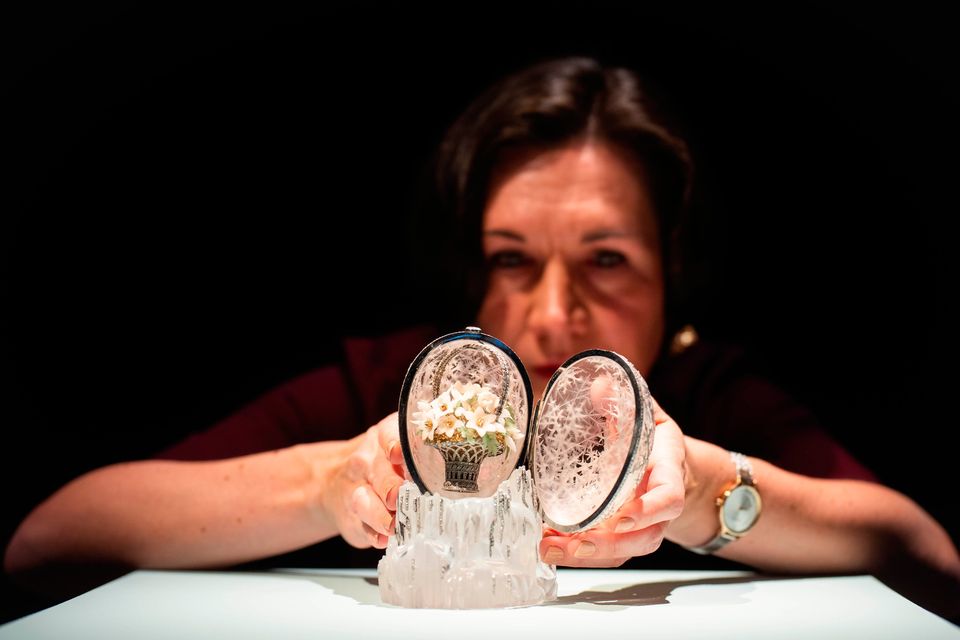
A remarkable Fabergé egg, known as the Winter Egg, has set a record at auction by selling for an astonishing €26 million. This exquisite piece, crafted for Russia’s imperial family in 1913, was sold at Christie’s auction house in London, surpassing its pre-sale estimate of £20 million. The sale highlights the enduring allure of Fabergé’s creations, which remain a symbol of opulence and craftsmanship.
The Winter Egg, measuring just 10 centimeters tall, is made from intricately carved rock crystal and adorned with a delicate snowflake design in platinum, complemented by 4,500 diamonds. The egg opens to reveal an enchanting basket of quartz flowers, symbolizing the arrival of spring. This stunning piece is one of only seven remaining in private collections, as stated by Christie’s, making its sale particularly significant.
Previously, the record for a Fabergé egg was set in 2007, when another egg sold for $18.5 million at a Christie’s auction, originally commissioned by the Rothschild banking family. Margo Oganesian, head of Christie’s Russian art department, referred to the Winter Egg as the “Mona Lisa for decorative arts,” emphasizing its unparalleled craftsmanship and design.
Czar Nicholas II commissioned the Winter Egg as an Easter gift for his mother, Dowager Empress Maria Feodorovna, who was a significant figure in the Russian Empire. This piece was one of two eggs designed by female artist Alma Pihl, with the other egg currently belonging to the British royal family. The tradition of gifting Fabergé eggs began with Czar Alexander III, who presented an egg to his wife each Easter, a practice that continued under Nicholas II.
The Romanov dynasty, which ruled Russia for over 300 years, came to a tragic end following the revolution of 1917. The family was executed in 1918, and many of their treasures were sold off in the years that followed. The Winter Egg was purchased by a London dealer for £450 during the 1920s, when the Communist authorities sought to liquidate some of Russia’s artistic treasures.
After being lost for two decades, the egg made its reappearance at a Christie’s auction in 1994, fetching more than 7 million Swiss francs (approximately $5.6 million at that time). It was sold again in 2002 for $9.6 million. Each sale has set a new world record for Fabergé items, underscoring the continued fascination with these luxurious pieces.
The Winter Egg joins the ranks of 43 surviving imperial Fabergé eggs, most of which are housed in museums. As collectors and enthusiasts continue to pursue these rare artifacts, the record-breaking sale reflects both the historical significance and the extraordinary craftsmanship that define Fabergé’s legacy.

Urgent Hack to Prevent Bedroom Condensation This Winter

Irish Stone Lifting Revolution Gains Momentum Amid Covid Recovery

Health Insurers Hike Prices Again; Average Premiums Near €2,000

Health Insurers Hike Prices Again: Average Premiums Soar 8%

Dublin Man Gets 20-Month Suspended Sentence for Money Laundering

Transforming Teen Anxiety: Building Self-Belief Through Experience

Helen Flanagan Dazzles in Red Lingerie Amid Online Criticism

Former Councillor Receives Suspended Sentence for Harassment

New Research Reveals Connection’s Role in Audio Consumption

Tributes Surge for 9-Year-Old Leon Briody After Cancer Battle

Aimee Osbourne Joins Family for Emotional Tribute to Ozzy

Danny Healy-Rae Considers Complaint After Altercation with Garda

Ireland Enjoys Summer Heat as Hurricane Erin Approaches Atlantic

Hawaii Commemorates 80 Years Since Hiroshima Bombing with Ceremony

Newcastle West Woman Patricia Foley Found Safe After Urgent Search

Fianna Fáil TDs Urgently Consider Maire Geoghegan-Quinn for Presidency

Couple Convicted of Murdering Two-Year-Old Grandson in Wales

Gaza Aid Distribution Tragedy: 20 Killed Amid Ongoing Violence
-
 Top Stories3 months ago
Tributes Surge for 9-Year-Old Leon Briody After Cancer Battle
-
 Entertainment4 months ago
Aimee Osbourne Joins Family for Emotional Tribute to Ozzy
-
 Politics4 months ago
Danny Healy-Rae Considers Complaint After Altercation with Garda
-
 Top Stories4 months ago
Ireland Enjoys Summer Heat as Hurricane Erin Approaches Atlantic
-
 World5 months ago
Hawaii Commemorates 80 Years Since Hiroshima Bombing with Ceremony
-
 Top Stories3 months ago
Newcastle West Woman Patricia Foley Found Safe After Urgent Search
-
 Top Stories5 months ago
Fianna Fáil TDs Urgently Consider Maire Geoghegan-Quinn for Presidency
-
 World5 months ago
Couple Convicted of Murdering Two-Year-Old Grandson in Wales
-
 World5 months ago
Gaza Aid Distribution Tragedy: 20 Killed Amid Ongoing Violence
-

 World5 months ago
Aristocrat Constance Marten and Partner Convicted of Infant Murder
-

 Top Stories4 months ago
Climbing Errigal: A Must-Do Summer Adventure in Donegal
-

 Top Stories4 months ago
Hike Donegal’s Errigal Mountain NOW for Unforgettable Summer Views