
Politics
Unpacking the Myths of the Nine Famous Irishmen Story

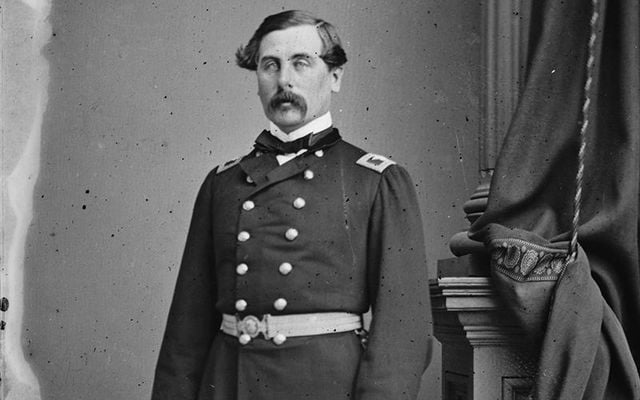
For generations, the tale of the “Nine Famous Irishmen” has captured the imaginations of Irish and Irish Americans alike. This story revolves around nine men involved in the Young Irelanders’ 1848 uprising against British rule. They were purportedly sentenced to death but later had their sentences commuted to transportation to Australia by Queen Victoria. While the story conveys a sense of heroism and resilience, a closer examination reveals that much of it is not rooted in fact.
The narrative begins with the assertion that during the 1848 uprising, nine men—John Mitchell, Morris Leyne, Patrick Donahue, Thomas McGee, Charles Duffy, Thomas Meagher, Richard O’Gorman, Terrence McManus, and Michael Ireland—were captured and convicted of treason. According to the myth, these men faced the death penalty, with Meagher allegedly declaring that they would not be caught again. The story continues with Queen Victoria purportedly intervening due to public outcry, commuting their sentences to life transportation in Australia.
Examining the Truth Behind the Myth
While the tale of these nine men is often recounted in pubs and on memorabilia, the historical accuracy is questionable. For instance, Thomas Francis Meagher is often celebrated as a heroic figure who mysteriously died as the acting governor of the Montana territories. Although he was an esteemed leader in the 1848 uprising and played a significant role in the American Civil War, the words attributed to him in the myth are not accurate. Instead of the light-hearted remark claimed, Meagher stated, “Judged by the law of England, I know this crime entails upon me the penalty of death; but the history of Ireland explains that crime and justifies it.”
In the case of Charles Gavan Duffy, the myth incorrectly suggests he was the Prime Minister of Australia. While he was indeed Prime Minister of the province of Victoria, he did not participate in the 1848 uprising and emigrated voluntarily to Australia in 1856. His political career was marked by challenges, particularly anti-Catholic sentiment, and he eventually retired to France.
The story’s portrayal of Terrence McManus as a soldier is also misleading. McManus died in 1861, never having served in the military. After escaping from transportation, he became a local Fenian leader in San Francisco, living out his days in poverty.
Dissecting More Misattributions
Patrick Donahue, another figure in the myth, was indeed a Fenian and fought in the American Civil War. However, he did not achieve the rank of Brigadier General, contrary to popular belief. His life was marked by hardship, which one of his descendants outlined in a book addressing the family’s struggles with poverty.
The myth continues with Richard O’Gorman, who was a significant figure in the Irish nationalist movement. However, the claim that he served as Governor of Newfoundland is unfounded. This title has a history dating back to 1610, held by individuals often linked to the British Empire.
Further Fallacies and Historical Context
Maurice Leyne participated in the 1848 uprising but never faced transportation to Australia. He remained active in Irish journalism until his death in 1854, never setting foot in Australia.
The narrative also mentions a fictitious character, an Attorney General named Michael Ireland, indicating a complete fabrication in the tale. Such inaccuracies contribute to the misleading nature of the “Nine Famous Irishmen” story.
The myth’s portrayal of John Mitchel is equally problematic. Although he was involved in the uprising and later wrote critically about British rule, he was also known for his racist views and support of slavery, particularly during his time in Confederate Virginia. His writings reflect a complex and often troubling legacy, which does not align with the heroic portrayal found in the myth.
Conclusion: Revisiting Historical Narratives
Ultimately, the enduring popularity of the “Nine Famous Irishmen” story highlights the complexity of historical narratives within cultural contexts. While the myth may serve as a source of inspiration, it is essential to separate fact from fiction to appreciate the true historical contributions of these figures.
As history continues to be retold, updating narratives to reflect more accurate accounts may prove beneficial. The reality of these individuals’ lives is often more intricate and engaging than the embellished tales that have taken root over the years. By acknowledging the truths and complexities of the past, the legacy of these Irish figures can be honored more authentically.

Councillor Demands Urgent Funding Bid for Buncrana Road Now

Judge Accuses Billionaire John Magnier of Lying in Estate Case

Irish Lotto Player Wins €17 Million EuroMillions Jackpot Today!

Trump Announces Ceasefire Between Thailand and Cambodia Amid Ongoing Clashes

Fast Fashion Deliveries Face New Charges Starting July 2026

Stars of Berlin and American Ballet Shine at Kazakhstan Festival

New Gonorrhoea Drug Zoliflodacin Offers Hope Against Resistance

Nvidia CEO Jensen Huang Named Financial Times’ 2025 Person of the Year

Trump Brokers Renewed Ceasefire Between Thailand and Cambodia

Tributes Surge for 9-Year-Old Leon Briody After Cancer Battle

Aimee Osbourne Joins Family for Emotional Tribute to Ozzy

Danny Healy-Rae Considers Complaint After Altercation with Garda

Ireland Enjoys Summer Heat as Hurricane Erin Approaches Atlantic

Hawaii Commemorates 80 Years Since Hiroshima Bombing with Ceremony

Newcastle West Woman Patricia Foley Found Safe After Urgent Search

Fianna Fáil TDs Urgently Consider Maire Geoghegan-Quinn for Presidency

Couple Convicted of Murdering Two-Year-Old Grandson in Wales

Gaza Aid Distribution Tragedy: 20 Killed Amid Ongoing Violence
-
 Top Stories3 months ago
Tributes Surge for 9-Year-Old Leon Briody After Cancer Battle
-
 Entertainment5 months ago
Aimee Osbourne Joins Family for Emotional Tribute to Ozzy
-
 Politics5 months ago
Danny Healy-Rae Considers Complaint After Altercation with Garda
-
 Top Stories4 months ago
Ireland Enjoys Summer Heat as Hurricane Erin Approaches Atlantic
-
 World5 months ago
Hawaii Commemorates 80 Years Since Hiroshima Bombing with Ceremony
-
 Top Stories3 months ago
Newcastle West Woman Patricia Foley Found Safe After Urgent Search
-
 Top Stories5 months ago
Fianna Fáil TDs Urgently Consider Maire Geoghegan-Quinn for Presidency
-
 World5 months ago
Couple Convicted of Murdering Two-Year-Old Grandson in Wales
-
 World5 months ago
Gaza Aid Distribution Tragedy: 20 Killed Amid Ongoing Violence
-

 World5 months ago
Aristocrat Constance Marten and Partner Convicted of Infant Murder
-

 Top Stories4 months ago
Climbing Errigal: A Must-Do Summer Adventure in Donegal
-

 Top Stories4 months ago
Hike Donegal’s Errigal Mountain NOW for Unforgettable Summer Views