
Science
NASA Unveils New Images of Comet 3I/ATLAS, Speculation Grows

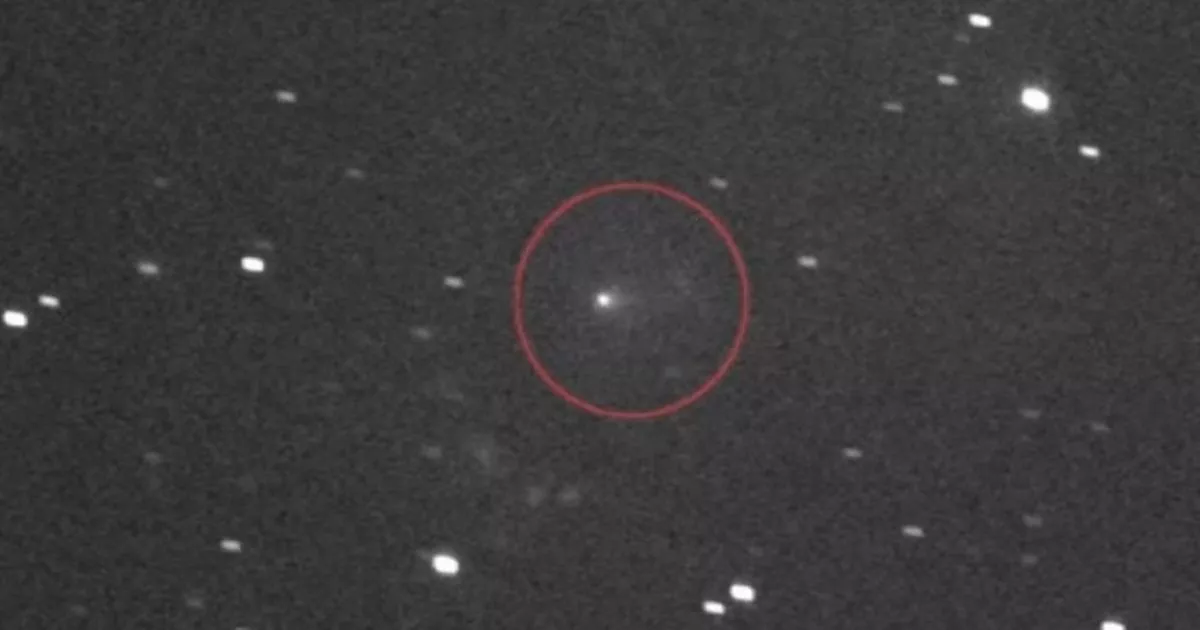
NASA has released significant new images of the comet 3I/ATLAS, which has sparked speculation about its origin. During a press conference on November 19, 2023, the space agency presented these images captured by the Mars rover, marking the first public display of the comet since its discovery. The updated information adds to the growing intrigue surrounding this interstellar object, with some experts even suggesting it could potentially be an alien spacecraft.
The comet, moving at an extraordinary speed of 130,000 miles per hour, has raised eyebrows within the scientific community. While NASA classifies 3I/ATLAS as a comet, prominent theoretical physicist Avi Loeb has posited that its unusual characteristics might indicate it is an alien “mothership” on a reconnaissance mission. Loeb noted that the comet’s behavior is so peculiar that he cannot dismiss the possibility of it being an extraterrestrial craft.
In his assessment, Loeb employs a UFO scale where zero represents natural phenomena and ten indicates confirmed extraterrestrial origins. He assigns 3I/ATLAS a score of at least two, suggesting it is an object that “merits attention.”
During the recent U.S. government shutdown, which lasted from October 1 to November 12, many of NASA’s staff were furloughed, delaying the release of additional photographs taken by telescopes. Loeb had previously called on NASA to share these images, highlighting the importance of public awareness regarding this enigmatic object.
Since its confirmation as an interstellar object in early June, scientists have been utilizing the world’s most advanced telescopes to gather data on 3I/ATLAS. The comet recently became visible again after completing a slingshot maneuver around the Sun. As it approaches Earth for its closest pass in December, observatories worldwide are preparing to monitor its trajectory closely. At its nearest point, 3I/ATLAS will be approximately 170 million miles (273 million kilometers) from our planet.
Looking ahead, the comet is also expected to come close to Jupiter early next year, providing an opportunity for spacecraft in the vicinity of the gas giant to conduct final observations before 3I/ATLAS exits our solar system. The ongoing interest in this interstellar visitor underscores the blend of scientific inquiry and public fascination surrounding potential extraterrestrial phenomena.
As updates continue, the scientific community remains alert, eager to uncover the secrets of 3I/ATLAS while weighing the implications of its unusual characteristics.

Mother Reveals Daughter’s Meningitis Seizure After Night Out

Major Oil Spill Disrupts Traffic in Donegal on March 16, 2026

Discovering Literature: The Joys of Rejoining a Public Library

Ted Season 2 Announced: Release Date & Trailer Updates Revealed

Research Ireland and UKRI Forge New Collaboration Agreement

David McGoldrick’s Impressive Scoring Streak Sparks World Cup Talk

Plane Crash Claims Lives of Publishing Heir, Pregnant Wife, and Pilot

Oscars Snub Brigitte Bardot Sparks Controversy Over In Memoriam

Meta Plans Major Layoffs to Offset Rising AI Investment Costs

Tributes Surge for 9-Year-Old Leon Briody After Cancer Battle

Aimee Osbourne Joins Family for Emotional Tribute to Ozzy

Danny Healy-Rae Considers Complaint After Altercation with Garda

Hawaii Commemorates 80 Years Since Hiroshima Bombing with Ceremony

Ireland Enjoys Summer Heat as Hurricane Erin Approaches Atlantic

Couple Convicted of Murdering Two-Year-Old Grandson in Wales

Gaza Aid Distribution Tragedy: 20 Killed Amid Ongoing Violence

Newcastle West Woman Patricia Foley Found Safe After Urgent Search

Fianna Fáil TDs Urgently Consider Maire Geoghegan-Quinn for Presidency
-
 Top Stories11 months ago
Tributes Surge for 9-Year-Old Leon Briody After Cancer Battle
-
 Entertainment1 year ago
Aimee Osbourne Joins Family for Emotional Tribute to Ozzy
-
 Politics1 year ago
Danny Healy-Rae Considers Complaint After Altercation with Garda
-
 World1 year ago
Hawaii Commemorates 80 Years Since Hiroshima Bombing with Ceremony
-
 Top Stories12 months ago
Ireland Enjoys Summer Heat as Hurricane Erin Approaches Atlantic
-
 World1 year ago
Couple Convicted of Murdering Two-Year-Old Grandson in Wales
-
 World1 year ago
Gaza Aid Distribution Tragedy: 20 Killed Amid Ongoing Violence
-
 Top Stories11 months ago
Newcastle West Woman Patricia Foley Found Safe After Urgent Search
-
 Top Stories1 year ago
Fianna Fáil TDs Urgently Consider Maire Geoghegan-Quinn for Presidency
-

 World1 year ago
Aristocrat Constance Marten and Partner Convicted of Infant Murder
-

 Top Stories12 months ago
Climbing Errigal: A Must-Do Summer Adventure in Donegal
-

 Top Stories12 months ago
Hike Donegal’s Errigal Mountain NOW for Unforgettable Summer Views