
Business
Afghan Farmers Face Economic Crisis as Opium Ban Takes Toll

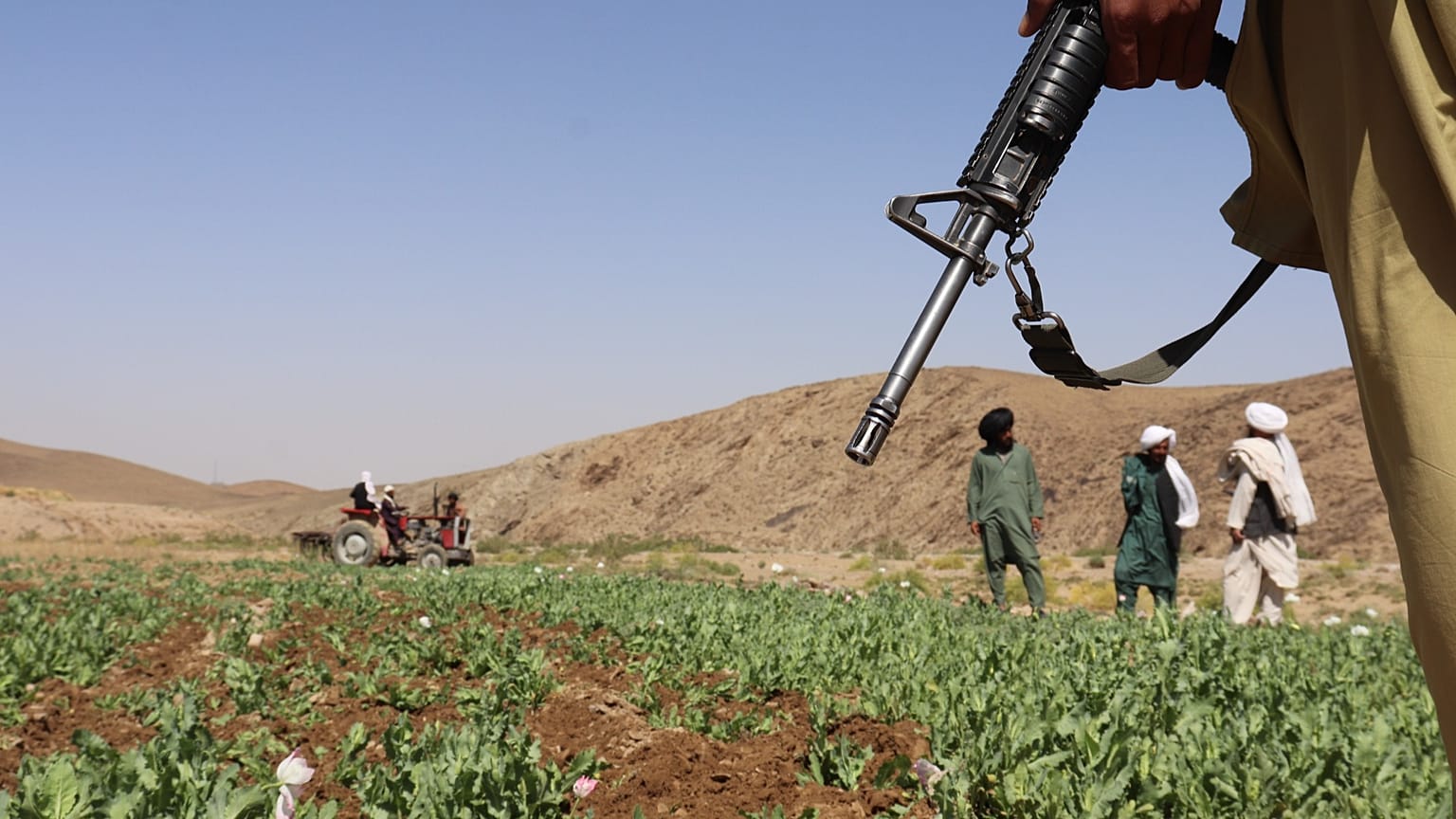
Farmers in Afghanistan are grappling with severe economic challenges following a ban on opium poppy cultivation imposed by the Taliban. The United Nations Office on Drugs and Crime (UNODC) reported that only 10,200 hectares of land was used for opium poppy cultivation in 2023, marking one of the lowest levels in the country’s history. This decline follows a drastic reduction from 232,000 hectares in 2022, prior to the Taliban returning to power.
The ban has particularly affected farmers in northern provinces, where an alarming 85% of families are unable to replace the income they lost from poppy production. According to the UNODC’s recent survey, many farmers have shifted to cultivating wheat and other grains, but the financial returns are starkly inadequate. In 2023, the average income from wheat was just $770 (approximately €654.6) per hectare, compared to around $10,000 (approximately €8,500) per hectare from opium poppy.
In provinces like Badakhshan, which borders Tajikistan, some farmers have continued to cultivate poppy despite the ban. The UNODC highlighted that, on average, 85% of households in Badakhshan, Kunduz, and Balkh reported either no or only partial compensation for their lost income following the cessation of poppy production. This income loss has broader implications, weakening rural purchasing power and increasing vulnerability to poverty and food insecurity.
Impact of the Ban and Shift in Cultivation
The Taliban implemented a comprehensive ban on opium poppy cultivation, along with the production and trafficking of all narcotics, in April 2022. While the ban has successfully reduced cultivation, it has not entirely eliminated it. The UNODC reported that compliance remains high, with 95% of surveyed farmers in Badakhshan and Balkh indicating they ceased poppy cultivation due to legal restrictions.
Despite the decline in opium production, which fell by 32% to an estimated 296 tonnes in 2023 from 436 tonnes in 2024, the prices for dry opium remain elevated. The price dropped by 27% to $570 (approximately €484) per kilogram in 2025 compared to $780 (approximately €663) in 2024, yet it is still five times higher than the pre-ban average.
The UNODC has called for alternative solutions to aid farmers in transitioning to more sustainable crops. These include high-value crops such as saffron, nuts, and medicinal plants that are better suited to Afghanistan’s challenging climate. “Afghanistan’s path to overcoming illicit crop cultivation requires coordinated, long-term investments,” stated Oliver Stolpe, the UNODC regional representative for Afghanistan, Central Asia, Iran, and Pakistan.
Challenges and Future Prospects
The situation is compounded by worsening weather conditions, including droughts and low rainfall, which have rendered over 40% of agricultural land barren. The return of approximately 4 million Afghans from neighboring countries has intensified competition for scarce resources and employment opportunities. Coupled with reductions in humanitarian aid, these factors could make opium poppy cultivation more appealing for farmers struggling to survive.
While opium production declines, the trafficking of synthetic drugs, particularly methamphetamine, has been on the rise. UNODC noted that seizures of synthetic drugs in and around Afghanistan increased by approximately 50% by the end of 2024 compared to the third quarter of 2023. The agency emphasized that as the production of traditional opiates declines, synthetic drugs have become increasingly attractive to organized crime due to their relatively easier production and lower detection risks.
“Afghanistan’s drug problem is not confined to its borders,” said Georgette Gagnon, deputy special representative of the secretary-general for Afghanistan. She stressed the need for collaboration among key stakeholders to effectively address the complexities of drug supply, demand, and trafficking.
As farmers navigate these challenging conditions, the international community faces pressing questions about how best to support Afghanistan’s agricultural sector while addressing the ongoing issues of drug production and trafficking.

Mother Reveals Daughter’s Meningitis Seizure After Night Out

Major Oil Spill Disrupts Traffic in Donegal on March 16, 2026

Discovering Literature: The Joys of Rejoining a Public Library

Ted Season 2 Announced: Release Date & Trailer Updates Revealed

Research Ireland and UKRI Forge New Collaboration Agreement

David McGoldrick’s Impressive Scoring Streak Sparks World Cup Talk

Plane Crash Claims Lives of Publishing Heir, Pregnant Wife, and Pilot

Oscars Snub Brigitte Bardot Sparks Controversy Over In Memoriam

Meta Plans Major Layoffs to Offset Rising AI Investment Costs

Tributes Surge for 9-Year-Old Leon Briody After Cancer Battle

Aimee Osbourne Joins Family for Emotional Tribute to Ozzy

Danny Healy-Rae Considers Complaint After Altercation with Garda

Hawaii Commemorates 80 Years Since Hiroshima Bombing with Ceremony

Ireland Enjoys Summer Heat as Hurricane Erin Approaches Atlantic

Couple Convicted of Murdering Two-Year-Old Grandson in Wales

Gaza Aid Distribution Tragedy: 20 Killed Amid Ongoing Violence

Newcastle West Woman Patricia Foley Found Safe After Urgent Search

Fianna Fáil TDs Urgently Consider Maire Geoghegan-Quinn for Presidency
-
 Top Stories12 months ago
Tributes Surge for 9-Year-Old Leon Briody After Cancer Battle
-
 Entertainment1 year ago
Aimee Osbourne Joins Family for Emotional Tribute to Ozzy
-
 Politics1 year ago
Danny Healy-Rae Considers Complaint After Altercation with Garda
-
 World1 year ago
Hawaii Commemorates 80 Years Since Hiroshima Bombing with Ceremony
-
 Top Stories1 year ago
Ireland Enjoys Summer Heat as Hurricane Erin Approaches Atlantic
-
 World1 year ago
Couple Convicted of Murdering Two-Year-Old Grandson in Wales
-
 World1 year ago
Gaza Aid Distribution Tragedy: 20 Killed Amid Ongoing Violence
-
 Top Stories11 months ago
Newcastle West Woman Patricia Foley Found Safe After Urgent Search
-
 Top Stories1 year ago
Fianna Fáil TDs Urgently Consider Maire Geoghegan-Quinn for Presidency
-

 World1 year ago
Aristocrat Constance Marten and Partner Convicted of Infant Murder
-

 Top Stories1 year ago
Climbing Errigal: A Must-Do Summer Adventure in Donegal
-

 Top Stories1 year ago
Hike Donegal’s Errigal Mountain NOW for Unforgettable Summer Views