
World
EU Softens Stance on Orban as Hungary Faces Crucial Election

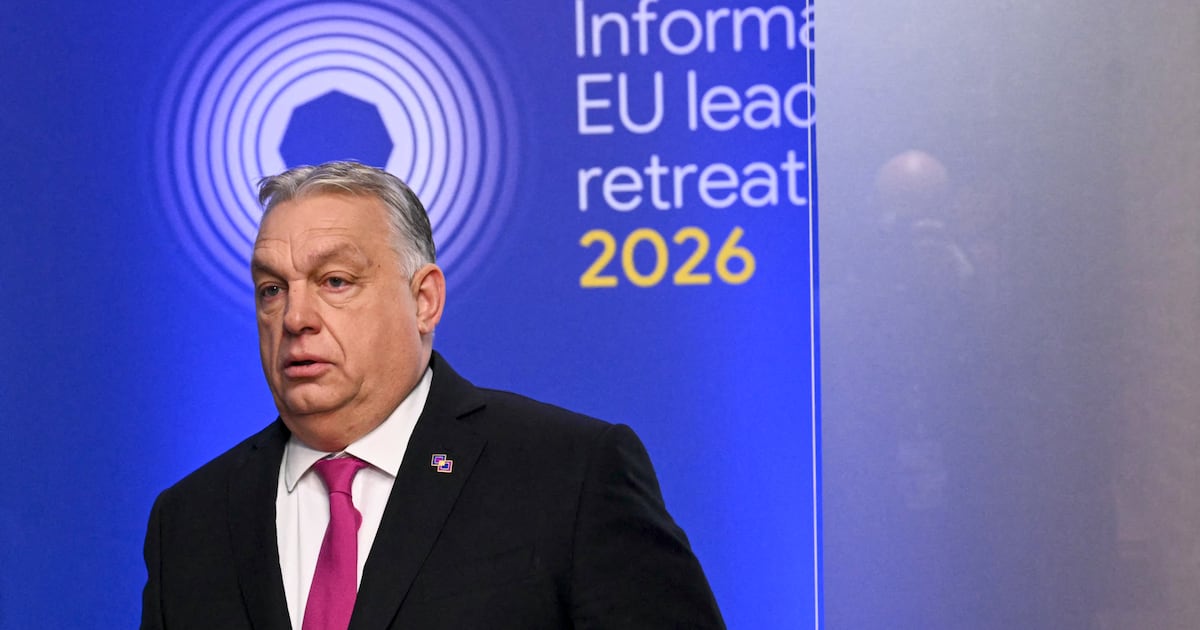
The European Commission is adjusting its approach towards Hungarian Prime Minister Viktor Orban as the country prepares for a significant election on April 12, 2024. Reports indicate that the Commission may consider releasing approximately €2.4 billion in EU funds to Orban’s government, despite ongoing concerns regarding Hungary’s adherence to EU democratic principles. This shift appears to be a strategic move to avoid perceived interference in Hungary’s electoral process, which could ultimately affect Orban’s political future.
Polls indicate that Orban’s party, Fidesz, may be at risk of losing power to the opposition Tisza Party, led by Péter Magyar. Current forecasts show Tisza with a lead of about ten points over Fidesz. In recent remarks, Magyar has called for EU institutions to exercise caution during the campaign, reflecting a desire for a more restrained approach from Brussels. He emphasized Hungary’s integral role within the EU, stating, “Hungary’s place is in Europe, not only because we need Europe but also because Europe needs us.”
The Commission’s newfound caution in its public statements relates to ongoing concerns about Hungary’s rule of law and governance. EU officials are reportedly hesitant to provoke further backlash from Orban, who has historically framed EU scrutiny as foreign meddling in Hungary’s sovereignty. A Hungarian official noted, “Months before such a historic, decisive election… they came to the conclusion that the best thing to do is not to do anything.”
In the past, Orban has aligned himself closely with controversial figures, including Russian President Vladimir Putin, and consistently opposed military assistance for Ukraine. His administration has characterized any EU criticism as an attack on national sovereignty, portraying Magyar as a puppet of Brussels. This situation is further complicated by the establishment of a “Democracy Interference Observatory” by the Mathias Corvinus Collegium, a think tank associated with Orban. This initiative aims to scrutinize perceived EU influence on national elections across Europe.
A European Parliament official remarked, “Whatever the EU institutions will do will be used by Orban… Whatever we say or do not say, it will be used against us.” The US has also shown support for Orban’s government, with Secretary of State Marco Rubio scheduled to visit Hungary, coinciding with the upcoming Conservative Political Action Conference (CPAC) where former President Donald Trump is expected to appear.
The European Court of Justice recently issued a legal opinion questioning a decision made earlier in 2023 to unfreeze €10 billion in aid for Hungary, a move aimed at alleviating Orban’s veto on support for Ukraine. Hungarian EU Minister János Bóka criticized the EU’s actions, claiming, “Brussels is threatening Hungary through the European Court of Justice because we are not paying Ukraine.”
Currently, approximately €17 billion in EU funds intended for Hungary remain frozen due to concerns over judicial independence and discrimination issues. Furthermore, the Commission has initiated an investigation into allegations that the Hungarian government attempted to recruit EU officials as informants. A spokesperson for the Commission stated that they are “actively looking into these [spying] allegations” and that their assessments of Hungary’s rule of law continue normally.
In the wake of recent developments, Orban has enacted a decree instructing courts to dismiss certain lawsuits against the government, raising further concerns regarding judicial independence. The Commission responded by stating, “We are following developments closely, and we are now analyzing the decree in question.”
Political reactions to the Commission’s cautious stance reveal a divide among lawmakers. Some, like Tineke Strik from the Green Party, argue that the Commission’s reluctance to act sends a detrimental message. Strik described the strategy as “such a stupid strategy,” pointing out that the EU’s delay could be interpreted as a lack of commitment to democratic principles in Hungary.
Budapest stands to gain €16 billion in defense funding through the EU’s major arms procurement program, known as Safe. Should Hungary’s funding plans be approved, an initial allocation of around €2.4 billion could be disbursed. Opinions on this funding are mixed, with some European lawmakers expressing concern about providing financial support to Orban’s government. An official from the European People’s Party stated, “Granting him this money would be absolutely absurd,” while others caution that withholding funds could also be viewed as interference.
As Hungary approaches its critical election, the European Commission finds itself navigating a complex political landscape, balancing the need for democratic integrity with the ramifications of its actions on the electoral process.

Mother Reveals Daughter’s Meningitis Seizure After Night Out

Major Oil Spill Disrupts Traffic in Donegal on March 16, 2026

Discovering Literature: The Joys of Rejoining a Public Library

Ted Season 2 Announced: Release Date & Trailer Updates Revealed

Research Ireland and UKRI Forge New Collaboration Agreement

David McGoldrick’s Impressive Scoring Streak Sparks World Cup Talk

Plane Crash Claims Lives of Publishing Heir, Pregnant Wife, and Pilot

Oscars Snub Brigitte Bardot Sparks Controversy Over In Memoriam

Meta Plans Major Layoffs to Offset Rising AI Investment Costs

Tributes Surge for 9-Year-Old Leon Briody After Cancer Battle

Aimee Osbourne Joins Family for Emotional Tribute to Ozzy

Danny Healy-Rae Considers Complaint After Altercation with Garda

Hawaii Commemorates 80 Years Since Hiroshima Bombing with Ceremony

Ireland Enjoys Summer Heat as Hurricane Erin Approaches Atlantic

Couple Convicted of Murdering Two-Year-Old Grandson in Wales

Newcastle West Woman Patricia Foley Found Safe After Urgent Search

Fianna Fáil TDs Urgently Consider Maire Geoghegan-Quinn for Presidency

Gaza Aid Distribution Tragedy: 20 Killed Amid Ongoing Violence
-
 Top Stories7 months ago
Tributes Surge for 9-Year-Old Leon Briody After Cancer Battle
-
 Entertainment8 months ago
Aimee Osbourne Joins Family for Emotional Tribute to Ozzy
-
 Politics9 months ago
Danny Healy-Rae Considers Complaint After Altercation with Garda
-
 World9 months ago
Hawaii Commemorates 80 Years Since Hiroshima Bombing with Ceremony
-
 Top Stories8 months ago
Ireland Enjoys Summer Heat as Hurricane Erin Approaches Atlantic
-
 World9 months ago
Couple Convicted of Murdering Two-Year-Old Grandson in Wales
-
 Top Stories7 months ago
Newcastle West Woman Patricia Foley Found Safe After Urgent Search
-
 Top Stories9 months ago
Fianna Fáil TDs Urgently Consider Maire Geoghegan-Quinn for Presidency
-
 World9 months ago
Gaza Aid Distribution Tragedy: 20 Killed Amid Ongoing Violence
-

 World9 months ago
Aristocrat Constance Marten and Partner Convicted of Infant Murder
-

 Top Stories8 months ago
Hike Donegal’s Errigal Mountain NOW for Unforgettable Summer Views
-

 Top Stories8 months ago
Climbing Errigal: A Must-Do Summer Adventure in Donegal