
Entertainment
Irish Activist Jimmy Gralton Deported for Political Dissent

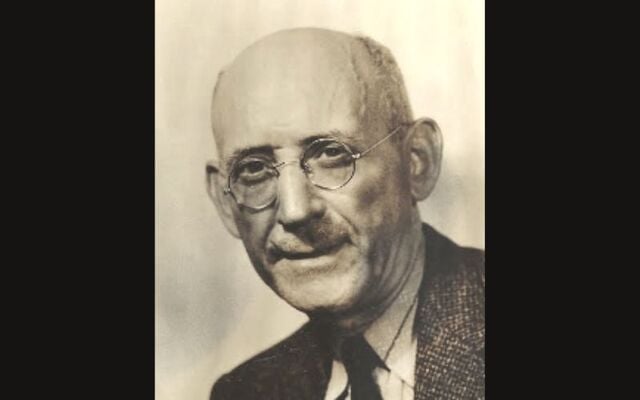
James “Jimmy” Gralton, a prominent Irish activist, holds the unique distinction of being the only Irish citizen deported from Ireland for his political beliefs. In February 1933, Gralton was arrested and subsequently sent to the United States, where he continued his advocacy. His life and struggles were later captured in the acclaimed film “Jimmy’s Hall,” directed by Ken Loach in 2014.
Born on April 17, 1886, in Effrinagh, County Leitrim, Gralton grew up on a small farm in a region plagued by inequitable land ownership. Following his emigration to the United States in 1909 at the age of 23, he returned to Ireland to join the fight in the Irish War of Independence. After the war, he went back to the U.S., only to return in 1932 to care for his ailing mother.
During his time in America, Gralton became increasingly radicalized, witnessing the harsh realities of the Great Depression. Upon returning to Ireland, he found that despite gaining independence, the socio-economic conditions had not improved for many. Gralton took on a leadership role in the Revolutionary Workers’ Group, a precursor to the Communist Party of Ireland, and sought to empower the local community.
In Effrinagh, Gralton established a dance hall that served as a center for education, political discussion, and community gatherings. He offered free classes, music events, and dance nights, which became popular among the locals. His efforts, however, were met with fierce opposition from conservative elements, particularly local Catholic priests, who led protests against the gatherings.
The tensions escalated, culminating in a violent incident at the hall. On February 9, 1933, Gralton was arrested under the pretext of being an “alien,” despite being born in Ireland. His deportation sparked public outcry, with protests organized by the Irish Republican Army demanding his return.
Gralton’s life came to an end on December 29, 1945, when he died from stomach cancer in New York City. His legacy, however, has not been forgotten. Irish socialist Councillor Declan Bree has noted that Gralton’s contributions place him alongside other influential figures in Irish socialism, such as James Larkin and James Connolly.
In 2014, Ken Loach’s film “Jimmy’s Hall” brought Gralton’s story to a new audience, exploring the dreams and disillusionments of post-independence Ireland. Loach remarked on the film’s thematic continuity with his earlier work, “The Wind That Shakes the Barley,” emphasizing the ongoing struggle for social justice.
The film not only highlighted Gralton’s activism but also served as a reflection on the broader socio-political landscape of Ireland in the 1930s. Gralton’s journey remains a poignant reminder of the complexities surrounding independence and the fight for equality in Ireland.
Through his efforts and sacrifices, Jimmy Gralton’s story continues to resonate, symbolizing the power of grassroots activism in the face of oppression.

Mother Reveals Daughter’s Meningitis Seizure After Night Out

Major Oil Spill Disrupts Traffic in Donegal on March 16, 2026

Discovering Literature: The Joys of Rejoining a Public Library

Ted Season 2 Announced: Release Date & Trailer Updates Revealed

Research Ireland and UKRI Forge New Collaboration Agreement

David McGoldrick’s Impressive Scoring Streak Sparks World Cup Talk

Plane Crash Claims Lives of Publishing Heir, Pregnant Wife, and Pilot

Oscars Snub Brigitte Bardot Sparks Controversy Over In Memoriam

Meta Plans Major Layoffs to Offset Rising AI Investment Costs

Tributes Surge for 9-Year-Old Leon Briody After Cancer Battle

Aimee Osbourne Joins Family for Emotional Tribute to Ozzy

Danny Healy-Rae Considers Complaint After Altercation with Garda

Hawaii Commemorates 80 Years Since Hiroshima Bombing with Ceremony

Ireland Enjoys Summer Heat as Hurricane Erin Approaches Atlantic

Couple Convicted of Murdering Two-Year-Old Grandson in Wales

Gaza Aid Distribution Tragedy: 20 Killed Amid Ongoing Violence

Newcastle West Woman Patricia Foley Found Safe After Urgent Search

Fianna Fáil TDs Urgently Consider Maire Geoghegan-Quinn for Presidency
-
 Top Stories11 months ago
Tributes Surge for 9-Year-Old Leon Briody After Cancer Battle
-
 Entertainment1 year ago
Aimee Osbourne Joins Family for Emotional Tribute to Ozzy
-
 Politics1 year ago
Danny Healy-Rae Considers Complaint After Altercation with Garda
-
 World1 year ago
Hawaii Commemorates 80 Years Since Hiroshima Bombing with Ceremony
-
 Top Stories1 year ago
Ireland Enjoys Summer Heat as Hurricane Erin Approaches Atlantic
-
 World1 year ago
Couple Convicted of Murdering Two-Year-Old Grandson in Wales
-
 World1 year ago
Gaza Aid Distribution Tragedy: 20 Killed Amid Ongoing Violence
-
 Top Stories11 months ago
Newcastle West Woman Patricia Foley Found Safe After Urgent Search
-
 Top Stories1 year ago
Fianna Fáil TDs Urgently Consider Maire Geoghegan-Quinn for Presidency
-

 World1 year ago
Aristocrat Constance Marten and Partner Convicted of Infant Murder
-

 Top Stories1 year ago
Climbing Errigal: A Must-Do Summer Adventure in Donegal
-

 Top Stories1 year ago
Hike Donegal’s Errigal Mountain NOW for Unforgettable Summer Views