
Health
Smart Clothing Revolutionizes Health Tracking with Greater Accuracy

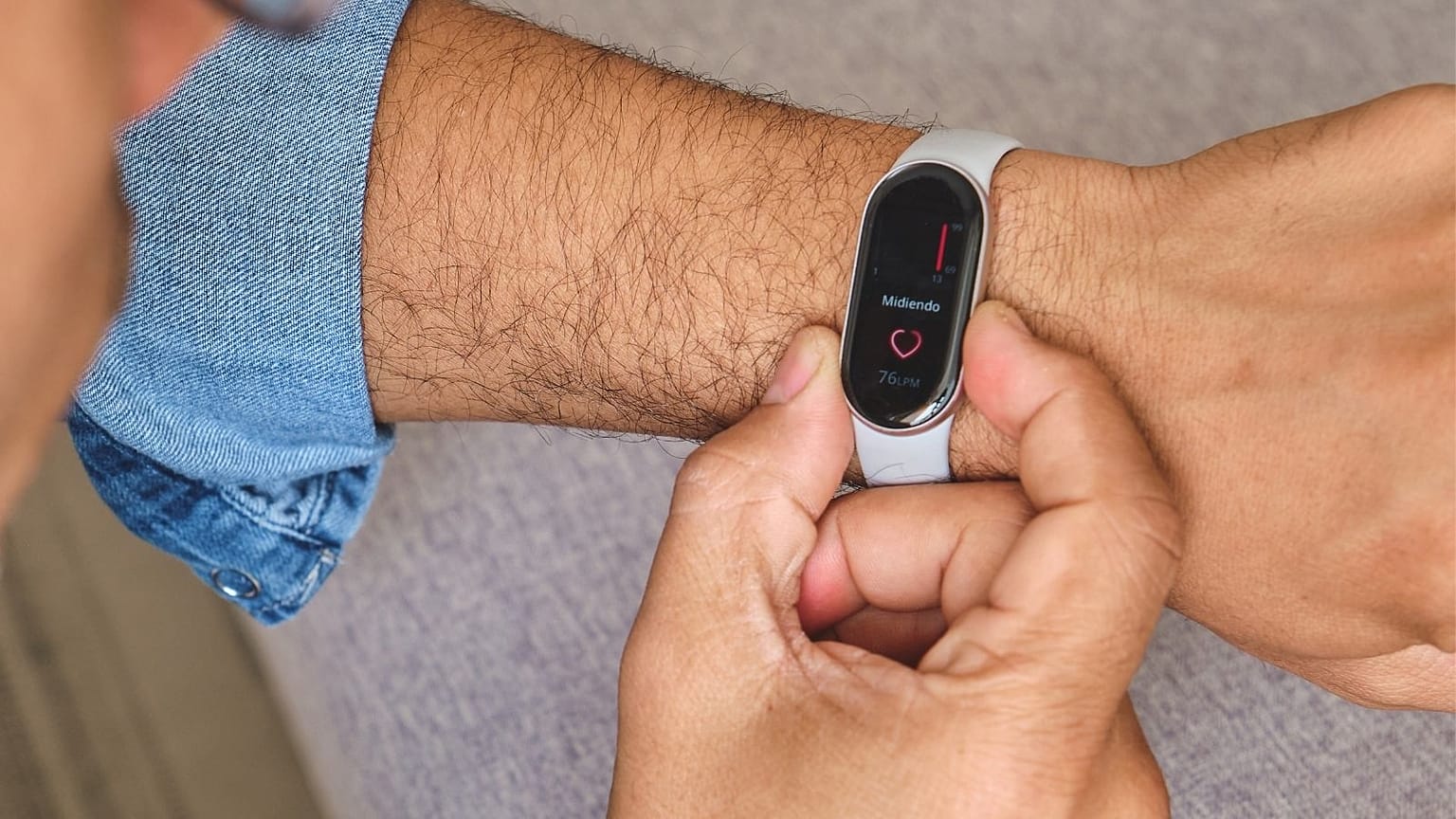
New research from King’s College London suggests that smart clothing may surpass traditional wearables in health tracking capabilities. The study, published in the journal Nature Communications, reveals that sensors embedded in looser clothing can monitor body metrics with 40 percent more accuracy while using 80 percent less data than conventional tight-fitting wearables.
Current health and fitness trackers typically take the form of wristbands or body straps that closely fit the skin. These devices measure raw movements and vital signs, converting them into quantifiable metrics such as steps taken, calories burned, and sleep stages. However, researchers have challenged the belief that loose-fitting sensors yield unreliable data. They found that clothes with flowing fabric can capture movement more effectively.
Matthew Howard, co-author of the study and a reader in engineering at King’s College London, explained, “We could move away from ‘wearable tech’ that feels like medical equipment and toward ‘smart clothing’—like a simple button or pin on a dress—that tracks your health while you feel completely natural going about your day.” He noted that loose sleeves react more sensitively to arm movements, folding and moving in a way that captures motion more accurately than tighter sensors.
Breakthrough in Motion Tracking
The research team conducted experiments on various fabrics using both human and robotic subjects performing a range of movements. They compared the performance of loose fabric sensors with traditional motion sensors attached to tight clothing and straps. The results indicated that the fabric-based approach not only detected movements more rapidly, but it also did so with greater accuracy while requiring significantly less data.
The study’s findings also highlight the potential for these sensors to detect subtle movements often overlooked by current wearables, such as tremors associated with Parkinson’s disease. Irene Di Giulio, co-author of the study, stated, “Through this approach, we could ‘amplify’ people’s movement, which will help capture them even when they are smaller than typical abled-bodied movements.” This capability could facilitate monitoring from home or care facilities, enhancing the ease with which doctors track their patients’ health.
Enhancing Clinical Monitoring
The implications of this technology extend beyond personal fitness. By integrating sensors into everyday clothing, healthcare professionals could gather critical data needed to enhance understanding of various conditions and develop new therapies. Di Giulio emphasized that this advancement could also lead to wearable technologies designed specifically for individuals with disabilities.
While current wearables, such as the Apple Watch, have proven effective in measuring metrics like heart rate during rest, they face limitations in more complex clinical measurements, including heart rate variability and blood pressure. Research indicates that while devices like the Apple Watch can accurately track heartbeats, they demonstrate inconsistencies in measuring energy expenditure, particularly during physical activity.
The transition from conventional wearable technology to smart clothing could mark a significant leap forward in health tracking, offering a more comfortable and effective means of monitoring well-being in daily life. As smart clothing continues to evolve, it may redefine how individuals and healthcare providers approach health metrics and personal health management.

Mother Reveals Daughter’s Meningitis Seizure After Night Out

Major Oil Spill Disrupts Traffic in Donegal on March 16, 2026

Discovering Literature: The Joys of Rejoining a Public Library

Ted Season 2 Announced: Release Date & Trailer Updates Revealed

Research Ireland and UKRI Forge New Collaboration Agreement

David McGoldrick’s Impressive Scoring Streak Sparks World Cup Talk

Plane Crash Claims Lives of Publishing Heir, Pregnant Wife, and Pilot

Oscars Snub Brigitte Bardot Sparks Controversy Over In Memoriam

Meta Plans Major Layoffs to Offset Rising AI Investment Costs

Tributes Surge for 9-Year-Old Leon Briody After Cancer Battle

Aimee Osbourne Joins Family for Emotional Tribute to Ozzy

Danny Healy-Rae Considers Complaint After Altercation with Garda

Hawaii Commemorates 80 Years Since Hiroshima Bombing with Ceremony

Ireland Enjoys Summer Heat as Hurricane Erin Approaches Atlantic

Couple Convicted of Murdering Two-Year-Old Grandson in Wales

Gaza Aid Distribution Tragedy: 20 Killed Amid Ongoing Violence

Newcastle West Woman Patricia Foley Found Safe After Urgent Search

Fianna Fáil TDs Urgently Consider Maire Geoghegan-Quinn for Presidency
-
 Top Stories10 months ago
Tributes Surge for 9-Year-Old Leon Briody After Cancer Battle
-
 Entertainment12 months ago
Aimee Osbourne Joins Family for Emotional Tribute to Ozzy
-
 Politics12 months ago
Danny Healy-Rae Considers Complaint After Altercation with Garda
-
 World12 months ago
Hawaii Commemorates 80 Years Since Hiroshima Bombing with Ceremony
-
 Top Stories11 months ago
Ireland Enjoys Summer Heat as Hurricane Erin Approaches Atlantic
-
 World12 months ago
Couple Convicted of Murdering Two-Year-Old Grandson in Wales
-
 World12 months ago
Gaza Aid Distribution Tragedy: 20 Killed Amid Ongoing Violence
-
 Top Stories10 months ago
Newcastle West Woman Patricia Foley Found Safe After Urgent Search
-
 Top Stories12 months ago
Fianna Fáil TDs Urgently Consider Maire Geoghegan-Quinn for Presidency
-

 World12 months ago
Aristocrat Constance Marten and Partner Convicted of Infant Murder
-

 Top Stories11 months ago
Climbing Errigal: A Must-Do Summer Adventure in Donegal
-

 Top Stories11 months ago
Hike Donegal’s Errigal Mountain NOW for Unforgettable Summer Views