
Lifestyle
Spiritual Seekers Fill Churches During Christmas Season

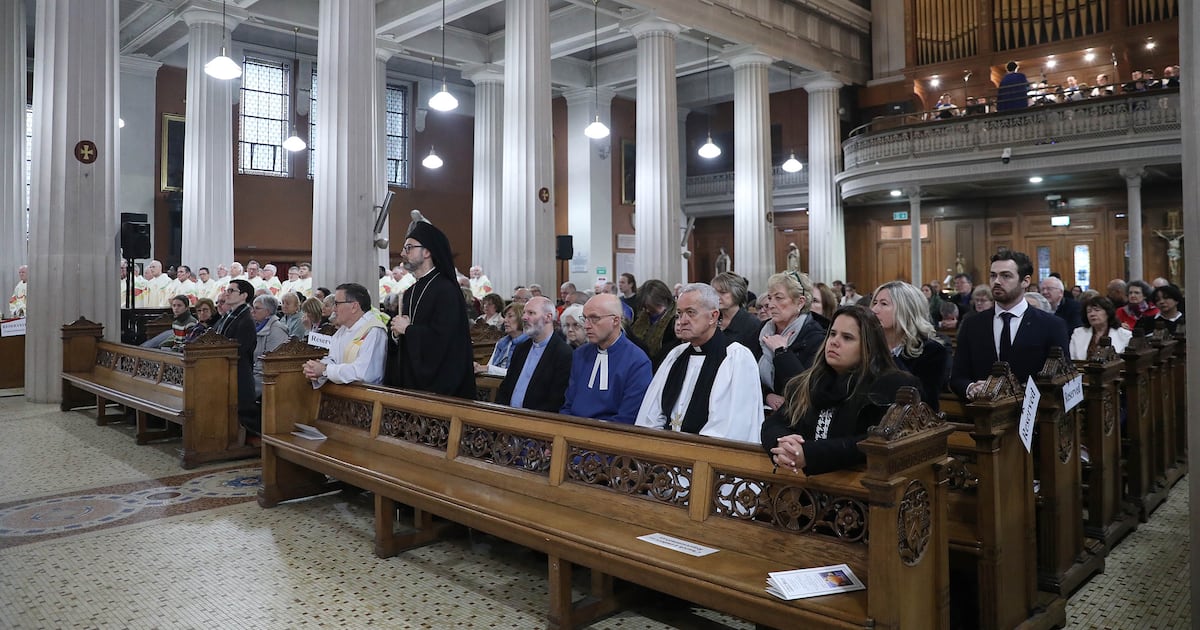
The Christmas season in Ireland often sees a surge of individuals identifying as “lapsed Catholics” or “spiritual but not religious” attending church services. This trend reflects a broader search for spirituality amidst modern life’s challenges. The late writer and broadcaster, Manchán Magan, whose recent death has left a notable impact, inspired discussions about the evolving religious landscape in Ireland. His wife, Aisling Rogerson, noted in an interview that “everyone is looking for something at the moment… religion has failed us,” highlighting a growing disillusionment with traditional religious institutions.
Research by Hugh Turpin in his book, *Unholy Catholic Ireland*, reveals profound dissatisfaction with the Catholic Church. Turpin documents that many individuals feel motivated to challenge the Church’s influence and practices, particularly among those who label themselves as cultural Catholics. He points out a significant shift in societal ideals, suggesting that the archetype of the “good Irish person” has transitioned from an observant Catholic to a secular advocate for progressive values.
This change is substantiated by statistics from the 2022 Census, which indicated that over 14 percent of the Irish population, or 736,210 individuals, reported having no religion. Additionally, there were 3,823 individuals identifying as agnostic or atheist. The number of self-described lapsed Catholics has decreased to 3,254, down from 8,094 in 2016. This data suggests a significant demographic shift that warrants further exploration.
The complexities of spiritual identity are evident in findings from a survey conducted by Amárach Research for the Iona Institute in May. The results show a diverse spectrum of belief among the Irish population: only one in ten identify strictly as religious, while three identify as spiritual, and two as both. The remaining three do not identify with either category, a trend more pronounced among younger individuals, particularly those aged 25 to 34, where 42 percent expressed no spiritual or religious affiliation.
Interestingly, the rise of alternative spiritual practices is evident in changing wedding trends. In 2024, nearly a quarter of couples opted for ceremonies that are Spiritualist, pagan, or Celtic, with the Spiritualist Union of Ireland emerging as a significant provider of these services, conducting 1,446 weddings, accounting for 7 percent of all marriages that year. In contrast, the Catholic Church officiated 6,425 weddings, representing about 32 percent of total ceremonies.
The term “spiritual but not religious” encompasses a broad array of beliefs. It includes individuals who engage in practices that blend spirituality with personal interpretation of faith, as seen during events like Magan’s month’s mind, which featured druidic rituals and spiritual dancing. Those who identify as religious often view this eclectic approach with skepticism, suggesting that it lacks coherence. They sometimes feel that their own expressions of spirituality, rooted in community traditions, are unjustly dismissed.
As church attendance increases during this festive period, a question arises for religious communities: Why do these visitors often leave without finding the spiritual fulfilment they seek? Historically, early Christians garnered attention and admiration for their dedication to caring for the marginalized and the less fortunate. The challenge for contemporary churches is to reconnect with this spirit of inclusivity and outreach.
The evolving landscape of belief in Ireland underscores the need for religious institutions to reflect on their relevance in the lives of modern individuals. As more people identify outside traditional religious frameworks, understanding and addressing their spiritual needs could foster deeper connections and meaningful engagement.

Mother Reveals Daughter’s Meningitis Seizure After Night Out

Major Oil Spill Disrupts Traffic in Donegal on March 16, 2026

Discovering Literature: The Joys of Rejoining a Public Library

Ted Season 2 Announced: Release Date & Trailer Updates Revealed

Research Ireland and UKRI Forge New Collaboration Agreement

David McGoldrick’s Impressive Scoring Streak Sparks World Cup Talk

Plane Crash Claims Lives of Publishing Heir, Pregnant Wife, and Pilot

Oscars Snub Brigitte Bardot Sparks Controversy Over In Memoriam

Meta Plans Major Layoffs to Offset Rising AI Investment Costs

Tributes Surge for 9-Year-Old Leon Briody After Cancer Battle

Aimee Osbourne Joins Family for Emotional Tribute to Ozzy

Danny Healy-Rae Considers Complaint After Altercation with Garda

Hawaii Commemorates 80 Years Since Hiroshima Bombing with Ceremony

Ireland Enjoys Summer Heat as Hurricane Erin Approaches Atlantic

Couple Convicted of Murdering Two-Year-Old Grandson in Wales

Gaza Aid Distribution Tragedy: 20 Killed Amid Ongoing Violence

Newcastle West Woman Patricia Foley Found Safe After Urgent Search

Fianna Fáil TDs Urgently Consider Maire Geoghegan-Quinn for Presidency
-
 Top Stories10 months ago
Tributes Surge for 9-Year-Old Leon Briody After Cancer Battle
-
 Entertainment12 months ago
Aimee Osbourne Joins Family for Emotional Tribute to Ozzy
-
 Politics12 months ago
Danny Healy-Rae Considers Complaint After Altercation with Garda
-
 World12 months ago
Hawaii Commemorates 80 Years Since Hiroshima Bombing with Ceremony
-
 Top Stories11 months ago
Ireland Enjoys Summer Heat as Hurricane Erin Approaches Atlantic
-
 World12 months ago
Couple Convicted of Murdering Two-Year-Old Grandson in Wales
-
 World12 months ago
Gaza Aid Distribution Tragedy: 20 Killed Amid Ongoing Violence
-
 Top Stories10 months ago
Newcastle West Woman Patricia Foley Found Safe After Urgent Search
-
 Top Stories12 months ago
Fianna Fáil TDs Urgently Consider Maire Geoghegan-Quinn for Presidency
-

 World1 year ago
Aristocrat Constance Marten and Partner Convicted of Infant Murder
-

 Top Stories12 months ago
Climbing Errigal: A Must-Do Summer Adventure in Donegal
-

 Top Stories12 months ago
Hike Donegal’s Errigal Mountain NOW for Unforgettable Summer Views