
Politics
Elon Musk and Michael O’Leary Engage in Cultural Clash of Wits

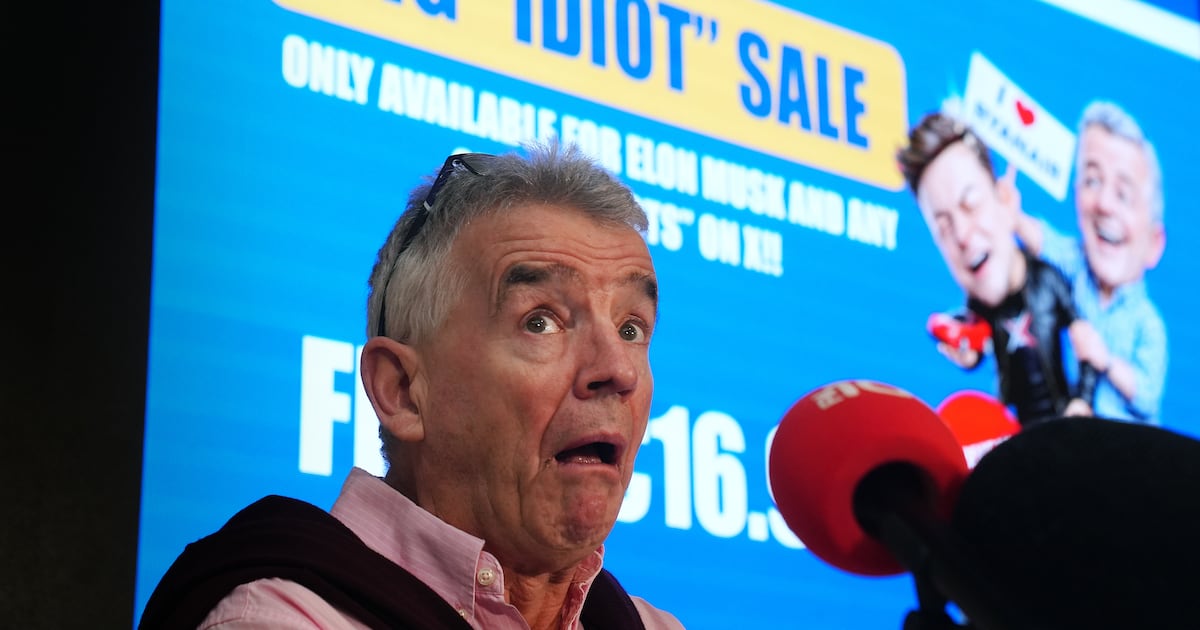
A recent exchange between Elon Musk, CEO of Tesla and SpaceX, and Michael O’Leary, head of Ryanair, escalated from a simple insult to a reflection of differing cultural attitudes and communication styles. The confrontation began with O’Leary calling Musk an “idiot,” which Musk amplified by labeling O’Leary an “utter idiot” and a “retarded twat.” This back-and-forth, rooted in a familiar Anglo-Saxon style of banter, quickly encompassed deeper socio-cultural nuances.
While the initial insults were easily digestible on both sides of the Atlantic, O’Leary’s next move introduced a layer of self-deprecation that Musk may not have fully grasped. O’Leary humorously accepted the insults, indicating that his children also shared Musk’s low opinion of him. He then capitalized on the situation by promoting a “Big Idiots” seat sale for Ryanair flights in January, cheekily featuring himself and Musk. This marketing ploy, typical of O’Leary’s brash style, may have bemused those unacquainted with such humour in Texas, where Musk currently resides.
Understanding the Cultural Context
The cultural divide between the two figures highlights differing approaches to public persona and humour. O’Leary’s self-deprecating wit contrasts sharply with the more brash, self-aggrandizing style prevalent in American political discourse, particularly exemplified by figures like Donald Trump. In Ireland, self-deprecation is a common rhetorical device, often used to diffuse tension and foster relatability. O’Leary’s approach may stem from his education at Clongowes Wood College, where he learned to navigate social dynamics with a blend of humility and humour.
Interestingly, O’Leary’s strategy echoes the teachings of the ancient Stoic philosopher Epictetus, who advised not to defend oneself against criticism but to embrace it. O’Leary’s acceptance of Musk’s insults as an opportunity for self-reflection aligns with this Stoic principle. This method of handling conflict, though foreign to Musk’s world of high-tech innovation and competitive business, reveals a deeper philosophical underpinning that informs O’Leary’s public persona.
The Role of Humour in Public Discourse
Historically, self-deprecating humour has played a significant role in various cultures, especially within Jewish comedy in the United States, as seen in the work of comedians like Woody Allen and Larry David. However, in recent years, the American political landscape has shifted towards a more assertive and boastful style, leaving little room for the kind of humility that O’Leary embodies.
The late journalist H.L. Mencken famously critiqued the American penchant for self-promotion, asserting that grandiosity often overshadows authenticity in public leadership. O’Leary’s humorous retorts could serve as a reminder of the value of humility in leadership and communication, contrasting sharply with the current trend of self-aggrandizement within American politics.
As their exchange continues to attract attention, the incident between Musk and O’Leary offers a lens through which to examine broader cultural differences in communication styles. The clash between their personalities not only entertains but also serves as a vehicle for exploring how public figures navigate personal branding and public perception in their respective arenas.

Mother Reveals Daughter’s Meningitis Seizure After Night Out

Major Oil Spill Disrupts Traffic in Donegal on March 16, 2026

Discovering Literature: The Joys of Rejoining a Public Library

Ted Season 2 Announced: Release Date & Trailer Updates Revealed

Research Ireland and UKRI Forge New Collaboration Agreement

David McGoldrick’s Impressive Scoring Streak Sparks World Cup Talk

Plane Crash Claims Lives of Publishing Heir, Pregnant Wife, and Pilot

Oscars Snub Brigitte Bardot Sparks Controversy Over In Memoriam

Meta Plans Major Layoffs to Offset Rising AI Investment Costs

Tributes Surge for 9-Year-Old Leon Briody After Cancer Battle

Aimee Osbourne Joins Family for Emotional Tribute to Ozzy

Danny Healy-Rae Considers Complaint After Altercation with Garda

Hawaii Commemorates 80 Years Since Hiroshima Bombing with Ceremony

Ireland Enjoys Summer Heat as Hurricane Erin Approaches Atlantic

Couple Convicted of Murdering Two-Year-Old Grandson in Wales

Newcastle West Woman Patricia Foley Found Safe After Urgent Search

Fianna Fáil TDs Urgently Consider Maire Geoghegan-Quinn for Presidency

Gaza Aid Distribution Tragedy: 20 Killed Amid Ongoing Violence
-
 Top Stories7 months ago
Tributes Surge for 9-Year-Old Leon Briody After Cancer Battle
-
 Entertainment9 months ago
Aimee Osbourne Joins Family for Emotional Tribute to Ozzy
-
 Politics9 months ago
Danny Healy-Rae Considers Complaint After Altercation with Garda
-
 World9 months ago
Hawaii Commemorates 80 Years Since Hiroshima Bombing with Ceremony
-
 Top Stories8 months ago
Ireland Enjoys Summer Heat as Hurricane Erin Approaches Atlantic
-
 World9 months ago
Couple Convicted of Murdering Two-Year-Old Grandson in Wales
-
 Top Stories7 months ago
Newcastle West Woman Patricia Foley Found Safe After Urgent Search
-
 Top Stories9 months ago
Fianna Fáil TDs Urgently Consider Maire Geoghegan-Quinn for Presidency
-
 World9 months ago
Gaza Aid Distribution Tragedy: 20 Killed Amid Ongoing Violence
-

 World9 months ago
Aristocrat Constance Marten and Partner Convicted of Infant Murder
-

 Top Stories8 months ago
Hike Donegal’s Errigal Mountain NOW for Unforgettable Summer Views
-

 Top Stories8 months ago
Climbing Errigal: A Must-Do Summer Adventure in Donegal