
Politics
Reflecting on 100 Years of Fianna Fáil: A Political Legacy

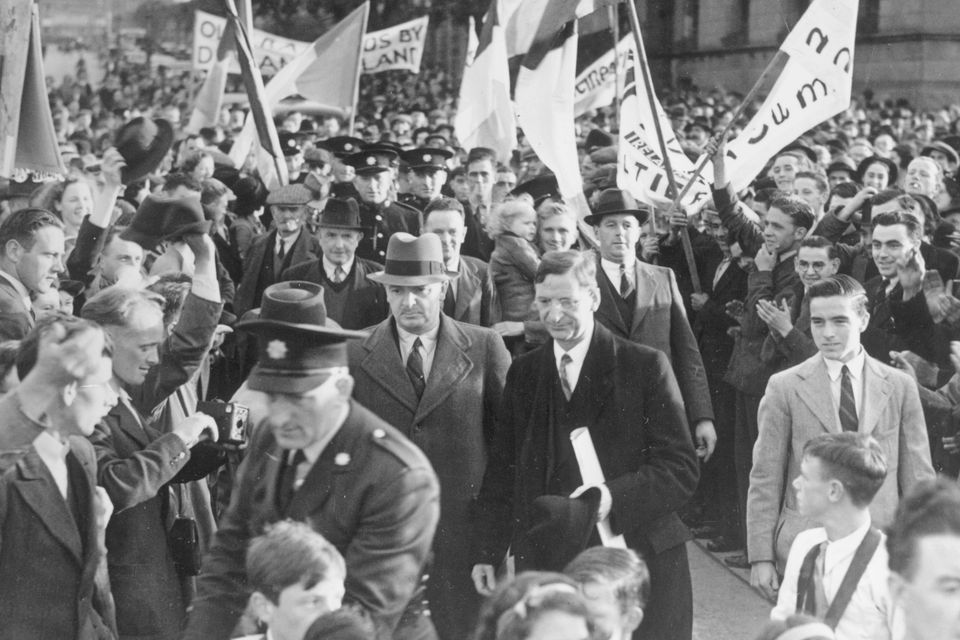
The establishment of Fianna Fáil marked a pivotal moment in Irish political history, originating from a split within Sinn Féin nearly a century ago. In 1923, following a contentious internal vote, Éamon de Valera resigned as president of Sinn Féin after the party decided against taking their seats in the newly formed Dáil Éireann, the legislature of the Irish Free State. This decision was rooted in Sinn Féin’s staunch opposition to the Anglo-Irish Treaty, which had granted 26 counties of Ireland a degree of autonomy.
The decision to form Fianna Fáil was not merely a political maneuver; it signified a broader ideological shift. De Valera and his supporters believed that engaging with the Dáil would facilitate the pursuit of full sovereignty for Ireland, contrasting with the more hardline stance of Sinn Féin. This split ultimately laid the groundwork for what would become one of Ireland’s dominant political parties.
Founding Principles and Early Challenges
Fianna Fáil was officially founded in 1926, with de Valera taking the helm as leader. The party’s formation was marked by a commitment to republican ideals and a vision of a united Ireland. Initially, it faced significant challenges, including navigating the political landscape shaped by the Anglo-Irish Treaty and the subsequent Civil War. Despite these obstacles, Fianna Fáil quickly gained traction among voters who were eager for a new direction.
In the subsequent elections, Fianna Fáil capitalized on the discontent with the ruling Cumann na nGaedheal party. By 1932, the party won a decisive victory, allowing de Valera to become the Taoiseach, or prime minister. This victory not only transformed the political landscape of Ireland but also solidified Fianna Fáil’s position as a major force in Irish politics.
A Century of Governance and Evolution
Throughout its history, Fianna Fáil has been characterized by its ability to adapt to changing political climates. The party has held power for significant periods, shaping key policies that have impacted various aspects of Irish life, from economic development to social reforms. Under de Valera’s leadership, the party focused on building a national identity and fostering economic independence.
The 1970s and 1980s brought new challenges, as Ireland faced economic difficulties and rising unemployment. Fianna Fáil responded with policies aimed at stimulating growth, which included investment in infrastructure and education. These efforts spurred economic recovery and helped the party retain its influence in subsequent decades.
As the 21st century unfolded, Fianna Fáil encountered new hurdles, including the financial crisis of 2008. The party’s handling of the crisis led to significant losses in public support, culminating in a dramatic defeat in the 2011 general election. Despite this setback, the party has continued to play a crucial role in Irish politics, participating in coalition governments and addressing contemporary issues such as housing and healthcare.
The legacy of Fianna Fáil is intrinsically linked to its founding principles and the vision set forth by Éamon de Valera. As the party celebrates its centenary, it reflects on its journey from a splinter group to a dominant political force. With changing demographics and evolving public sentiments, the challenge for Fianna Fáil will be to remain relevant in a rapidly changing political landscape while honoring its historical roots.
In conclusion, the story of Fianna Fáil is not just about political evolution but also about the ongoing quest for identity and governance in Ireland. As it moves into its next century, the party faces the task of balancing tradition with the demands of contemporary society.

Mother Reveals Daughter’s Meningitis Seizure After Night Out

Major Oil Spill Disrupts Traffic in Donegal on March 16, 2026

Discovering Literature: The Joys of Rejoining a Public Library

Ted Season 2 Announced: Release Date & Trailer Updates Revealed

Research Ireland and UKRI Forge New Collaboration Agreement

David McGoldrick’s Impressive Scoring Streak Sparks World Cup Talk

Plane Crash Claims Lives of Publishing Heir, Pregnant Wife, and Pilot

Oscars Snub Brigitte Bardot Sparks Controversy Over In Memoriam

Meta Plans Major Layoffs to Offset Rising AI Investment Costs

Tributes Surge for 9-Year-Old Leon Briody After Cancer Battle

Aimee Osbourne Joins Family for Emotional Tribute to Ozzy

Danny Healy-Rae Considers Complaint After Altercation with Garda

Hawaii Commemorates 80 Years Since Hiroshima Bombing with Ceremony

Ireland Enjoys Summer Heat as Hurricane Erin Approaches Atlantic

Couple Convicted of Murdering Two-Year-Old Grandson in Wales

Gaza Aid Distribution Tragedy: 20 Killed Amid Ongoing Violence

Newcastle West Woman Patricia Foley Found Safe After Urgent Search

Fianna Fáil TDs Urgently Consider Maire Geoghegan-Quinn for Presidency
-
 Top Stories10 months ago
Tributes Surge for 9-Year-Old Leon Briody After Cancer Battle
-
 Entertainment12 months ago
Aimee Osbourne Joins Family for Emotional Tribute to Ozzy
-
 Politics12 months ago
Danny Healy-Rae Considers Complaint After Altercation with Garda
-
 World12 months ago
Hawaii Commemorates 80 Years Since Hiroshima Bombing with Ceremony
-
 Top Stories11 months ago
Ireland Enjoys Summer Heat as Hurricane Erin Approaches Atlantic
-
 World12 months ago
Couple Convicted of Murdering Two-Year-Old Grandson in Wales
-
 World12 months ago
Gaza Aid Distribution Tragedy: 20 Killed Amid Ongoing Violence
-
 Top Stories10 months ago
Newcastle West Woman Patricia Foley Found Safe After Urgent Search
-
 Top Stories12 months ago
Fianna Fáil TDs Urgently Consider Maire Geoghegan-Quinn for Presidency
-

 World12 months ago
Aristocrat Constance Marten and Partner Convicted of Infant Murder
-

 Top Stories11 months ago
Climbing Errigal: A Must-Do Summer Adventure in Donegal
-

 Top Stories11 months ago
Hike Donegal’s Errigal Mountain NOW for Unforgettable Summer Views