
Politics
Taoiseach Micheál Martin Seeks Stronger Ties During China Visit

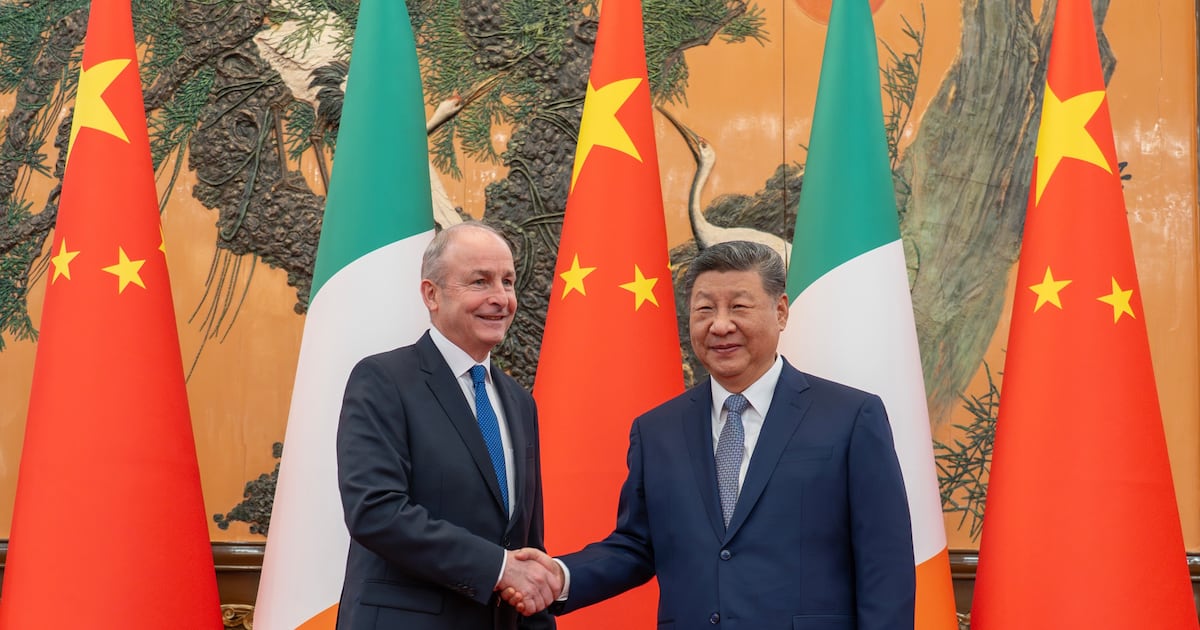
Micheál Martin’s visit to China this week marked a significant diplomatic event as it was the first trip by a sitting Taoiseach since 2012. Over four days, Martin received a warm welcome, including meetings with prominent leaders such as President Xi Jinping, Premier Li Qiang, and Zhao Leji, Chairman of the National People’s Congress. The primary focus of his discussions centered on enhancing the bilateral economic relationship, where Ireland enjoys a trade surplus with China.
As Ireland’s largest trading partner in Asia and its fifth-largest globally, the potential for growth in both markets and foreign direct investment was a core theme of the visit. Martin engaged with representatives from 13 Irish higher education institutions, highlighting over 100 joint programmes established with Chinese colleges. He dismissed concerns regarding security risks associated with hosting Chinese students, noting that universities in the United States and other European nations also welcome them.
A Call for New EU-China Relations
Throughout his meetings in Beijing, Martin heard a consistent message from Xi, Li, and Zhao: the need for a new framework to guide relations between China and the European Union. EU-China relations have faced challenges for several years, particularly due to Beijing’s support for Russia during the ongoing conflict in Ukraine. The growing trade surplus in China, which exceeded $1 trillion last year, raises concerns for European industries. Chinese manufacturers are increasingly competitive, producing high-end goods like electric vehicles with efficiency and quality that pose challenges to their European counterparts.
While acknowledging these concerns, Martin suggested that European industries should focus on enhancing their competitiveness rather than voicing dissatisfaction with Chinese imports. His emphasis on open and diversified trade relations is noteworthy, although it coincides with the Irish Government’s recent decision to vote against an EU trade deal with Mercosur, which may dilute the impact of his message.
Addressing Human Rights Concerns
During his discussions, Martin also raised critical human rights issues, including the case of Jimmy Lai, a former media owner in Hong Kong who has been imprisoned under the city’s National Security Law. Lai, who is 78 years old, faces a sentencing hearing next week after being convicted of colluding with foreign forces. His potential life sentence underscores the serious human rights concerns in the region.
While addressing human rights may not yield immediate results with Chinese officials, it remains essential for leaders like Martin to voice these concerns. Bringing attention to human rights abuses serves to remind victims that they are not forgotten and that their struggles resonate beyond national borders.
As Micheál Martin concludes his visit, the delicate balance of promoting economic ties while addressing human rights issues reflects the complexities of modern diplomacy. His engagement with Chinese leaders highlights Ireland’s role in navigating these challenging waters, aiming for a constructive and mutually beneficial relationship in an increasingly interconnected world.

Mother Reveals Daughter’s Meningitis Seizure After Night Out

Major Oil Spill Disrupts Traffic in Donegal on March 16, 2026

Discovering Literature: The Joys of Rejoining a Public Library

Ted Season 2 Announced: Release Date & Trailer Updates Revealed

Research Ireland and UKRI Forge New Collaboration Agreement

David McGoldrick’s Impressive Scoring Streak Sparks World Cup Talk

Plane Crash Claims Lives of Publishing Heir, Pregnant Wife, and Pilot

Oscars Snub Brigitte Bardot Sparks Controversy Over In Memoriam

Meta Plans Major Layoffs to Offset Rising AI Investment Costs

Tributes Surge for 9-Year-Old Leon Briody After Cancer Battle

Aimee Osbourne Joins Family for Emotional Tribute to Ozzy

Danny Healy-Rae Considers Complaint After Altercation with Garda

Hawaii Commemorates 80 Years Since Hiroshima Bombing with Ceremony

Ireland Enjoys Summer Heat as Hurricane Erin Approaches Atlantic

Couple Convicted of Murdering Two-Year-Old Grandson in Wales

Newcastle West Woman Patricia Foley Found Safe After Urgent Search

Fianna Fáil TDs Urgently Consider Maire Geoghegan-Quinn for Presidency

Gaza Aid Distribution Tragedy: 20 Killed Amid Ongoing Violence
-
 Top Stories7 months ago
Tributes Surge for 9-Year-Old Leon Briody After Cancer Battle
-
 Entertainment9 months ago
Aimee Osbourne Joins Family for Emotional Tribute to Ozzy
-
 Politics9 months ago
Danny Healy-Rae Considers Complaint After Altercation with Garda
-
 World9 months ago
Hawaii Commemorates 80 Years Since Hiroshima Bombing with Ceremony
-
 Top Stories8 months ago
Ireland Enjoys Summer Heat as Hurricane Erin Approaches Atlantic
-
 World9 months ago
Couple Convicted of Murdering Two-Year-Old Grandson in Wales
-
 Top Stories7 months ago
Newcastle West Woman Patricia Foley Found Safe After Urgent Search
-
 Top Stories9 months ago
Fianna Fáil TDs Urgently Consider Maire Geoghegan-Quinn for Presidency
-
 World9 months ago
Gaza Aid Distribution Tragedy: 20 Killed Amid Ongoing Violence
-

 World9 months ago
Aristocrat Constance Marten and Partner Convicted of Infant Murder
-

 Top Stories8 months ago
Hike Donegal’s Errigal Mountain NOW for Unforgettable Summer Views
-

 Top Stories8 months ago
Climbing Errigal: A Must-Do Summer Adventure in Donegal