
Politics
Trump Advocates for Stronger Europe Amid Criticism from Leaders

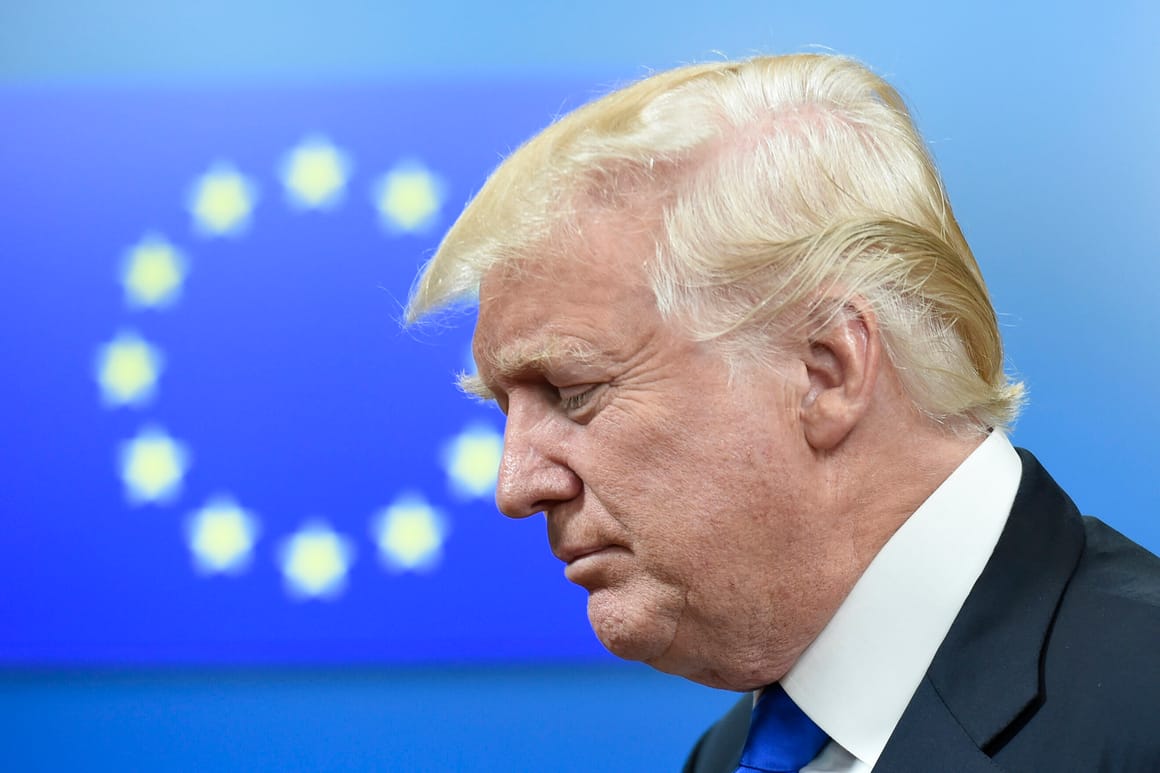
Recent comments from former U.S. President Donald Trump have reignited discussions about the transatlantic relationship between the United States and Europe. In an interview with POLITICO, Trump expressed his desire for a “strong Europe,” highlighting the importance of European stability for global security. His remarks come in the wake of a new U.S. National Security Strategy that calls for greater collaboration between the U.S. and Europe.
Mathias Döpfner, chair and CEO of Axel Springer, the parent company of POLITICO, argues that European leaders have often reacted defensively to American critiques. This, he contends, is counterproductive. Rather than dismissing the criticisms, European nations should engage in constructive dialogue and self-reflection. “Criticism is almost always a sign of involvement, of passion,” he stated, emphasizing the need for a more open response.
Critique of Europe’s Performance
Döpfner points out that much of the criticism directed at Europe is valid. He asserts that European nations have not delivered adequately on crucial issues such as economic growth, energy affordability, and digital innovation. For instance, Europe continues to grapple with slow growth rates and has lagged behind in adopting new technologies, particularly artificial intelligence.
The recent formation of a new German government was met with optimism, as it was expected to rejuvenate the economy and strengthen transatlantic ties. However, the reality has been disappointing. The government has faced challenges in living up to its promises, leading to frustration among both domestic and international observers.
Countries like France and Spain have also struggled with their own political and economic challenges. France is dealing with the complexities of its colonial past, while Spain’s government has faced criticism for its handling of social and economic issues. In contrast, nations such as Finland, Denmark, and the Baltic states show a more proactive approach, demonstrating ambition and a commitment to improvement.
The Path Forward
Döpfner argues that Europe must adopt a more constructive and ambitious stance to strengthen its position on the global stage. A unified approach, especially regarding the ongoing conflict in Ukraine, would be a significant step forward. He suggests that Europe should not only talk about sovereignty but also demonstrate it through decisive actions.
Moreover, he emphasizes the need for a fundamental shift in migration policy, advocating for solutions that respect European values and legal frameworks. The effectiveness of these changes could determine the overall success of European nations in addressing Trump’s critiques.
Looking ahead, Döpfner posits that there is an opportunity for a renaissance in the transatlantic relationship. Both Europe and the U.S. face rising pressures to adapt and evolve. A potential “New Deal” between the European Union and the U.S. could pave the way for tariff-free trade, which would benefit both economies and contribute to a more cohesive security policy for the free world.
In conclusion, the current climate presents a chance for both Europe and America to redefine their partnership. As Winston Churchill famously stated, “Never waste a good crisis.” The challenges at hand could serve as a catalyst for a renewed commitment to cooperation and shared goals, benefiting both sides of the Atlantic.

Mother Reveals Daughter’s Meningitis Seizure After Night Out

Major Oil Spill Disrupts Traffic in Donegal on March 16, 2026

Discovering Literature: The Joys of Rejoining a Public Library

Ted Season 2 Announced: Release Date & Trailer Updates Revealed

Research Ireland and UKRI Forge New Collaboration Agreement

David McGoldrick’s Impressive Scoring Streak Sparks World Cup Talk

Plane Crash Claims Lives of Publishing Heir, Pregnant Wife, and Pilot

Oscars Snub Brigitte Bardot Sparks Controversy Over In Memoriam

Meta Plans Major Layoffs to Offset Rising AI Investment Costs

Tributes Surge for 9-Year-Old Leon Briody After Cancer Battle

Aimee Osbourne Joins Family for Emotional Tribute to Ozzy

Danny Healy-Rae Considers Complaint After Altercation with Garda

Hawaii Commemorates 80 Years Since Hiroshima Bombing with Ceremony

Ireland Enjoys Summer Heat as Hurricane Erin Approaches Atlantic

Couple Convicted of Murdering Two-Year-Old Grandson in Wales

Gaza Aid Distribution Tragedy: 20 Killed Amid Ongoing Violence

Newcastle West Woman Patricia Foley Found Safe After Urgent Search

Fianna Fáil TDs Urgently Consider Maire Geoghegan-Quinn for Presidency
-
 Top Stories10 months ago
Tributes Surge for 9-Year-Old Leon Briody After Cancer Battle
-
 Entertainment12 months ago
Aimee Osbourne Joins Family for Emotional Tribute to Ozzy
-
 Politics12 months ago
Danny Healy-Rae Considers Complaint After Altercation with Garda
-
 World12 months ago
Hawaii Commemorates 80 Years Since Hiroshima Bombing with Ceremony
-
 Top Stories11 months ago
Ireland Enjoys Summer Heat as Hurricane Erin Approaches Atlantic
-
 World12 months ago
Couple Convicted of Murdering Two-Year-Old Grandson in Wales
-
 World12 months ago
Gaza Aid Distribution Tragedy: 20 Killed Amid Ongoing Violence
-
 Top Stories10 months ago
Newcastle West Woman Patricia Foley Found Safe After Urgent Search
-
 Top Stories12 months ago
Fianna Fáil TDs Urgently Consider Maire Geoghegan-Quinn for Presidency
-

 World12 months ago
Aristocrat Constance Marten and Partner Convicted of Infant Murder
-

 Top Stories11 months ago
Climbing Errigal: A Must-Do Summer Adventure in Donegal
-

 Top Stories11 months ago
Hike Donegal’s Errigal Mountain NOW for Unforgettable Summer Views