
Politics
U.S. Shifts Tone at Munich Security Conference, Not Substance

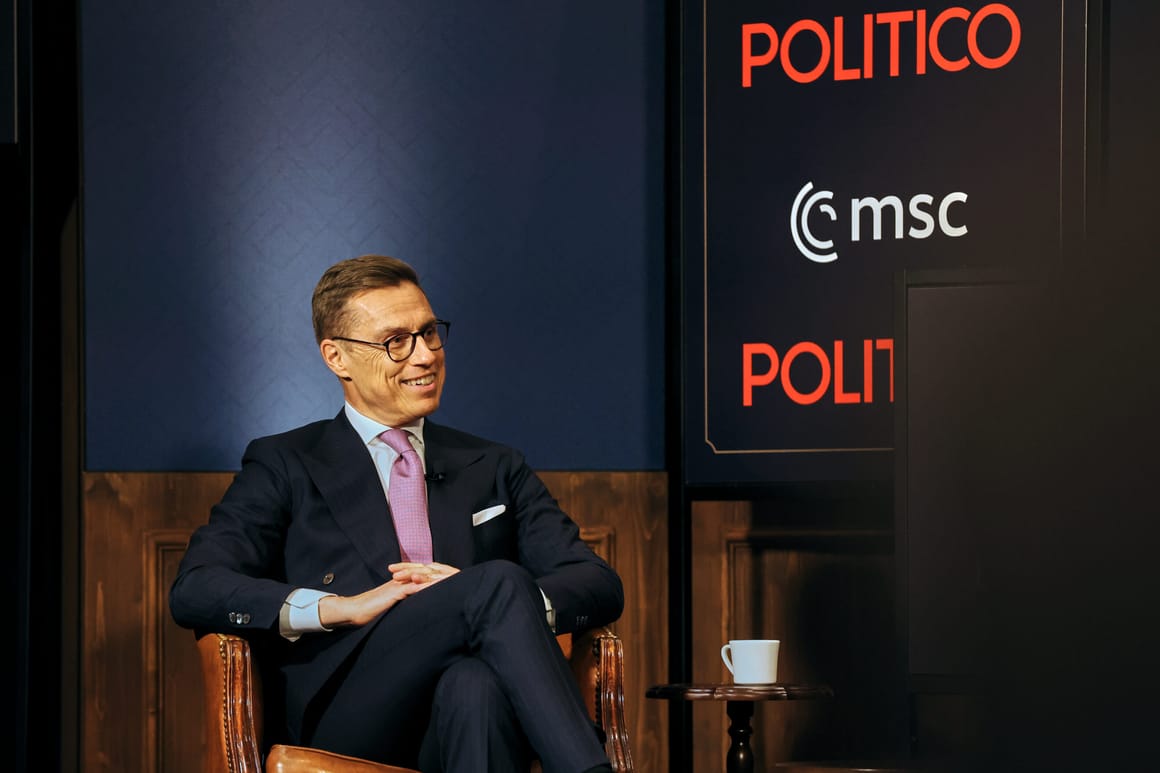
The Munich Security Conference has seen a notable shift in the tone of U.S. diplomacy this year, yet many observers caution that this reflects a change in rhetoric rather than a fundamental alteration in policy. During a live interview with POLITICO, Alexander Stubb, the president of Finland and a known ally of former President Donald Trump, emphasized that the underlying strategies of American foreign policy remain largely unchanged.
Stubb pointed to the U.S. National Security Strategy, which he believes contains some of its harshest critiques directed at European allies. He described the current American approach as a combination of ideology and hierarchy, stating: “One is ideological: It’s very MAGA … and then the second strand is America First.” This perspective underscores a continuation of Trump-era themes, even amidst a softened tone.
U.S. Officials Highlight Shared Values
U.S. Secretary of State Marco Rubio addressed the conference with remarks that echoed Make America Great Again principles, reinforcing the historical and cultural ties between Europe and the United States. He articulated that European nations are still regarded as vital allies, a sentiment echoed by Matthew Whitaker, the U.S. Ambassador to NATO. Whitaker asserted in a separate interview that “The Americans are not leaving,” contrasting sharply with the earlier, more hostile rhetoric from last year’s conference.
Stubb noted that while the tone has been toned down, Rubio’s statements regarding the shifting focus of U.S. defense responsibilities toward Europe—while prioritizing the Western Hemisphere and Asia—do not diverge significantly from the views expressed by Vice President JD Vance in 2022. “I think we brought down the temperature in the transatlantic relationship,” Stubb said, reflecting on a conversation he had with Rubio following the Secretary’s speech.
Evolution of the Transatlantic Relationship
According to Stubb, the evolving nature of American foreign policy should be understood within the context of changing global priorities. He outlined a clear hierarchy for U.S. interests: “No. 1 is the Western Hemisphere, No. 2 is the Indo-Pacific, and then No. 3 is Europe.” Despite this ranking, Stubb maintained that the transatlantic partnership remains strong. He cited Finland’s military cooperation with the United States, which predates its NATO membership, as evidence of a robust alliance that is “better than it has ever been.”
Stubb firmly believes that a strong defense presence in Finland, Sweden, and Norway is beneficial for U.S. interests. “It’s in the interest of the United States to have very strong defense forces in Finland, Sweden and Norway,” he reiterated, advocating for continued collaboration between Europe and the U.S.
The Munich Security Conference serves as a crucial platform for addressing global security issues, and this year’s discussions reflect the ongoing complexities of U.S.-European relations. While the tone may have softened, the implications of American policy priorities remain a critical topic for both sides of the Atlantic.

Mother Reveals Daughter’s Meningitis Seizure After Night Out

Major Oil Spill Disrupts Traffic in Donegal on March 16, 2026

Discovering Literature: The Joys of Rejoining a Public Library

Ted Season 2 Announced: Release Date & Trailer Updates Revealed

Research Ireland and UKRI Forge New Collaboration Agreement

David McGoldrick’s Impressive Scoring Streak Sparks World Cup Talk

Plane Crash Claims Lives of Publishing Heir, Pregnant Wife, and Pilot

Oscars Snub Brigitte Bardot Sparks Controversy Over In Memoriam

Meta Plans Major Layoffs to Offset Rising AI Investment Costs

Tributes Surge for 9-Year-Old Leon Briody After Cancer Battle

Aimee Osbourne Joins Family for Emotional Tribute to Ozzy

Danny Healy-Rae Considers Complaint After Altercation with Garda

Hawaii Commemorates 80 Years Since Hiroshima Bombing with Ceremony

Ireland Enjoys Summer Heat as Hurricane Erin Approaches Atlantic

Couple Convicted of Murdering Two-Year-Old Grandson in Wales

Newcastle West Woman Patricia Foley Found Safe After Urgent Search

Fianna Fáil TDs Urgently Consider Maire Geoghegan-Quinn for Presidency

Gaza Aid Distribution Tragedy: 20 Killed Amid Ongoing Violence
-
 Top Stories7 months ago
Tributes Surge for 9-Year-Old Leon Briody After Cancer Battle
-
 Entertainment8 months ago
Aimee Osbourne Joins Family for Emotional Tribute to Ozzy
-
 Politics9 months ago
Danny Healy-Rae Considers Complaint After Altercation with Garda
-
 World9 months ago
Hawaii Commemorates 80 Years Since Hiroshima Bombing with Ceremony
-
 Top Stories8 months ago
Ireland Enjoys Summer Heat as Hurricane Erin Approaches Atlantic
-
 World9 months ago
Couple Convicted of Murdering Two-Year-Old Grandson in Wales
-
 Top Stories7 months ago
Newcastle West Woman Patricia Foley Found Safe After Urgent Search
-
 Top Stories9 months ago
Fianna Fáil TDs Urgently Consider Maire Geoghegan-Quinn for Presidency
-
 World9 months ago
Gaza Aid Distribution Tragedy: 20 Killed Amid Ongoing Violence
-

 World9 months ago
Aristocrat Constance Marten and Partner Convicted of Infant Murder
-

 Top Stories8 months ago
Hike Donegal’s Errigal Mountain NOW for Unforgettable Summer Views
-

 Top Stories8 months ago
Climbing Errigal: A Must-Do Summer Adventure in Donegal