
Politics
UK Supreme Court Blocks Release of Sensitive Troubles-Era Information

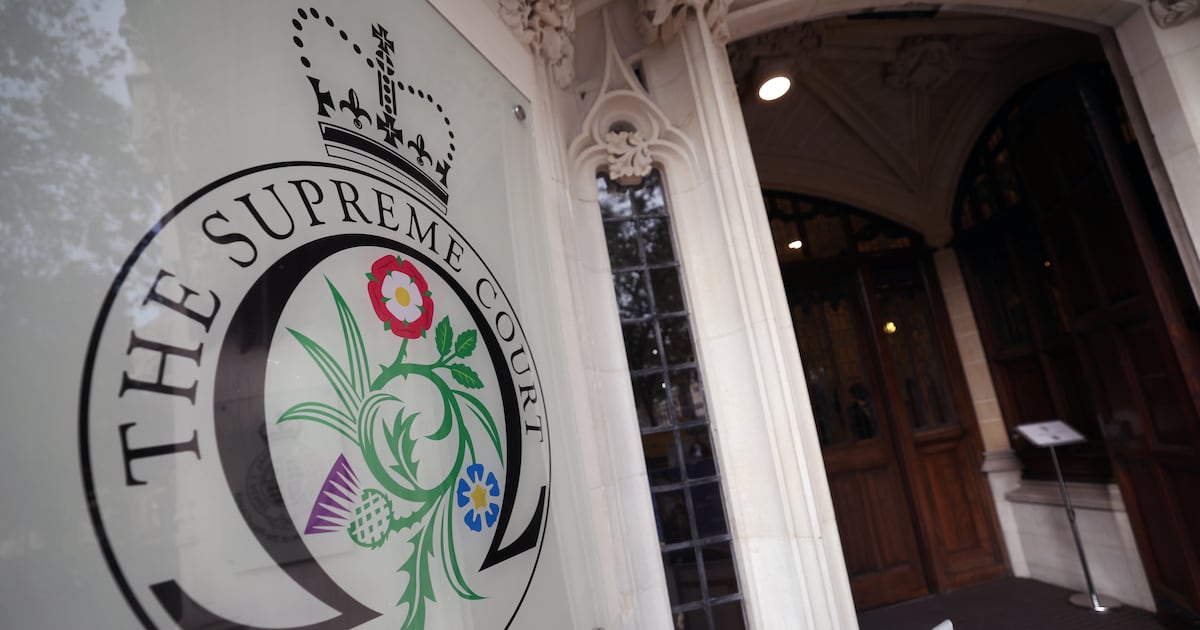
The UK Supreme Court has ruled in favor of the government by blocking the release of sensitive information related to the Troubles-era inquest. This decision, announced on November 1, 2023, has significant implications for ongoing legacy investigations in Northern Ireland, including the identification of the IRA informer known as Stakeknife. The unanimous ruling sided with Northern Secretary Hilary Benn, preventing a coroner from disclosing summaries of evidence contained in classified security force files.
Human rights organizations have expressed deep concern over the ruling. Daniel Holder, director of the Committee on the Administration of Justice, warned that this decision could allow government officials to conceal the involvement of state agents in killings and other violations during the Northern Ireland conflict. Holder stated, “The ruling itself implies that doing so is an appropriate application of the [UK] government’s Neither Confirm Nor Deny [NCND] policy.”
In a written statement to Parliament, Benn described the case as “highly complex” with far-reaching effects. He acknowledged the need for the government to consider all aspects of the judgment, particularly regarding the request from Operation Kenova to officially name Stakeknife, who is widely believed to be Freddie Scappaticci, a senior member of the Belfast IRA.
The Supreme Court’s ruling stems from a challenge to the decision made by coroner Louisa Fee, who sought to disclose certain evidence in her inquest findings into the death of Liam Paul “Topper” Thompson. Thompson was shot and killed by the Ulster Defence Association (UDA) while in a taxi in Springfield Park, Belfast, in 1994. His family has long suspected state collusion in his murder.
During the judgment, Lord Stephens highlighted that one key consideration in Thompson’s inquest was whether security forces had received information from an informer related to his death. The Police Service of Northern Ireland (PSNI) held documents relevant to this inquiry. However, the Secretary of State argued that disclosing these documents would undermine national security and violate the NCND policy regarding the use of informers.
The Northern Secretary sought to withhold the information on the grounds of Public Interest Immunity (PII), a position supported by PSNI Chief Constable Jon Boutcher. The coroner initially upheld this claim concerning several documents but permitted a summary of evidence from one folder to be disclosed. This decision was later challenged but upheld by the High Court and the Court of Appeal. Ultimately, the Supreme Court found that the coroner had erred in her decision to disclose any information.
Lord Stephens underscored that the court accepted the Northern Secretary’s assessment regarding potential risks to national security. The judges concluded that “the balance of the public interest clearly lies against the disclosure of the gist” of the evidence.
The ruling has sparked reactions from those directly affected by Thompson’s murder. Eugene Thompson, Liam’s brother, who passed away earlier this year after a terminal illness, had campaigned for justice on behalf of his brother. He received a letter of apology from Chief Constable Boutcher just days before his death, which acknowledged the police’s failures and suggested that Thompson’s death might have been preventable.
Following the judgment, Boutcher stated that the PSNI would carefully analyze the ruling’s implications and discuss it with the Northern Ireland Office and other stakeholders in the new year. He emphasized the need for a PII process that satisfies both the courts and the requirements for disclosing information to victims and their families.
Mark Thompson, CEO of Relatives for Justice, remarked that the ruling reinforces the belief that individuals managing agents and informers remain unaccountable. He expressed concern that this decision undermines prospects for new legacy arrangements and perpetuates a form of immunity previously deemed unlawful under the Legacy Act.
This ruling not only impacts the search for truth regarding historical injustices in Northern Ireland but also raises significant questions about transparency and accountability within state operations during a tumultuous period of conflict. As the government evaluates the judgment, the call for justice and the need for clarity on state involvement in past atrocities continues to resonate among victims’ families and human rights advocates.

Mother Reveals Daughter’s Meningitis Seizure After Night Out

Major Oil Spill Disrupts Traffic in Donegal on March 16, 2026

Discovering Literature: The Joys of Rejoining a Public Library

Ted Season 2 Announced: Release Date & Trailer Updates Revealed

Research Ireland and UKRI Forge New Collaboration Agreement

David McGoldrick’s Impressive Scoring Streak Sparks World Cup Talk

Plane Crash Claims Lives of Publishing Heir, Pregnant Wife, and Pilot

Oscars Snub Brigitte Bardot Sparks Controversy Over In Memoriam

Meta Plans Major Layoffs to Offset Rising AI Investment Costs

Tributes Surge for 9-Year-Old Leon Briody After Cancer Battle

Aimee Osbourne Joins Family for Emotional Tribute to Ozzy

Danny Healy-Rae Considers Complaint After Altercation with Garda

Hawaii Commemorates 80 Years Since Hiroshima Bombing with Ceremony

Ireland Enjoys Summer Heat as Hurricane Erin Approaches Atlantic

Couple Convicted of Murdering Two-Year-Old Grandson in Wales

Gaza Aid Distribution Tragedy: 20 Killed Amid Ongoing Violence

Newcastle West Woman Patricia Foley Found Safe After Urgent Search

Fianna Fáil TDs Urgently Consider Maire Geoghegan-Quinn for Presidency
-
 Top Stories10 months ago
Tributes Surge for 9-Year-Old Leon Briody After Cancer Battle
-
 Entertainment12 months ago
Aimee Osbourne Joins Family for Emotional Tribute to Ozzy
-
 Politics12 months ago
Danny Healy-Rae Considers Complaint After Altercation with Garda
-
 World12 months ago
Hawaii Commemorates 80 Years Since Hiroshima Bombing with Ceremony
-
 Top Stories11 months ago
Ireland Enjoys Summer Heat as Hurricane Erin Approaches Atlantic
-
 World12 months ago
Couple Convicted of Murdering Two-Year-Old Grandson in Wales
-
 World12 months ago
Gaza Aid Distribution Tragedy: 20 Killed Amid Ongoing Violence
-
 Top Stories10 months ago
Newcastle West Woman Patricia Foley Found Safe After Urgent Search
-
 Top Stories12 months ago
Fianna Fáil TDs Urgently Consider Maire Geoghegan-Quinn for Presidency
-

 World12 months ago
Aristocrat Constance Marten and Partner Convicted of Infant Murder
-

 Top Stories11 months ago
Climbing Errigal: A Must-Do Summer Adventure in Donegal
-

 Top Stories11 months ago
Hike Donegal’s Errigal Mountain NOW for Unforgettable Summer Views