
Science
Archaeologists Uncover Hidden Passage System in German Burial Site

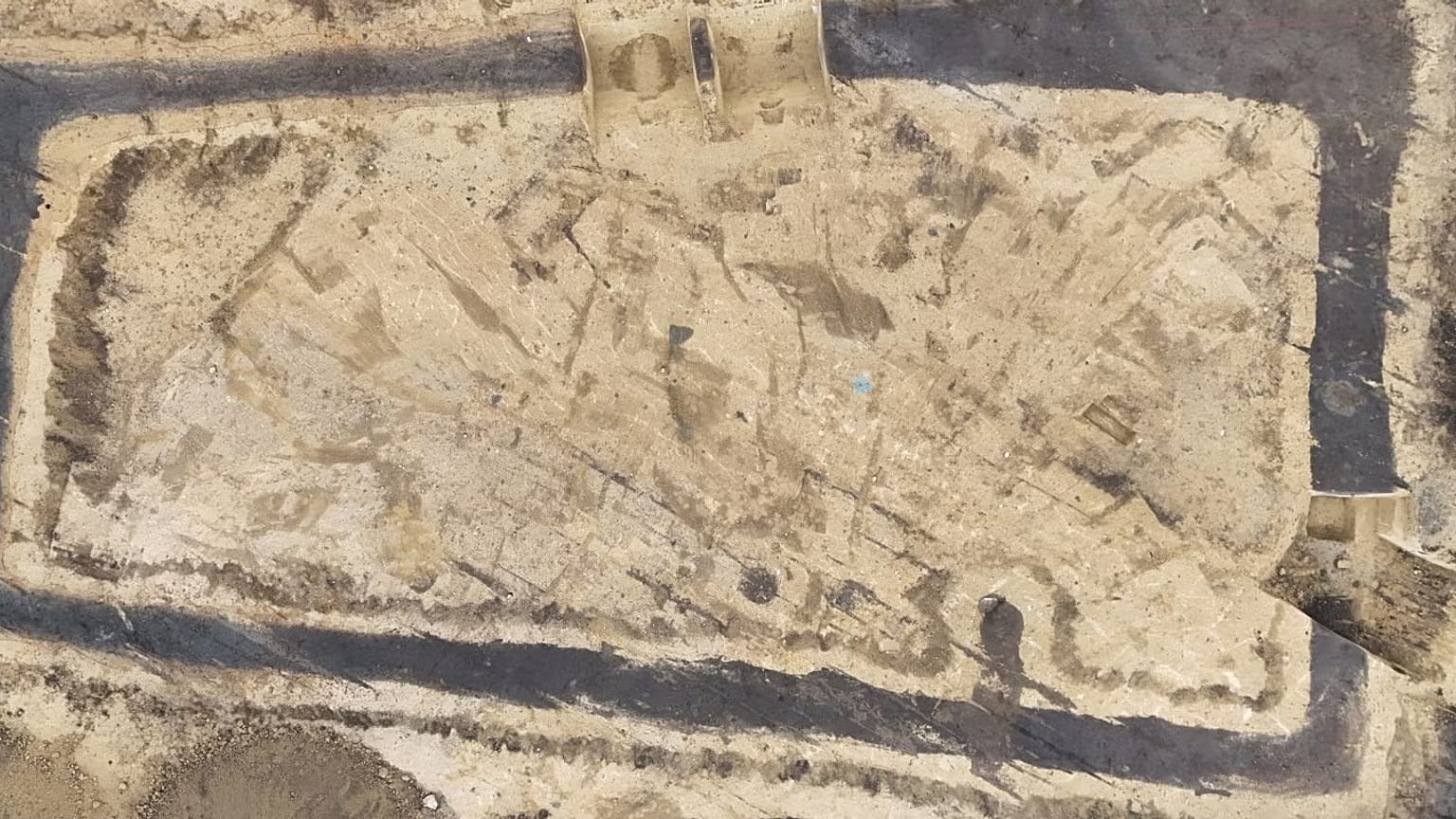
Archaeologists in Germany have uncovered a remarkable corridor system from the late Middle Ages within a burial site that dates back to the 4th millennium BC. This discovery occurred in the small village of Dornberg, located in the Harz Mountains, during preliminary excavations intended for the installation of wind turbines.
Excavations conducted on a flat hill east of Dornberg, in the state of Saxony-Anhalt, revealed evidence of multiple prehistoric periods. Among the findings was a trapezoidal ditch associated with the Baalberg culture, which dates back to approximately 4,000 years ago. Researchers also uncovered poorly preserved burial stools from the late Neolithic period and the remnants of what appears to be a Bronze Age burial mound.
A significant feature of this site is a pit measuring about two metres long and up to 75 centimetres wide. Initially thought to be a grave due to the presence of a large stone slab, further investigation revealed a more complex structure. The backfill layers of the site sloped downwards to the north, leading to a solid loess subsoil beneath. This excavation soon unveiled a passage that is approximately two metres long, 0.7 metres wide, and 1.25 metres high, with a ceiling designed in a pointed gable style at certain points.
Within the soil that filled this passageway, researchers discovered pottery fragments from the late Middle Ages, charcoal remains, a horseshoe, small animal bones, and even a fox skeleton. The absence of typical red soil coloring suggested that a fire had burned briefly at this location.
Notably, at the narrowest point of the entrance to the passage, a distinctive accumulation of large stones indicated that the passageway may have been intentionally sealed. An accessible step allows entry into what scientists refer to as “earth stables.” These underground passage systems, often featuring chamber-like extensions, are particularly well-documented in regions stretching from southern Germany to Austria, as well as the Czech Republic and Slovakia.
Experts believe that these burrows were likely excavated between the 12th and 15th centuries and often feature labyrinthine designs that extend over multiple levels beneath ancient structures such as farms, churches, or cemeteries. There is speculation that the Neolithic complex was still visible above ground during the Middle Ages, leading people to generally avoid such sites, especially those located beneath graves.
While the exact purpose of these passages remains uncertain, they may have served as refuge during raids or held religious significance. As excavations continue, researchers hope to shed more light on the history and usage of this intriguing site.

Mother Reveals Daughter’s Meningitis Seizure After Night Out

Major Oil Spill Disrupts Traffic in Donegal on March 16, 2026

Discovering Literature: The Joys of Rejoining a Public Library

Ted Season 2 Announced: Release Date & Trailer Updates Revealed

Research Ireland and UKRI Forge New Collaboration Agreement

David McGoldrick’s Impressive Scoring Streak Sparks World Cup Talk

Plane Crash Claims Lives of Publishing Heir, Pregnant Wife, and Pilot

Oscars Snub Brigitte Bardot Sparks Controversy Over In Memoriam

Meta Plans Major Layoffs to Offset Rising AI Investment Costs

Tributes Surge for 9-Year-Old Leon Briody After Cancer Battle

Aimee Osbourne Joins Family for Emotional Tribute to Ozzy

Danny Healy-Rae Considers Complaint After Altercation with Garda

Hawaii Commemorates 80 Years Since Hiroshima Bombing with Ceremony

Ireland Enjoys Summer Heat as Hurricane Erin Approaches Atlantic

Couple Convicted of Murdering Two-Year-Old Grandson in Wales

Gaza Aid Distribution Tragedy: 20 Killed Amid Ongoing Violence

Newcastle West Woman Patricia Foley Found Safe After Urgent Search

Fianna Fáil TDs Urgently Consider Maire Geoghegan-Quinn for Presidency
-
 Top Stories10 months ago
Tributes Surge for 9-Year-Old Leon Briody After Cancer Battle
-
 Entertainment12 months ago
Aimee Osbourne Joins Family for Emotional Tribute to Ozzy
-
 Politics12 months ago
Danny Healy-Rae Considers Complaint After Altercation with Garda
-
 World1 year ago
Hawaii Commemorates 80 Years Since Hiroshima Bombing with Ceremony
-
 Top Stories11 months ago
Ireland Enjoys Summer Heat as Hurricane Erin Approaches Atlantic
-
 World1 year ago
Couple Convicted of Murdering Two-Year-Old Grandson in Wales
-
 World1 year ago
Gaza Aid Distribution Tragedy: 20 Killed Amid Ongoing Violence
-
 Top Stories10 months ago
Newcastle West Woman Patricia Foley Found Safe After Urgent Search
-
 Top Stories1 year ago
Fianna Fáil TDs Urgently Consider Maire Geoghegan-Quinn for Presidency
-

 World1 year ago
Aristocrat Constance Marten and Partner Convicted of Infant Murder
-

 Top Stories12 months ago
Climbing Errigal: A Must-Do Summer Adventure in Donegal
-

 Top Stories12 months ago
Hike Donegal’s Errigal Mountain NOW for Unforgettable Summer Views