
Science
Two Bioeconomy Projects Secure €10 Million from EU Fund

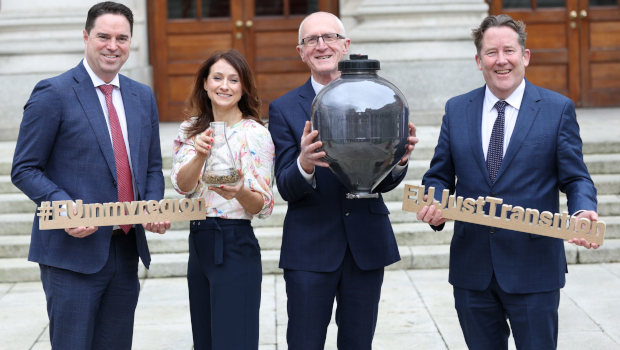
The European Union has allocated €10 million to two bioeconomy demonstration projects under the EU Just Transition Fund. This funding, announced on February 26, 2026, aims to foster sustainable development in Ireland’s Midlands region as it transitions from peat-based industries to low-carbon, biobased value chains. The initiative is co-funded by the Government of Ireland and the European Union.
Both projects will anchor their activities in the Midlands, focusing on biomass procurement and industry collaboration. This approach is expected to generate local investment, create supply-chain opportunities, and facilitate skills development within the community.
Biochar, led by the University of Limerick, will receive €5 million to develop a sustainable biochar product. This initiative aims to demonstrate the application of biochar in agriculture, water treatment, and transport infrastructure. The biochar will be produced from indigenous biomasses, with large-scale demonstrations planned in the region. Additionally, the project will establish a high-level blueprint for a mid-sized biochar facility, paving the way for future investments and replication efforts in the Midlands.
Meanwhile, the Transform project, spearheaded by University College Dublin, will also be awarded €5 million. This initiative focuses on upcycling food waste and agrifood by-products in collaboration with the Circular Food Company and technology provider Somatech. The commercial-scale demonstration will take place at the Circular Food Company’s facility in Tullamore, County Offaly, enhancing sustainable biomanufacturing and job creation in the area. Transform aims to develop a replicable model that can benefit the wider agrifood sector, unlocking opportunities to produce high-value ingredients for both food and feed industries.
Peter Power, Head of the EU Commission Representation in Ireland, emphasized the importance of the EU Just Transition Fund in supporting the Midlands’ shift toward a net-zero economy. He stated, “The support announced today for two circular bioeconomy projects is yet another example of how the EU JTF Programme is drawing on the resources and expertise already available within the region to strengthen innovative ecosystems and to create high-value, sustainable jobs.”
Clare Bannon, acting director of the Eastern and Midland Regional Assembly, which oversees Ireland’s EU Just Transition Fund Programme, highlighted the significance of this investment. She noted, “This significant investment into the bioeconomy sector in the Midlands demonstrates the strong commitment of Ireland and the European Union to advancing a climate-neutral and circular economy at scale.” Bannon added that such large-scale projects not only foster innovation for a greener future but also support economic diversification and job creation.
The funding awarded to Biochar and Transform is part of a broader effort to transform the Midlands into a resilient economy. By promoting a circular economy model, the EU Just Transition Fund aims to ensure sustainable livelihoods and long-term benefits for local communities. The successful implementation of these projects will complement previous EU-funded bioeconomy initiatives in the region, further solidifying the Midlands’ position as a leader in sustainable development.

Mother Reveals Daughter’s Meningitis Seizure After Night Out

Major Oil Spill Disrupts Traffic in Donegal on March 16, 2026

Discovering Literature: The Joys of Rejoining a Public Library

Ted Season 2 Announced: Release Date & Trailer Updates Revealed

Research Ireland and UKRI Forge New Collaboration Agreement

David McGoldrick’s Impressive Scoring Streak Sparks World Cup Talk

Plane Crash Claims Lives of Publishing Heir, Pregnant Wife, and Pilot

Oscars Snub Brigitte Bardot Sparks Controversy Over In Memoriam

Meta Plans Major Layoffs to Offset Rising AI Investment Costs

Tributes Surge for 9-Year-Old Leon Briody After Cancer Battle

Aimee Osbourne Joins Family for Emotional Tribute to Ozzy

Danny Healy-Rae Considers Complaint After Altercation with Garda

Hawaii Commemorates 80 Years Since Hiroshima Bombing with Ceremony

Ireland Enjoys Summer Heat as Hurricane Erin Approaches Atlantic

Couple Convicted of Murdering Two-Year-Old Grandson in Wales

Gaza Aid Distribution Tragedy: 20 Killed Amid Ongoing Violence

Newcastle West Woman Patricia Foley Found Safe After Urgent Search

Fianna Fáil TDs Urgently Consider Maire Geoghegan-Quinn for Presidency
-
 Top Stories10 months ago
Tributes Surge for 9-Year-Old Leon Briody After Cancer Battle
-
 Entertainment12 months ago
Aimee Osbourne Joins Family for Emotional Tribute to Ozzy
-
 Politics12 months ago
Danny Healy-Rae Considers Complaint After Altercation with Garda
-
 World1 year ago
Hawaii Commemorates 80 Years Since Hiroshima Bombing with Ceremony
-
 Top Stories11 months ago
Ireland Enjoys Summer Heat as Hurricane Erin Approaches Atlantic
-
 World1 year ago
Couple Convicted of Murdering Two-Year-Old Grandson in Wales
-
 World1 year ago
Gaza Aid Distribution Tragedy: 20 Killed Amid Ongoing Violence
-
 Top Stories10 months ago
Newcastle West Woman Patricia Foley Found Safe After Urgent Search
-
 Top Stories1 year ago
Fianna Fáil TDs Urgently Consider Maire Geoghegan-Quinn for Presidency
-

 World1 year ago
Aristocrat Constance Marten and Partner Convicted of Infant Murder
-

 Top Stories12 months ago
Climbing Errigal: A Must-Do Summer Adventure in Donegal
-

 Top Stories12 months ago
Hike Donegal’s Errigal Mountain NOW for Unforgettable Summer Views