
Science
Uzbekistan’s ‘Echo of Enlightenment’ Reshapes Science History

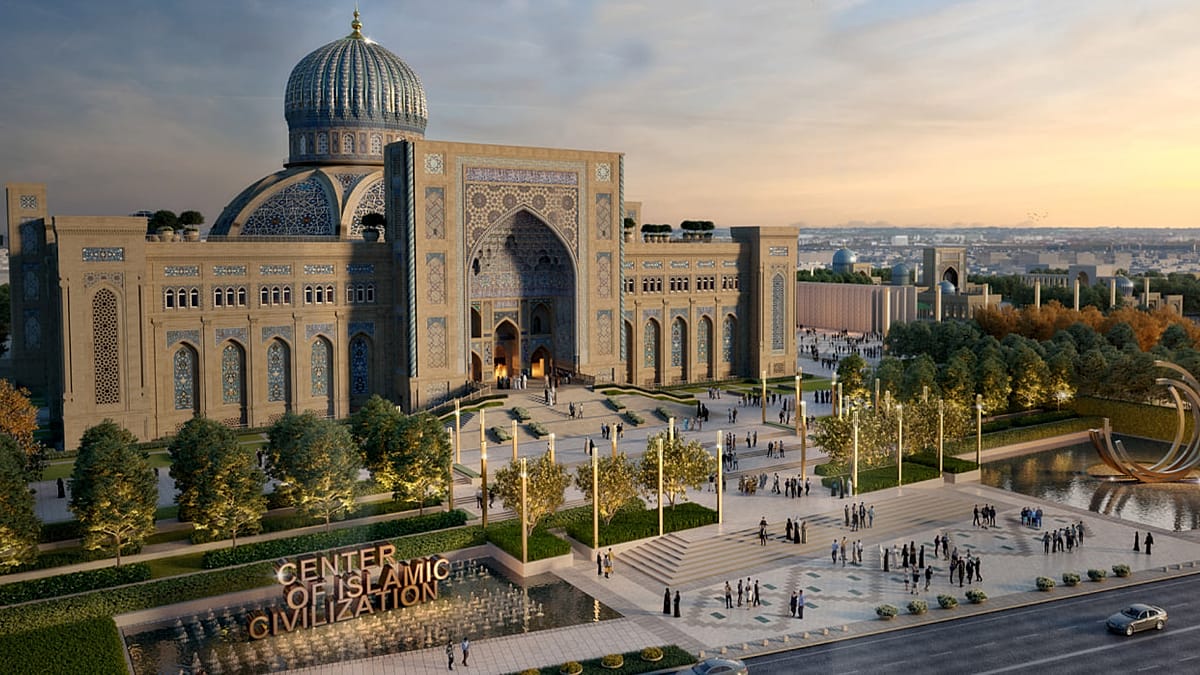
A groundbreaking cultural initiative from Uzbekistan, titled Echo of Enlightenment, is redefining the narrative of science history by reintroducing Central Asian scholars into a global context that has often overlooked their contributions. The project, led by the Center for Islamic Civilization in Tashkent, seeks to highlight the region’s role as a pivotal hub of intellectual exchange, challenging the Eurocentric perspective that typically dominates historical accounts.
The initiative aligns with a message articulated by Uzbekistan’s President Shavkat Mirziyoyev during his address to the United Nations in 2017. He emphasized the Islamic tradition of learning and tolerance as a counter-narrative to extremist ideologies. Rather than approaching this argument through political channels, Echo of Enlightenment adopts a cultural approach, utilizing film to disseminate knowledge and illuminate the contributions of thinkers from the Islamic Golden Age whose work influenced European scientific traditions.
Documentary Series Brings History to Life
At the core of the project is a ten-part documentary series, with each episode dedicated to a prominent scholar or cultural figure from the Islamic Golden Age connected to modern-day Uzbekistan. These films blend dramatic reenactments, expert commentary, and historical research with modern animation to convey complex ideas engagingly. The series is narrated by Sir Ben Kingsley, an Oscar-winning actor known for roles such as Mahatma Gandhi and Avicenna in The Healer. The cinematic style is designed to appeal to contemporary audiences, striking a balance between entertainment and education.
The documentary features influential figures, including Muhammad al-Khwarizmi, who established foundational principles for algebra and algorithms; Ahmad al-Fergani, whose astronomical insights influenced later explorers such as Columbus; and Abu Rayhan al-Biruni, a polymath who made significant contributions to geography and anthropology. Another episode is dedicated to Ibn Sina, widely known in Europe as Avicenna, whose Canon of Medicine remained a critical academic text well into the early modern period.
Highlighting Central Asia’s Intellectual Renaissance
The series also pays considerable attention to the Timurid era, often characterized by historians as Central Asia’s “Second Renaissance.” Viewers are introduced to key figures such as Amir Timur, the first Timurid ruler who transformed Samarkand into a center of learning; Mirzo Ulugbek, a 15th-century astronomer whose calculations of the Earth’s year were remarkably accurate for his time; and Ali Kushchi, who played a crucial role in disseminating astronomical knowledge westward.
Cultural developments are also a focal point, with episodes dedicated to figures such as Alisher Navoi, Kamoliddin Behzad, and Zahiriddin Muhammad Babur. These segments illustrate how literature, miniature painting, and political leadership evolved alongside scientific inquiry, reinforcing the idea that knowledge systems are interconnected.
One visually striking episode recreates Ulugbek’s 15th-century observatory and astronomy school in Samarkand, highlighting their significant role as centers of scientific exploration.
The documentary series serves as a precursor to the broader work of the Center for Islamic Civilization, which is set to fully open to the public in April 2026. The center’s architectural centerpiece is the Mushaf of Uthman, one of the oldest surviving Qur’an manuscripts, dating back to the 7th century and recognized by UNESCO’s Memory of the World Register. Displayed beneath a grand dome alongside 114 rare Qur’ans that trace the evolution of Islamic calligraphy, the manuscript anchors the Center’s narrative of faith, scholarship, and cultural continuity.
The facility, located in the historic Hastimom district of Tashkent, will house exhibition spaces, research laboratories, manuscript archives, restoration workshops, conference halls, and offices for international research teams.
Beyond national storytelling, Echo of Enlightenment aims to recover manuscripts and artifacts associated with Central Asia that reside in foreign collections. The initiative seeks to reconnect these items, either physically or digitally, with their places of origin. By highlighting dynasties such as the Samanids, Karakhanids, Khorezmians, and Timurids, the project emphasizes a broader historical context.
In doing so, the initiative argues that modern science emerged through centuries of cross-cultural exchange rather than in isolation. For audiences in Europe and beyond, the series serves as a reminder that ideas often taught in Western universities have roots that extend further east. Instead of a nostalgic look back, the project presents an ongoing narrative, advocating for the recognition of Islamic civilization as an active contributor to the shared intellectual history of today’s world.

Mother Reveals Daughter’s Meningitis Seizure After Night Out

Major Oil Spill Disrupts Traffic in Donegal on March 16, 2026

Discovering Literature: The Joys of Rejoining a Public Library

Ted Season 2 Announced: Release Date & Trailer Updates Revealed

Research Ireland and UKRI Forge New Collaboration Agreement

David McGoldrick’s Impressive Scoring Streak Sparks World Cup Talk

Plane Crash Claims Lives of Publishing Heir, Pregnant Wife, and Pilot

Oscars Snub Brigitte Bardot Sparks Controversy Over In Memoriam

Meta Plans Major Layoffs to Offset Rising AI Investment Costs

Tributes Surge for 9-Year-Old Leon Briody After Cancer Battle

Aimee Osbourne Joins Family for Emotional Tribute to Ozzy

Danny Healy-Rae Considers Complaint After Altercation with Garda

Hawaii Commemorates 80 Years Since Hiroshima Bombing with Ceremony

Ireland Enjoys Summer Heat as Hurricane Erin Approaches Atlantic

Couple Convicted of Murdering Two-Year-Old Grandson in Wales

Gaza Aid Distribution Tragedy: 20 Killed Amid Ongoing Violence

Newcastle West Woman Patricia Foley Found Safe After Urgent Search

Fianna Fáil TDs Urgently Consider Maire Geoghegan-Quinn for Presidency
-
 Top Stories11 months ago
Tributes Surge for 9-Year-Old Leon Briody After Cancer Battle
-
 Entertainment1 year ago
Aimee Osbourne Joins Family for Emotional Tribute to Ozzy
-
 Politics1 year ago
Danny Healy-Rae Considers Complaint After Altercation with Garda
-
 World1 year ago
Hawaii Commemorates 80 Years Since Hiroshima Bombing with Ceremony
-
 Top Stories12 months ago
Ireland Enjoys Summer Heat as Hurricane Erin Approaches Atlantic
-
 World1 year ago
Couple Convicted of Murdering Two-Year-Old Grandson in Wales
-
 World1 year ago
Gaza Aid Distribution Tragedy: 20 Killed Amid Ongoing Violence
-
 Top Stories11 months ago
Newcastle West Woman Patricia Foley Found Safe After Urgent Search
-
 Top Stories1 year ago
Fianna Fáil TDs Urgently Consider Maire Geoghegan-Quinn for Presidency
-

 World1 year ago
Aristocrat Constance Marten and Partner Convicted of Infant Murder
-

 Top Stories12 months ago
Climbing Errigal: A Must-Do Summer Adventure in Donegal
-

 Top Stories12 months ago
Hike Donegal’s Errigal Mountain NOW for Unforgettable Summer Views