
Top Stories
New Insights Challenge Saint Patrick’s Legacy: Was He a Saint or Criminal?

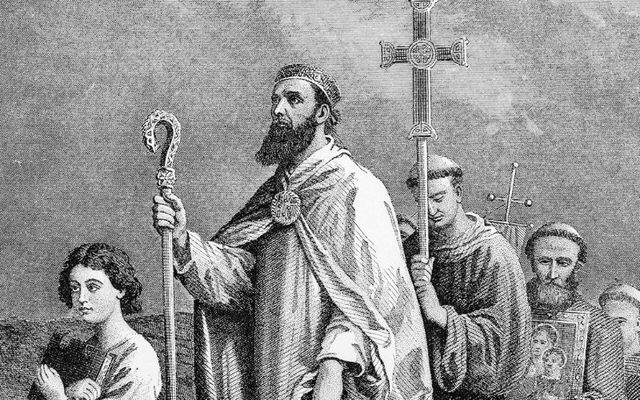
UPDATE: New research is reshaping the narrative surrounding Saint Patrick, Ireland’s revered patron saint, as questions arise about his true character. Celebrated globally on March 17, the day of his death, new findings suggest that his legacy may not be as saintly as once believed.
Authorities confirm that historical documents, including Patrick’s own letters known as the Confessio and Epistola, hint at a complex figure who might have engaged in questionable actions during his mission to spread Christianity in Ireland.
Born in the 5th century, possibly in Cumbria, Patrick was kidnapped by Irish raiders at just 16 years old. After six years as a slave, he escaped and returned home, only to receive a vision urging him to return to Ireland to convert the Irish people. But the circumstances surrounding his return reveal a more tumultuous story.
Upon his arrival, Patrick faced hostility and allegations of impropriety. Reports indicate that he had a confrontation with King Ceretic Guletic, who sold Christian converts into slavery. Patrick’s Epistola excommunicated the king’s warband, leading to accusations of financial misconduct against him. He claimed to have refused gifts and payments, which some interpret as a defense against bribery allegations.
These revelations pose a stark contrast to the traditional view of Patrick as a peaceful missionary. Historical accounts from the late 7th century depict him as a zealous figure, possibly engaging in violent confrontations with druids and targeting wealthy women for conversion.
Furthermore, naturalists note that the legendary tale of Patrick driving snakes from Ireland is likely a myth, as there has never been evidence of snakes in the region. Instead, Patrick’s narrative intertwines with Ireland’s pagan past, where he is said to have destroyed idols and engaged in battles that left a lasting impact on the culture.
Despite controversies surrounding his actions, Patrick’s influence on Irish society is undeniable. His legacy is evident in numerous locations across Ireland, including Croagh Patrick, where he is believed to have fasted for 40 days. Interestingly, Patrick has never been formally canonized by the Pope, raising questions about his sainthood status.
As the debate over Saint Patrick’s true nature continues, scholars urge a reevaluation of his historical impact. With new insights emerging, many are left wondering: was he a divine messenger or a controversial figure driven by ambition?
Stay tuned for further developments on this urgent story, as historians and scholars delve deeper into the life of Saint Patrick, revealing layers of complexity in a tale that has captivated hearts for centuries.

Mother Reveals Daughter’s Meningitis Seizure After Night Out

Major Oil Spill Disrupts Traffic in Donegal on March 16, 2026

Discovering Literature: The Joys of Rejoining a Public Library

Ted Season 2 Announced: Release Date & Trailer Updates Revealed

Research Ireland and UKRI Forge New Collaboration Agreement

David McGoldrick’s Impressive Scoring Streak Sparks World Cup Talk

Plane Crash Claims Lives of Publishing Heir, Pregnant Wife, and Pilot

Oscars Snub Brigitte Bardot Sparks Controversy Over In Memoriam

Meta Plans Major Layoffs to Offset Rising AI Investment Costs

Tributes Surge for 9-Year-Old Leon Briody After Cancer Battle

Aimee Osbourne Joins Family for Emotional Tribute to Ozzy

Danny Healy-Rae Considers Complaint After Altercation with Garda

Hawaii Commemorates 80 Years Since Hiroshima Bombing with Ceremony

Ireland Enjoys Summer Heat as Hurricane Erin Approaches Atlantic

Couple Convicted of Murdering Two-Year-Old Grandson in Wales

Gaza Aid Distribution Tragedy: 20 Killed Amid Ongoing Violence

Newcastle West Woman Patricia Foley Found Safe After Urgent Search

Fianna Fáil TDs Urgently Consider Maire Geoghegan-Quinn for Presidency
-
 Top Stories10 months ago
Tributes Surge for 9-Year-Old Leon Briody After Cancer Battle
-
 Entertainment12 months ago
Aimee Osbourne Joins Family for Emotional Tribute to Ozzy
-
 Politics12 months ago
Danny Healy-Rae Considers Complaint After Altercation with Garda
-
 World1 year ago
Hawaii Commemorates 80 Years Since Hiroshima Bombing with Ceremony
-
 Top Stories11 months ago
Ireland Enjoys Summer Heat as Hurricane Erin Approaches Atlantic
-
 World1 year ago
Couple Convicted of Murdering Two-Year-Old Grandson in Wales
-
 World1 year ago
Gaza Aid Distribution Tragedy: 20 Killed Amid Ongoing Violence
-
 Top Stories10 months ago
Newcastle West Woman Patricia Foley Found Safe After Urgent Search
-
 Top Stories1 year ago
Fianna Fáil TDs Urgently Consider Maire Geoghegan-Quinn for Presidency
-

 World1 year ago
Aristocrat Constance Marten and Partner Convicted of Infant Murder
-

 Top Stories12 months ago
Climbing Errigal: A Must-Do Summer Adventure in Donegal
-

 Top Stories12 months ago
Hike Donegal’s Errigal Mountain NOW for Unforgettable Summer Views