
World
Canada and China Forge New Strategic Partnership Amid Trade Shifts

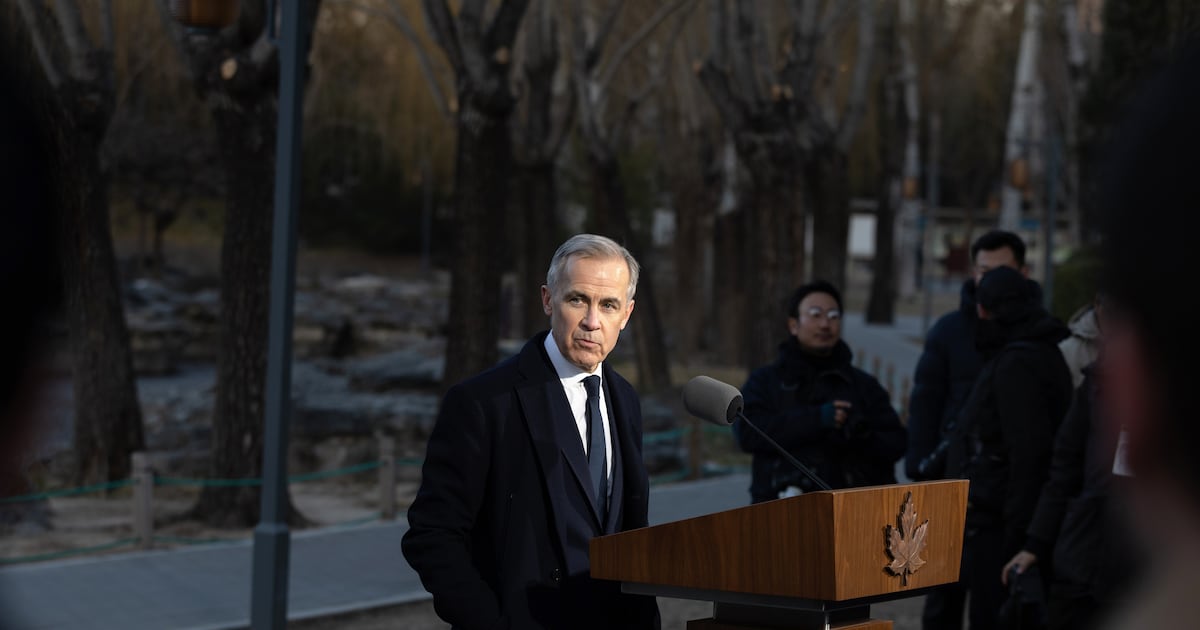
Canadian Prime Minister Mark Carney has announced a significant shift in Canada’s relationship with China, describing it as a strategic partnership that positions the nation advantageously in a changing global landscape. During his recent visit to Beijing, Carney revealed plans to reduce tariffs on Chinese electric vehicles, a move aimed at revitalizing trade ties that have deteriorated in recent years.
This visit culminated in meetings with Chinese President Xi Jinping and Premier Li Qiang, where both sides expressed their intent to rebuild and strengthen their economic relationship. Carney highlighted the collaborative efforts to address trade issues, stating, “Our teams have worked hard, addressing trade irritants and creating platforms for new opportunities.”
Canada will permit the import of up to 49,000 Chinese electric vehicles at a reduced tariff of just 6 percent, a significant drop from the previous 100 percent levy. In return, China plans to lower its tariff on Canadian rapeseed from 85 percent to 15 percent.
Commitment to Multilateralism and Economic Cooperation
In a joint statement, both nations committed to enhancing economic and trade cooperation across various sectors, including energy and finance. They also reaffirmed their dedication to multilateralism and the role of the United Nations in strengthening a rules-based trading system through the World Trade Organization (WTO). Carney noted the urgency of adapting to a rapidly evolving global trading environment, which he described as a “fundamental change” that is altering the effectiveness of established multilateral institutions.
“The global trading system is undergoing a fundamental change… What we do now in Canada, how we position ourselves in the world, will shape our future for decades to come,” Carney emphasized. He urged that Canada must embrace this new reality by diversifying its trade partnerships and attracting significant investment.
A Shift from Hostility to Partnership
Carney’s outreach to China marks a notable turnaround from nearly a decade of strained relations, a period marked by the 2018 arrest of Huawei executive Meng Wanzhou on a U.S. warrant. This incident led to the detention of two Canadians, Michael Kovrig and Michael Spavor, on allegations of espionage, igniting a diplomatic crisis that captured international attention. Their release in 2021, part of a broader agreement that also involved Meng, represented a pivotal moment in Canadian-Chinese relations.
While Carney refrained from directly referencing former U.S. President Donald Trump, he acknowledged that the shift in U.S. foreign policy had influenced Canada’s strategy towards China. He remarked on the ongoing uncertainty surrounding the establishment of a new global order and the future of international trade regulations, noting, “The multilateral system… is being eroded. The question is, what gets built in its place?”
In conclusion, Canada’s renewed partnership with China signifies a strategic pivot aimed at navigating the complexities of global trade in an era shaped by rapid change. The agreements reached during Carney’s visit could set the foundation for a more resilient and diversified Canadian economy moving forward.

Mother Reveals Daughter’s Meningitis Seizure After Night Out

Major Oil Spill Disrupts Traffic in Donegal on March 16, 2026

Discovering Literature: The Joys of Rejoining a Public Library

Ted Season 2 Announced: Release Date & Trailer Updates Revealed

Research Ireland and UKRI Forge New Collaboration Agreement

David McGoldrick’s Impressive Scoring Streak Sparks World Cup Talk

Plane Crash Claims Lives of Publishing Heir, Pregnant Wife, and Pilot

Oscars Snub Brigitte Bardot Sparks Controversy Over In Memoriam

Meta Plans Major Layoffs to Offset Rising AI Investment Costs

Tributes Surge for 9-Year-Old Leon Briody After Cancer Battle

Aimee Osbourne Joins Family for Emotional Tribute to Ozzy

Danny Healy-Rae Considers Complaint After Altercation with Garda

Hawaii Commemorates 80 Years Since Hiroshima Bombing with Ceremony

Ireland Enjoys Summer Heat as Hurricane Erin Approaches Atlantic

Couple Convicted of Murdering Two-Year-Old Grandson in Wales

Newcastle West Woman Patricia Foley Found Safe After Urgent Search

Fianna Fáil TDs Urgently Consider Maire Geoghegan-Quinn for Presidency

Gaza Aid Distribution Tragedy: 20 Killed Amid Ongoing Violence
-
 Top Stories7 months ago
Tributes Surge for 9-Year-Old Leon Briody After Cancer Battle
-
 Entertainment8 months ago
Aimee Osbourne Joins Family for Emotional Tribute to Ozzy
-
 Politics9 months ago
Danny Healy-Rae Considers Complaint After Altercation with Garda
-
 World9 months ago
Hawaii Commemorates 80 Years Since Hiroshima Bombing with Ceremony
-
 Top Stories8 months ago
Ireland Enjoys Summer Heat as Hurricane Erin Approaches Atlantic
-
 World9 months ago
Couple Convicted of Murdering Two-Year-Old Grandson in Wales
-
 Top Stories7 months ago
Newcastle West Woman Patricia Foley Found Safe After Urgent Search
-
 Top Stories9 months ago
Fianna Fáil TDs Urgently Consider Maire Geoghegan-Quinn for Presidency
-
 World9 months ago
Gaza Aid Distribution Tragedy: 20 Killed Amid Ongoing Violence
-

 World9 months ago
Aristocrat Constance Marten and Partner Convicted of Infant Murder
-

 Top Stories8 months ago
Hike Donegal’s Errigal Mountain NOW for Unforgettable Summer Views
-

 Top Stories8 months ago
Climbing Errigal: A Must-Do Summer Adventure in Donegal