
World
Greenland Faces Uncertainty as Trump Revives Territorial Ambitions

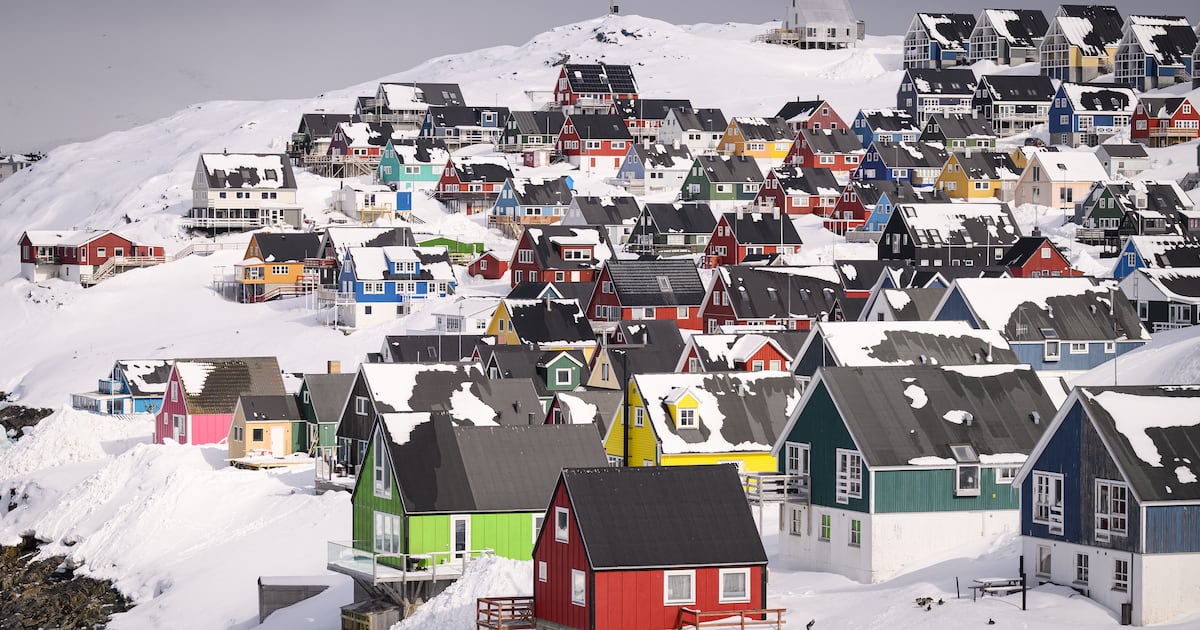
As the United States reignites its interest in Greenland, uncertainty looms over the island’s residents. On a recent Friday morning in Nuuk, the capital city, Mayor Avaaraq Olsen expressed the sentiment of many locals regarding renewed discussions about Greenland’s status. The White House has designated the potential acquisition of Greenland as a “national security priority,” with Donald Trump hinting at a willingness to use military force to achieve this goal.
Nuuk, characterized by its colorful wooden homes and snowy hills, is a remote yet vibrant community of approximately 20,000 people. This small population represents about a third of Greenland’s total inhabitants, who often feel vulnerable amid external geopolitical maneuvers. Mayor Olsen highlighted widespread frustration among her constituents, stating, “Frustration is what I hear the most from people here about other countries talking about us like an item to be bought or swapped.” She emphasized Greenland’s identity, noting, “We have our flag, we have our national anthem, and we are our own people.”
The history of Greenland’s relationship with the United States is marked by previous attempts at acquisition. In 1946, the U.S. offered $100 million in gold bars for the territory, while the Danish government has historically maintained sovereignty over Greenland. The current dialogue is complicated by claims from the Trump administration suggesting increased military presence from Russia and China in the Arctic region, assertions that the Danish government firmly disputes. Lars Lokke Rasmussen, Denmark’s foreign minister, described Trump’s allegations as “not correct,” advocating for a more sensible dialogue.
In a recent meeting at the White House, Danish Ambassador to the United States Jesper Moller Sorensen and Greenland’s chief representative in the U.S., Jacob Isbosethsen, aimed to clarify the future of U.S.-Greenland relations. According to local government aides, details about upcoming discussions with U.S. Secretary of State Marco Rubio remain unclear, heightening tension in Nuuk.
Greenland’s future might hinge on a significant historical agreement from 1951, which granted the United States considerable autonomy to establish military bases on the island. Currently, the only operational base is the Pituffik Space Base, which plays a crucial role in missile warning and space surveillance. Danish analyst Otto Svendsen pointed out that recent U.S. national security strategies have not addressed Greenland or the Arctic, raising questions about the administration’s intentions.
In light of these developments, local residents are left pondering the implications of U.S. interest in their territory. Fisherman Ilatsiag Markussen voiced concern, saying, “I don’t like his tone, and certainly not what he has to say. We don’t know what is coming to be honest.”
The geopolitical landscape has prompted Danish Prime Minister Mette Frederiksen to reflect on the potential consequences of a U.S. military conflict with another NATO member, stating, “If the United States chooses to attack another NATO country militarily, then everything stops.” This assertion underscores the gravity of the situation, as the implications of U.S. ambitions could disrupt longstanding alliances.
A precautionary order from 1952, established in response to historical military vulnerabilities, mandates immediate military response from Danish forces in the event of an attack, even from an allied nation. This order remains active and applies to Greenland, where approximately 300 Danish soldiers are stationed alongside military equipment. Kenneth Ohlenschlaeger Buhl, a retired officer and military analyst, remarked that such directives create a heightened sense of urgency surrounding the current situation.
As Nuuk continues to grapple with these developments, Mayor Olsen remains hopeful for international support. She stated, “When we hear other countries are going to stick up for us, it makes us feel less lonely.” The global community’s response to the evolving dynamics in Greenland will likely shape the island’s future in a rapidly changing geopolitical landscape.

Mother Reveals Daughter’s Meningitis Seizure After Night Out

Major Oil Spill Disrupts Traffic in Donegal on March 16, 2026

Discovering Literature: The Joys of Rejoining a Public Library

Ted Season 2 Announced: Release Date & Trailer Updates Revealed

Research Ireland and UKRI Forge New Collaboration Agreement

David McGoldrick’s Impressive Scoring Streak Sparks World Cup Talk

Plane Crash Claims Lives of Publishing Heir, Pregnant Wife, and Pilot

Oscars Snub Brigitte Bardot Sparks Controversy Over In Memoriam

Meta Plans Major Layoffs to Offset Rising AI Investment Costs

Tributes Surge for 9-Year-Old Leon Briody After Cancer Battle

Aimee Osbourne Joins Family for Emotional Tribute to Ozzy

Danny Healy-Rae Considers Complaint After Altercation with Garda

Hawaii Commemorates 80 Years Since Hiroshima Bombing with Ceremony

Ireland Enjoys Summer Heat as Hurricane Erin Approaches Atlantic

Couple Convicted of Murdering Two-Year-Old Grandson in Wales

Gaza Aid Distribution Tragedy: 20 Killed Amid Ongoing Violence

Newcastle West Woman Patricia Foley Found Safe After Urgent Search

Fianna Fáil TDs Urgently Consider Maire Geoghegan-Quinn for Presidency
-
 Top Stories11 months ago
Tributes Surge for 9-Year-Old Leon Briody After Cancer Battle
-
 Entertainment12 months ago
Aimee Osbourne Joins Family for Emotional Tribute to Ozzy
-
 Politics12 months ago
Danny Healy-Rae Considers Complaint After Altercation with Garda
-
 World1 year ago
Hawaii Commemorates 80 Years Since Hiroshima Bombing with Ceremony
-
 Top Stories11 months ago
Ireland Enjoys Summer Heat as Hurricane Erin Approaches Atlantic
-
 World1 year ago
Couple Convicted of Murdering Two-Year-Old Grandson in Wales
-
 World1 year ago
Gaza Aid Distribution Tragedy: 20 Killed Amid Ongoing Violence
-
 Top Stories11 months ago
Newcastle West Woman Patricia Foley Found Safe After Urgent Search
-
 Top Stories1 year ago
Fianna Fáil TDs Urgently Consider Maire Geoghegan-Quinn for Presidency
-

 World1 year ago
Aristocrat Constance Marten and Partner Convicted of Infant Murder
-

 Top Stories12 months ago
Climbing Errigal: A Must-Do Summer Adventure in Donegal
-

 Top Stories12 months ago
Hike Donegal’s Errigal Mountain NOW for Unforgettable Summer Views