
World
UCD Evicts Gaza Protest Encampment Amid Legal Controversy

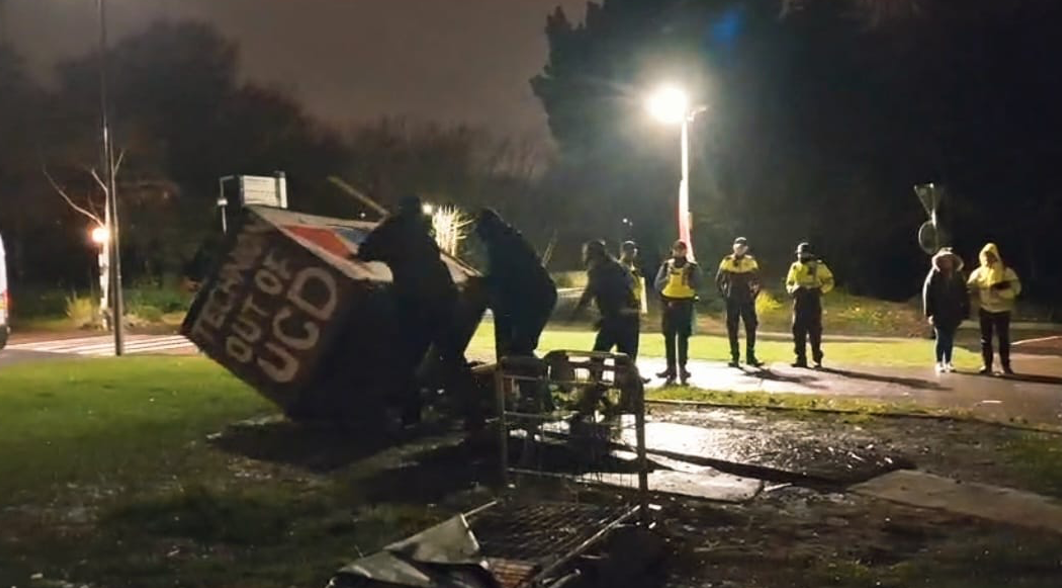
University College Dublin (UCD) dismantled a protest encampment supporting Gaza on January 13, 2026, following a contentious 132-day demonstration. The camp, named “Break the Academic Chains of Zionism,” highlighted concerns over UCD’s partnerships with Israeli institutions involved in military research. Activists, students, and alumni initiated the encampment on September 2025, seeking to challenge UCD’s involvement in European Union-funded research projects that included collaboration with institutions like the Technion – Israel Institute of Technology and Ben-Gurion University of the Negev.
The protest aimed to draw attention to UCD’s connections with partners implicated in what the International Court of Justice has termed a credible risk of genocide against Palestinians. These institutions have close ties to Israel’s defense sector, with Technion offering courses linked to arms marketing and maintaining sponsorship from major arms manufacturers. The encampment’s organizers called for UCD to suspend any partnerships that could contribute to violations of international law.
Despite these demands, UCD did not engage with the protesters’ legal arguments. The administration failed to provide a public legal assessment regarding the implications of its partnerships, leaving many activists frustrated. In early January, UCD worked with local authorities to characterize the protestors as “homeless,” ultimately leading to the dismantling of the encampment.
The actions taken by UCD raise significant legal questions. As a publicly funded institution, UCD is required to act rationally and with regard to relevant legal considerations. The continued collaboration with institutions tied to military applications poses risks of legal liability, particularly if it can be demonstrated that the university has not adhered to its duty to prevent complicity in international law violations.
Despite the encampment’s narrow focus, the response from university officials and the broader academic community was largely dismissive. Many academics refrained from publicly supporting the protest, and representative bodies treated the encampment as an inconvenience rather than a serious legal challenge.
The dismantling of the camp was executed by An Garda Síochána and Dun Laoghaire-Rathdown County Council, signaling UCD’s active role in suppressing dissent. This incident underscores the complexities of university partnerships with institutions that operate within military research ecosystems and raises questions about institutional accountability.
As UCD and the Irish State continue their collaborations without thorough review, the implications for compliance with international law become more pronounced. The encampment’s removal marks not just the end of a protest but the beginning of a critical conversation about the responsibilities of academic institutions in a global context. The future of such partnerships will likely be scrutinized under the lens of the legal obligations outlined by the 1948 Genocide Convention, compelling stakeholders to reassess their commitments to ethical research and international standards.

Mother Reveals Daughter’s Meningitis Seizure After Night Out

Major Oil Spill Disrupts Traffic in Donegal on March 16, 2026

Discovering Literature: The Joys of Rejoining a Public Library

Ted Season 2 Announced: Release Date & Trailer Updates Revealed

Research Ireland and UKRI Forge New Collaboration Agreement

David McGoldrick’s Impressive Scoring Streak Sparks World Cup Talk

Plane Crash Claims Lives of Publishing Heir, Pregnant Wife, and Pilot

Oscars Snub Brigitte Bardot Sparks Controversy Over In Memoriam

Meta Plans Major Layoffs to Offset Rising AI Investment Costs

Tributes Surge for 9-Year-Old Leon Briody After Cancer Battle

Aimee Osbourne Joins Family for Emotional Tribute to Ozzy

Danny Healy-Rae Considers Complaint After Altercation with Garda

Hawaii Commemorates 80 Years Since Hiroshima Bombing with Ceremony

Ireland Enjoys Summer Heat as Hurricane Erin Approaches Atlantic

Couple Convicted of Murdering Two-Year-Old Grandson in Wales

Newcastle West Woman Patricia Foley Found Safe After Urgent Search

Fianna Fáil TDs Urgently Consider Maire Geoghegan-Quinn for Presidency

Gaza Aid Distribution Tragedy: 20 Killed Amid Ongoing Violence
-
 Top Stories7 months ago
Tributes Surge for 9-Year-Old Leon Briody After Cancer Battle
-
 Entertainment9 months ago
Aimee Osbourne Joins Family for Emotional Tribute to Ozzy
-
 Politics9 months ago
Danny Healy-Rae Considers Complaint After Altercation with Garda
-
 World9 months ago
Hawaii Commemorates 80 Years Since Hiroshima Bombing with Ceremony
-
 Top Stories8 months ago
Ireland Enjoys Summer Heat as Hurricane Erin Approaches Atlantic
-
 World9 months ago
Couple Convicted of Murdering Two-Year-Old Grandson in Wales
-
 Top Stories7 months ago
Newcastle West Woman Patricia Foley Found Safe After Urgent Search
-
 Top Stories9 months ago
Fianna Fáil TDs Urgently Consider Maire Geoghegan-Quinn for Presidency
-
 World9 months ago
Gaza Aid Distribution Tragedy: 20 Killed Amid Ongoing Violence
-

 World9 months ago
Aristocrat Constance Marten and Partner Convicted of Infant Murder
-

 Top Stories8 months ago
Hike Donegal’s Errigal Mountain NOW for Unforgettable Summer Views
-

 Top Stories8 months ago
Climbing Errigal: A Must-Do Summer Adventure in Donegal