
World
US Shifts Support from Kurdish Allies to Syria’s New Government

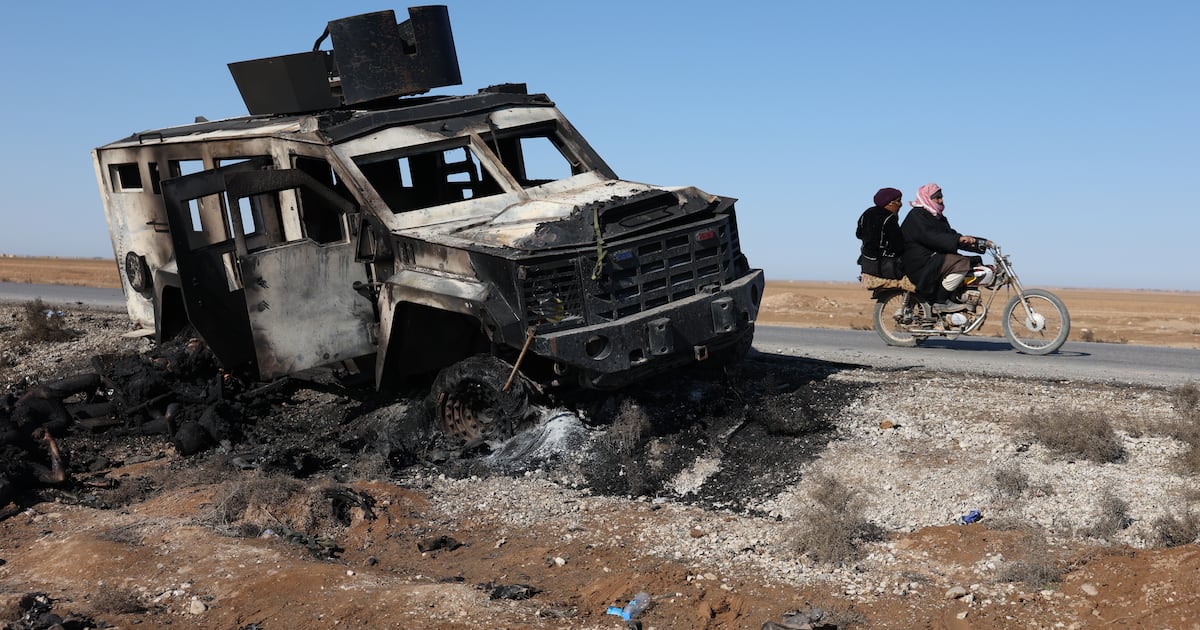
The longstanding alliance between the United States and the Kurdish-led Syrian Democratic Forces (SDF) is unraveling as Washington pivots its support towards Syria’s new government under President Ahmad al-Sharaa. This shift marks a significant change in the geopolitical landscape of Syria, which has been in turmoil since the fall of President Bashar Assad in December 2024.
For over a decade, the SDF played a crucial role in the fight against the Islamic State group, helping to secure US bases and manage internment facilities housing thousands of militants and their families. However, following the recent change in US foreign policy, the SDF has faced a rapid decline in influence and has begun retreating as Syrian government forces advance into northeastern Syria to reclaim territory.
The repercussions of this pivot are profound, potentially allowing the al-Sharaa government to take control of vital regions, including oilfields and fertile agricultural lands. This shift is viewed as a significant victory for al-Sharaa, who has been working to stabilize Syria’s fragmented political landscape, and for Turkey, which has long opposed US support for the SDF, viewing it as an extension of the Kurdistan Workers’ Party (PKK), a group engaged in a prolonged insurgency against the Turkish state.
The SDF’s disintegration has sparked feelings of betrayal among its supporters, particularly those within the US government who collaborated closely with the Kurdish forces. Many SDF fighters lost their lives in the battle against ISIS, and their loyalty to the US cause has now been called into question.
The alliance between the US and the SDF began during the rise of ISIS in 2013. The US, seeking to combat ISIS without deploying ground troops, formed a partnership with the Kurdish militia, providing them with weapons and support to defend against ISIS attacks, notably during the siege of Kobani in 2014. As the SDF expanded, they incorporated Arab fighters and branded themselves as a democratic force, despite questions about their governance structure.
With US logistical and air support, the SDF played a pivotal role in dismantling the ISIS caliphate, ultimately driving the group from its last stronghold in Syria in 2019. The SDF then continued to collaborate with the US, working to prevent a resurgence of ISIS and ensuring security across northeastern Syria. This partnership, however, drew the ire of Turkey and various Syrian rebel groups, who accused the SDF of imposing Kurdish rule on predominantly Arab areas and striking deals with the Assad regime.
Following the overthrow of Assad, the US sought to foster cooperation between al-Sharaa’s government and the SDF. Tom Barrack, the US ambassador to Turkey and special envoy for Syria, facilitated negotiations aimed at integrating the SDF into the new Syrian governance structure. A tentative agreement was reached in March 2025, but progress stalled as the SDF demanded security guarantees for its people amid ongoing sectarian violence in Syria.
Frustrated, al-Sharaa’s government began to assert control over Kurdish-held areas. Recent military movements have seen Syrian forces swiftly secure key provincial capitals such as Raqqa and Deir el-Zour. Analysts, including Newaf Xelil from the Kurdish Center for Studies, attribute this rapid advance to the backing of al-Sharaa’s government by Turkey, Saudi Arabia, and the United States.
Xelil expressed concern regarding the implications of this shift, stating that many in the SDF remain distrustful of al-Sharaa and his forces due to their historical ties to extremist groups. Al-Sharaa’s past includes connections to the Islamic State and al-Qaeda, raising alarms about the potential for an Islamist influence in the new Syrian government.
Despite the uncertainty, there was a belief among some observers that the Kurds could help temper the Islamist elements within Syria’s leadership, a goal that many thought aligned with US interests. As the situation evolves, the complexities of integrating SDF fighters into a new security framework remain.
Criticism of the US approach has surfaced, with voices like Asli Aydintasbas from the Brookings Institution pointing out that the Kurdish forces grossly miscalculated their position. Aydintasbas noted that while the US never guaranteed a permanent alliance, there was an expectation that the relationship would transition smoothly into a more decentralized Syrian structure.
In recent statements, President Donald Trump highlighted his administration’s focus on stabilizing the region, commending al-Sharaa for his efforts to manage the situation and secure prisons where ISIS members are held. He acknowledged the complexity of the Kurdish situation, stating, “I like the Kurds,” while emphasizing that they had received substantial support from the US.
The US Central Command has also taken steps to address growing security concerns, recently transferring 150 ISIS fighters from the city of Hasakah to a facility in Iraq to prevent potential prison breaks.
As the dynamics in Syria shift, the future of the SDF and its relationship with the US and the Assad government remains uncertain, raising critical questions about the long-term stability of the region.

Mother Reveals Daughter’s Meningitis Seizure After Night Out

Major Oil Spill Disrupts Traffic in Donegal on March 16, 2026

Discovering Literature: The Joys of Rejoining a Public Library

Ted Season 2 Announced: Release Date & Trailer Updates Revealed

Research Ireland and UKRI Forge New Collaboration Agreement

David McGoldrick’s Impressive Scoring Streak Sparks World Cup Talk

Plane Crash Claims Lives of Publishing Heir, Pregnant Wife, and Pilot

Oscars Snub Brigitte Bardot Sparks Controversy Over In Memoriam

Meta Plans Major Layoffs to Offset Rising AI Investment Costs

Tributes Surge for 9-Year-Old Leon Briody After Cancer Battle

Aimee Osbourne Joins Family for Emotional Tribute to Ozzy

Danny Healy-Rae Considers Complaint After Altercation with Garda

Hawaii Commemorates 80 Years Since Hiroshima Bombing with Ceremony

Ireland Enjoys Summer Heat as Hurricane Erin Approaches Atlantic

Couple Convicted of Murdering Two-Year-Old Grandson in Wales

Newcastle West Woman Patricia Foley Found Safe After Urgent Search

Fianna Fáil TDs Urgently Consider Maire Geoghegan-Quinn for Presidency

Gaza Aid Distribution Tragedy: 20 Killed Amid Ongoing Violence
-
 Top Stories7 months ago
Tributes Surge for 9-Year-Old Leon Briody After Cancer Battle
-
 Entertainment9 months ago
Aimee Osbourne Joins Family for Emotional Tribute to Ozzy
-
 Politics9 months ago
Danny Healy-Rae Considers Complaint After Altercation with Garda
-
 World9 months ago
Hawaii Commemorates 80 Years Since Hiroshima Bombing with Ceremony
-
 Top Stories8 months ago
Ireland Enjoys Summer Heat as Hurricane Erin Approaches Atlantic
-
 World9 months ago
Couple Convicted of Murdering Two-Year-Old Grandson in Wales
-
 Top Stories7 months ago
Newcastle West Woman Patricia Foley Found Safe After Urgent Search
-
 Top Stories9 months ago
Fianna Fáil TDs Urgently Consider Maire Geoghegan-Quinn for Presidency
-
 World9 months ago
Gaza Aid Distribution Tragedy: 20 Killed Amid Ongoing Violence
-

 World9 months ago
Aristocrat Constance Marten and Partner Convicted of Infant Murder
-

 Top Stories8 months ago
Hike Donegal’s Errigal Mountain NOW for Unforgettable Summer Views
-

 Top Stories8 months ago
Climbing Errigal: A Must-Do Summer Adventure in Donegal