
Politics
Bulgaria Joins Eurozone as Citizens Express Mixed Reactions

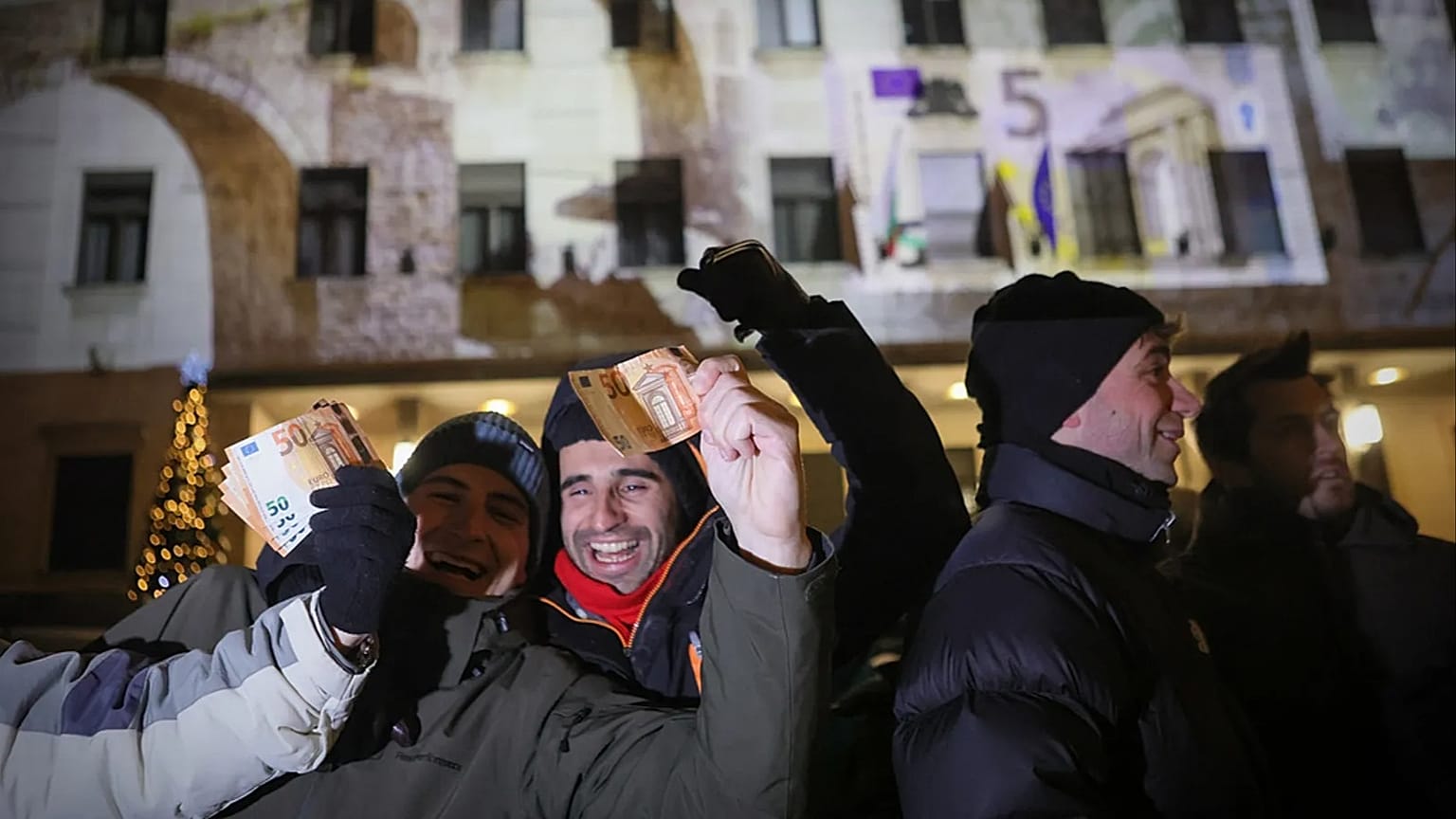
Bulgaria officially adopted the euro on January 1, 2024, becoming the 21st member of the Eurozone. This transition sees the euro replace the lev, a currency that has been in circulation for centuries. While the move is celebrated as a significant step towards economic integration with the European Union, it has also sparked considerable concern among the population regarding inflation and political stability.
The adoption of the euro was marked by a ceremony at the Bulgarian National Bank, where euro coins were projected onto the building. Christine Lagarde, president of the European Central Bank, welcomed Bulgaria to the euro family, describing the euro as a “powerful symbol” of shared values. Many citizens expressed optimism about the switch. “Great! It works!” exclaimed Dimitar, a 43-year-old man, shortly after withdrawing €100 from an ATM.
Bulgaria’s transition to the euro has been a topic of debate since the country joined the EU in 2007. Successive governments have advocated for the change, hoping it would enhance economic performance, strengthen ties with Western Europe, and mitigate Russian influence. However, the population remains divided. Many citizens fear that the introduction of the euro may lead to increased prices, especially given the country’s ongoing political turmoil and recent anti-corruption protests that ousted the conservative-led government in December 2023.
In a speech shortly before midnight, Rumen Radev, the Bulgarian President, characterized the euro adoption as the “final step” in the country’s EU integration. He acknowledged the lack of a public referendum on the decision, stating, “This refusal was one of the dramatic symptoms of the deep divide between the political class and the people.” His comments resonate with the feelings of many Bulgarians, as a recent Eurobarometer survey indicated that 49% of the population opposes the switch.
Despite the divide, European Commission President Ursula von der Leyen heralded Bulgaria’s entry into the Eurozone as an “important milestone.” She stated that it would simplify travel and living abroad, while enhancing market transparency and competitiveness. Central Bank Governor Dimitar Radev also emphasized the euro’s significance as more than just a currency, calling it a “sign of belonging.”
Concerns about inflation loom large, especially as food prices in Bulgaria surged by 5% year-on-year in November 2023, which is more than double the eurozone average. Business owners, like pastry shop owner Turgut Ismail, have already noted rising prices. “Unfortunately, prices no longer correspond to those in levs,” he remarked.
The hesitance surrounding the euro transition has been amplified by a euro protest campaign that emerged in 2025, largely driven by far-right and nationalist parties. These groups have tapped into the population’s negative sentiment towards the single currency, raising fears of future price hikes. Some individuals, including economist Stephane, voiced skepticism about the timing of the switch, citing economic conditions in larger Eurozone countries such as Italy and Spain.
Looking toward the future, analysts have noted that the euro’s adoption could bolster Bulgaria’s credit rating and encourage foreign investment. Petar Ganev, a Senior Research Fellow at the Institute for Market Economics, explained that improving confidence in the currency could lead to a stronger economic outlook. The switch to the euro, first introduced in 12 nations on January 1, 2002, has now brought the total number of Europeans using the currency to over 350 million.
As Bulgaria embarks on this new chapter, the success of the euro will depend on addressing citizens’ concerns about inflation and maintaining stability in a politically tumultuous environment. The coming weeks and months will be crucial in determining how this major economic shift impacts the lives of Bulgarians.

Mother Reveals Daughter’s Meningitis Seizure After Night Out

Major Oil Spill Disrupts Traffic in Donegal on March 16, 2026

Discovering Literature: The Joys of Rejoining a Public Library

Ted Season 2 Announced: Release Date & Trailer Updates Revealed

Research Ireland and UKRI Forge New Collaboration Agreement

David McGoldrick’s Impressive Scoring Streak Sparks World Cup Talk

Plane Crash Claims Lives of Publishing Heir, Pregnant Wife, and Pilot

Oscars Snub Brigitte Bardot Sparks Controversy Over In Memoriam

Meta Plans Major Layoffs to Offset Rising AI Investment Costs

Tributes Surge for 9-Year-Old Leon Briody After Cancer Battle

Aimee Osbourne Joins Family for Emotional Tribute to Ozzy

Danny Healy-Rae Considers Complaint After Altercation with Garda

Hawaii Commemorates 80 Years Since Hiroshima Bombing with Ceremony

Ireland Enjoys Summer Heat as Hurricane Erin Approaches Atlantic

Couple Convicted of Murdering Two-Year-Old Grandson in Wales

Gaza Aid Distribution Tragedy: 20 Killed Amid Ongoing Violence

Newcastle West Woman Patricia Foley Found Safe After Urgent Search

Fianna Fáil TDs Urgently Consider Maire Geoghegan-Quinn for Presidency
-
 Top Stories10 months ago
Tributes Surge for 9-Year-Old Leon Briody After Cancer Battle
-
 Entertainment12 months ago
Aimee Osbourne Joins Family for Emotional Tribute to Ozzy
-
 Politics12 months ago
Danny Healy-Rae Considers Complaint After Altercation with Garda
-
 World12 months ago
Hawaii Commemorates 80 Years Since Hiroshima Bombing with Ceremony
-
 Top Stories11 months ago
Ireland Enjoys Summer Heat as Hurricane Erin Approaches Atlantic
-
 World12 months ago
Couple Convicted of Murdering Two-Year-Old Grandson in Wales
-
 World12 months ago
Gaza Aid Distribution Tragedy: 20 Killed Amid Ongoing Violence
-
 Top Stories10 months ago
Newcastle West Woman Patricia Foley Found Safe After Urgent Search
-
 Top Stories12 months ago
Fianna Fáil TDs Urgently Consider Maire Geoghegan-Quinn for Presidency
-

 World12 months ago
Aristocrat Constance Marten and Partner Convicted of Infant Murder
-

 Top Stories11 months ago
Climbing Errigal: A Must-Do Summer Adventure in Donegal
-

 Top Stories11 months ago
Hike Donegal’s Errigal Mountain NOW for Unforgettable Summer Views