
World
British Airways’ Strategic Move: Ordering 12 Airbus A380s

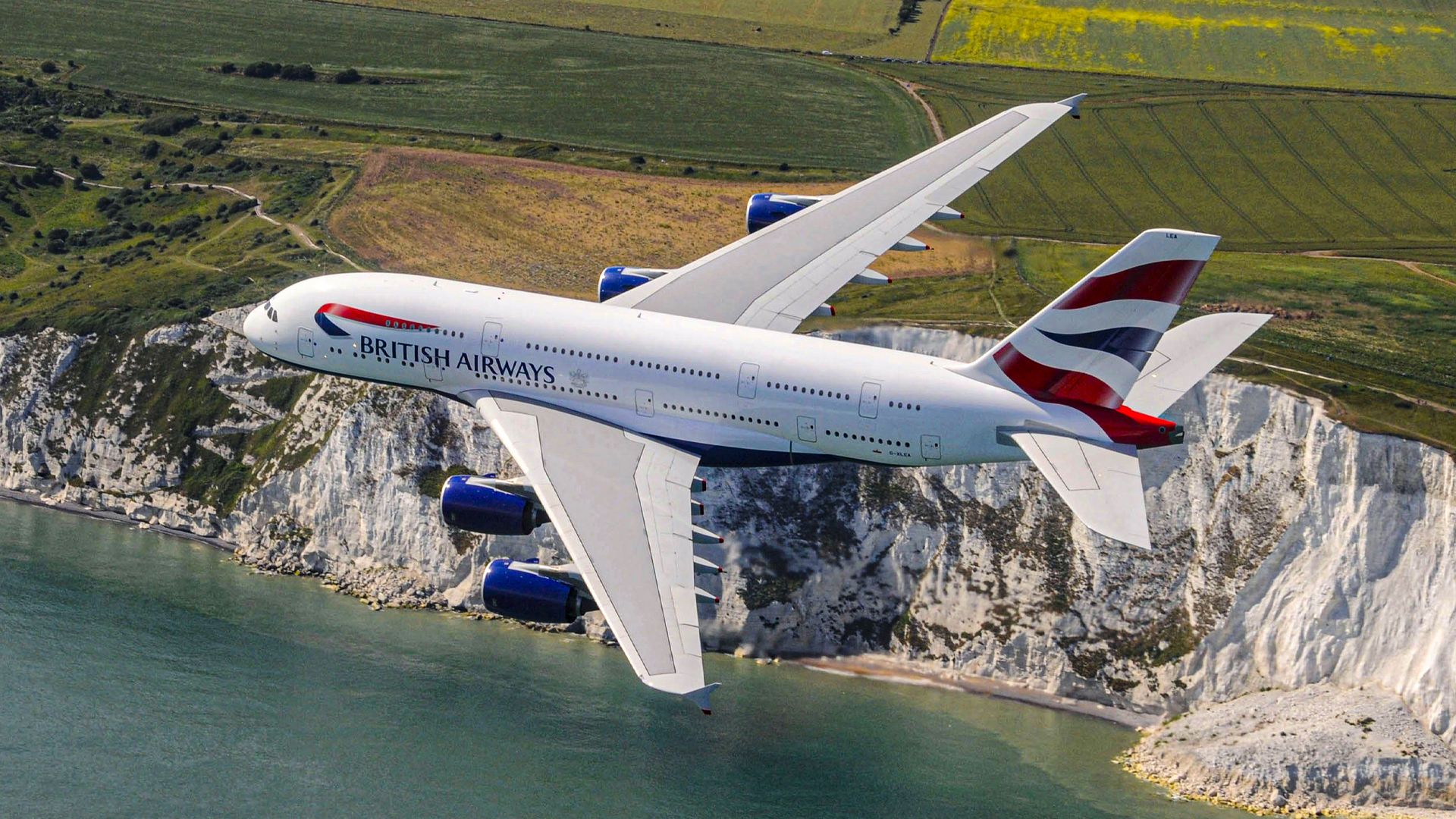
In September 2007, British Airways made a significant decision to reshape its long-haul fleet by ordering 12 Airbus A380 aircraft. This choice came alongside an order for 24 Boeing 787 Dreamliners, marking a dual investment aimed at replacing older models like the 747-400 and 767. The decision was primarily driven by the need to maximize capacity at Heathrow Airport, one of the world’s most slot-constrained hubs, where adding flights is often not an option.
British Airways’ rationale for investing in the Airbus A380 combined financial considerations with brand strategy. The aircraft’s impressive per-seat economics and reduced noise levels were seen as vital for optimizing operations on high-density routes while ensuring that the airline could make the most of its limited slots at Heathrow. The first Airbus A380 entered British Airways’ service in July 2013, featuring a layout with 469 seats.
The Airbus A380: A Game-Changer in Aviation
The Airbus A380 holds the title of the largest passenger aircraft ever constructed, being the only full-length double-deck jet to have entered regular commercial service. Designed for high-demand long-haul markets, it aims to transport a large number of passengers per flight, a crucial advantage for airlines operating in slot-limited environments. With a typical three-class configuration accommodating over 500 passengers and the ability to seat up to 853 in an all-economy arrangement, the A380 is tailored for efficiency in crowded airspace.
Airbus designed the A380 to be powered by either the Rolls-Royce Trent 900 or the Engine Alliance GP7000. Its dimensions are noteworthy, with wings that are wider than the aircraft itself. In addition to capacity, Airbus marketed the A380 as a step forward in passenger comfort, providing airlines with the flexibility to create premium-focused layouts while maintaining spacious cabins.
British Airways’ Network Strategy and the A380
To understand the significance of the A380 in British Airways’ operations, one must consider its hub-and-spoke model primarily centered around London Heathrow Airport. Heathrow is among the world’s busiest and most constrained airports, necessitating a fleet that maximizes passenger capacity. In this framework, the A380 serves as a strategic asset, complementing a diverse fleet that includes the Boeing 777 and Boeing 787 series.
The airline’s strategy is particularly focused on transatlantic routes, where it collaborates with American Airlines and other partners under the International Airlines Group (IAG). This partnership allows British Airways to enhance its network reach and operational efficiency, particularly on lucrative North Atlantic routes where the A380 has excelled.
British Airways’ decision to acquire the A380 was fundamentally about addressing the limitations posed by Heathrow’s structure. The airline’s order for the superjumbo was not merely to expand its route map but to enhance seat availability on existing high-demand routes. British Airways sought to secure its position in the most profitable markets while ensuring that its investment would yield maximum returns in passenger numbers.
Deliveries of the Airbus A380 were delayed, and British Airways did not receive its first aircraft until July 4, 2013. This delay pushed the initial commercial flights to the autumn of that year, with the first service connecting London Heathrow to Los Angeles International Airport on October 15, 2013.
The operational deployment of the Airbus A380 followed a clear pattern, focusing on routes where demand was high and slot restrictions were a consideration. Following the introduction of services to Los Angeles, the aircraft also began servicing Hong Kong on November 5, 2013, followed by Johannesburg in February 2014 and Washington D.C. in September of the same year.
The A380 quickly became a key component of British Airways’ long-haul operations, enabling the airline to concentrate premium capacity on major global hubs. It provided a solution to the challenges of operating in a constrained airport environment while still meeting consumer demand for long-haul travel.
Despite its initial success, the COVID-19 pandemic prompted British Airways to reassess the A380’s operational viability. The airline grounded the aircraft in spring 2020, moving several jets into long-term storage. As air travel restrictions began to ease and demand returned, British Airways brought the A380 back into service in December 2021, capitalizing on the aircraft’s capacity during a period of tight supply in the widebody segment.
British Airways configured its A380s to emphasize premium offerings, featuring a total of 469 seats across four cabins. The layout includes a first-class cabin, business class, premium economy, and economy class, designed to optimize revenue and ensure a mix of seating options.
While some industry analysts have suggested that British Airways’ cabin products may require updates, the A380 remains a flagship model for the airline. It plays a critical role in British Airways’ long-term strategy to maintain its competitive edge in the aviation market.
In conclusion, the Airbus A380 continues to be an integral part of British Airways’ operations. The airline’s decision to invest in this aircraft has proven beneficial, providing a unique combination of capacity and operational efficiency at a congested hub. As air travel demand rises, the A380’s value remains significant, underscoring British Airways’ foresight in choosing to order this remarkable aircraft.

Mother Reveals Daughter’s Meningitis Seizure After Night Out

Major Oil Spill Disrupts Traffic in Donegal on March 16, 2026

Discovering Literature: The Joys of Rejoining a Public Library

Ted Season 2 Announced: Release Date & Trailer Updates Revealed

Research Ireland and UKRI Forge New Collaboration Agreement

David McGoldrick’s Impressive Scoring Streak Sparks World Cup Talk

Plane Crash Claims Lives of Publishing Heir, Pregnant Wife, and Pilot

Oscars Snub Brigitte Bardot Sparks Controversy Over In Memoriam

Meta Plans Major Layoffs to Offset Rising AI Investment Costs

Tributes Surge for 9-Year-Old Leon Briody After Cancer Battle

Aimee Osbourne Joins Family for Emotional Tribute to Ozzy

Danny Healy-Rae Considers Complaint After Altercation with Garda

Hawaii Commemorates 80 Years Since Hiroshima Bombing with Ceremony

Ireland Enjoys Summer Heat as Hurricane Erin Approaches Atlantic

Couple Convicted of Murdering Two-Year-Old Grandson in Wales

Gaza Aid Distribution Tragedy: 20 Killed Amid Ongoing Violence

Newcastle West Woman Patricia Foley Found Safe After Urgent Search

Fianna Fáil TDs Urgently Consider Maire Geoghegan-Quinn for Presidency
-
 Top Stories10 months ago
Tributes Surge for 9-Year-Old Leon Briody After Cancer Battle
-
 Entertainment12 months ago
Aimee Osbourne Joins Family for Emotional Tribute to Ozzy
-
 Politics12 months ago
Danny Healy-Rae Considers Complaint After Altercation with Garda
-
 World1 year ago
Hawaii Commemorates 80 Years Since Hiroshima Bombing with Ceremony
-
 Top Stories11 months ago
Ireland Enjoys Summer Heat as Hurricane Erin Approaches Atlantic
-
 World1 year ago
Couple Convicted of Murdering Two-Year-Old Grandson in Wales
-
 World1 year ago
Gaza Aid Distribution Tragedy: 20 Killed Amid Ongoing Violence
-
 Top Stories10 months ago
Newcastle West Woman Patricia Foley Found Safe After Urgent Search
-
 Top Stories1 year ago
Fianna Fáil TDs Urgently Consider Maire Geoghegan-Quinn for Presidency
-

 World1 year ago
Aristocrat Constance Marten and Partner Convicted of Infant Murder
-

 Top Stories12 months ago
Climbing Errigal: A Must-Do Summer Adventure in Donegal
-

 Top Stories12 months ago
Hike Donegal’s Errigal Mountain NOW for Unforgettable Summer Views