
Entertainment
New Adaptation of Wuthering Heights Sparks Debate and Interest

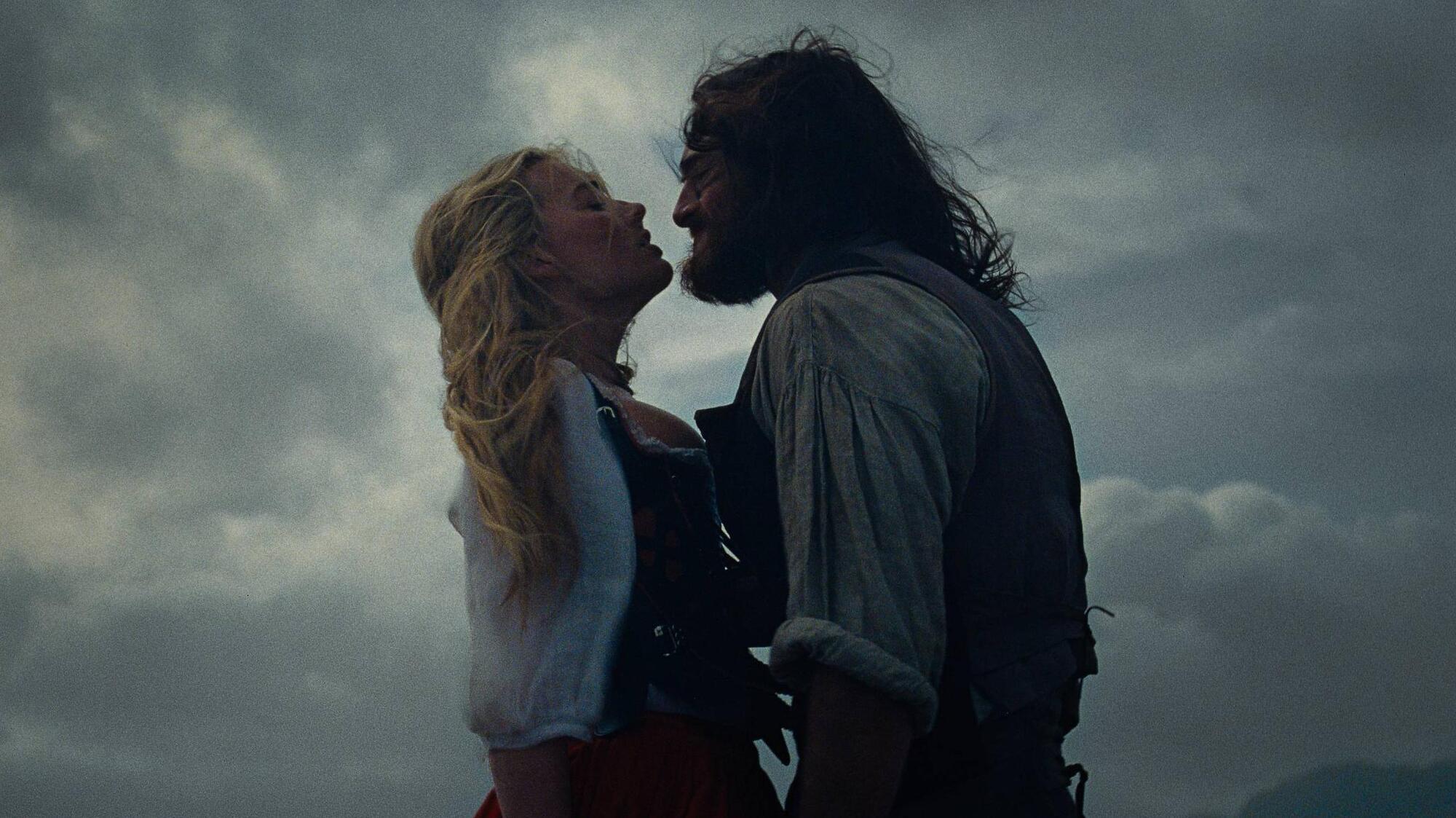
The upcoming film adaptation of Emily Brontë’s classic novel, Wuthering Heights, has generated significant buzz, particularly due to its modern take on the original story. Directed by Emerald Fennell, the film features a trailer that highlights provocative scenes and contemporary music, igniting discussions across social media platforms. The adaptation, which stars Margot Robbie as Catherine Earnshaw and Jacob Elordi as Heathcliff, is poised to reach audiences just ahead of Valentine’s Day, prompting speculation about its interpretation of the beloved Gothic tale.
When Wuthering Heights was first published in 1847, it faced harsh criticism, with many Victorian reviewers labeling it as immoral. Fennell, known for her viral marketing strategies and successful projects like Saltburn, seems to be targeting a Gen Z audience, eager for a fresh perspective. Her decision to place the film title in quotation marks suggests an awareness of the challenges in adapting such a complex narrative. “You can’t adapt a book as dense and complicated and difficult as this,” she stated, acknowledging the intricacies inherent in Brontë’s work.
The story revolves around the tumultuous and obsessive love between Heathcliff and Catherine, set against the haunting backdrop of the Yorkshire Moors. Critics emphasize that the novel is more than a mere love story; it delves into themes of trauma, revenge, and the darker facets of human relationships. Dr. Mary O’Connell, a lecturer in English literature at University College Cork, expressed her concerns about the film’s portrayal, stating, “describing it as the greatest love story ever told has rather spectacularly missed the point.”
O’Connell pointed out that the book’s vivid language and structure challenged readers upon its release. Many contemporary critics were profoundly disturbed, with one review famously recommending readers “burn Wuthering Heights” instead of enjoying it. Robert Logan, a member of Brontë Ireland, echoed the difficulty of adapting the novel, stating, “There isn’t a dull page in the whole book. The writing is incredibly vivid and alive.” He expressed admiration for anyone attempting to bring such a passionate and gritty narrative to the screen.
Scholars have often speculated about the Brontë sisters’ Irish roots, particularly their father, Patrick Brontë, who hailed from Co Down. This background has led to discussions about Heathcliff’s character, with some theorizing he may represent an Irish immigrant escaping the Famine. While his exact ethnicity remains ambiguous, O’Connell noted that his portrayal has raised questions regarding casting choices. “We know what he’s not rather than what he is, and he’s othered because of his class and how he looks,” she explained.
The casting of Elordi, a white male actor, has sparked controversy, as some argue it fails to capture the character’s complex identity. Logan remarked that no adaptation has yet fully encapsulated the essence of Heathcliff, adding, “It would be lovely if [this version] could just grasp what Heathcliff is about.”
Despite mixed feelings among purists, both O’Connell and Logan acknowledge the potential for the film to attract new audiences to Brontë’s work. O’Connell shared a personal connection to adaptations, recalling how the 1995 portrayal of Mr. Darcy in Pride and Prejudice inspired her career in literature. “For all the people that go and see it, there will be many who will be curious about the book,” she noted.
The legacy of Wuthering Heights extends beyond the page, having been adapted into various films, songs, and performances over the decades. The 1939 film featuring Laurence Olivier is often remembered fondly, while Kate Bush’s iconic song has helped keep the novel in public consciousness. More recent adaptations, including Andrea Arnold’s 2011 version, have aimed to capture the raw intensity of Brontë’s narrative.
As anticipation builds for Fennell’s adaptation, many are keen to see if it can do justice to the complex story that has captivated audiences for nearly 180 years. Whether it succeeds in reigniting interest in Brontë’s works remains to be seen, but it has undoubtedly sparked a renewed conversation about the enduring appeal of Wuthering Heights.

Mother Reveals Daughter’s Meningitis Seizure After Night Out

Major Oil Spill Disrupts Traffic in Donegal on March 16, 2026

Discovering Literature: The Joys of Rejoining a Public Library

Ted Season 2 Announced: Release Date & Trailer Updates Revealed

Research Ireland and UKRI Forge New Collaboration Agreement

David McGoldrick’s Impressive Scoring Streak Sparks World Cup Talk

Plane Crash Claims Lives of Publishing Heir, Pregnant Wife, and Pilot

Oscars Snub Brigitte Bardot Sparks Controversy Over In Memoriam

Meta Plans Major Layoffs to Offset Rising AI Investment Costs

Tributes Surge for 9-Year-Old Leon Briody After Cancer Battle

Aimee Osbourne Joins Family for Emotional Tribute to Ozzy

Danny Healy-Rae Considers Complaint After Altercation with Garda

Hawaii Commemorates 80 Years Since Hiroshima Bombing with Ceremony

Ireland Enjoys Summer Heat as Hurricane Erin Approaches Atlantic

Couple Convicted of Murdering Two-Year-Old Grandson in Wales

Gaza Aid Distribution Tragedy: 20 Killed Amid Ongoing Violence

Newcastle West Woman Patricia Foley Found Safe After Urgent Search

Fianna Fáil TDs Urgently Consider Maire Geoghegan-Quinn for Presidency
-
 Top Stories11 months ago
Tributes Surge for 9-Year-Old Leon Briody After Cancer Battle
-
 Entertainment1 year ago
Aimee Osbourne Joins Family for Emotional Tribute to Ozzy
-
 Politics1 year ago
Danny Healy-Rae Considers Complaint After Altercation with Garda
-
 World1 year ago
Hawaii Commemorates 80 Years Since Hiroshima Bombing with Ceremony
-
 Top Stories1 year ago
Ireland Enjoys Summer Heat as Hurricane Erin Approaches Atlantic
-
 World1 year ago
Couple Convicted of Murdering Two-Year-Old Grandson in Wales
-
 World1 year ago
Gaza Aid Distribution Tragedy: 20 Killed Amid Ongoing Violence
-
 Top Stories11 months ago
Newcastle West Woman Patricia Foley Found Safe After Urgent Search
-
 Top Stories1 year ago
Fianna Fáil TDs Urgently Consider Maire Geoghegan-Quinn for Presidency
-

 World1 year ago
Aristocrat Constance Marten and Partner Convicted of Infant Murder
-

 Top Stories1 year ago
Climbing Errigal: A Must-Do Summer Adventure in Donegal
-

 Top Stories1 year ago
Hike Donegal’s Errigal Mountain NOW for Unforgettable Summer Views