
Health
Understanding the Air Quality Index: Health Risks and Safety Tips

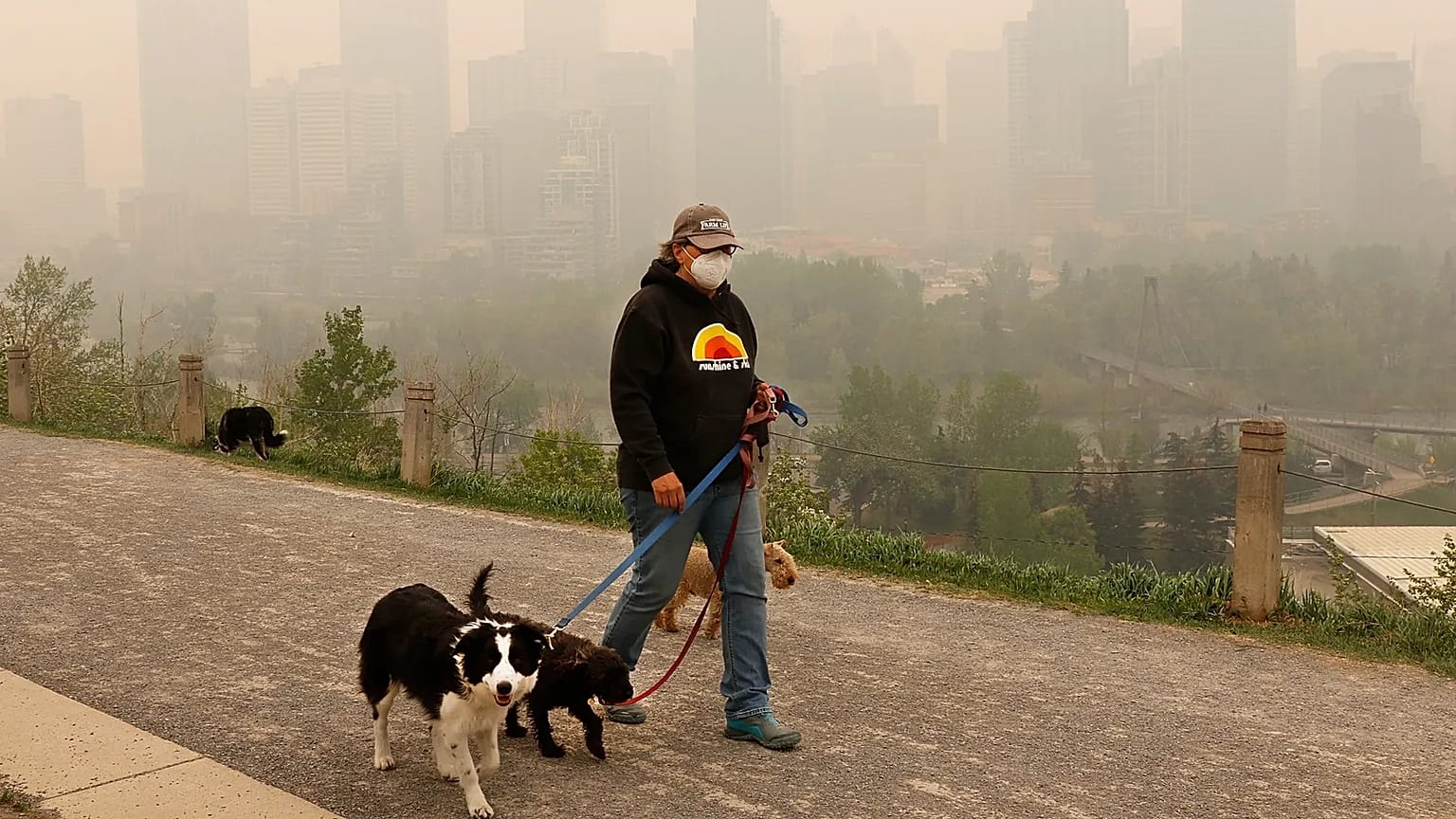
Monitoring air quality has become a crucial aspect of daily life, especially as urban pollution levels rise. The air quality index (AQI) provides a numerical value, typically ranging from 1 to 10, indicating the degree of air pollution. Understanding this index can help individuals make informed decisions about outdoor activities and safeguard their health.
What is the Air Quality Index?
The AQI is calculated using data from national and local monitoring stations, which track the concentration of various pollutants. In Europe, smartphones often display this information from approximately 3,500 monitoring stations, utilizing data from the Copernicus Atmospheric Monitoring Service to forecast air quality levels. The primary pollutants measured include fine particulate matter, known as PM2.5, larger particles like PM10, nitrogen dioxide (NO2), and sulphur dioxide (SO2).
Fine particles (PM2.5) significantly impact air quality and health, while PM10 encompasses larger particles such as dust and pollen. NO2 primarily arises from the combustion of fossil fuels in vehicles, whereas SO2 results from burning fossil fuels in industrial facilities. These pollutants contribute to systemic inflammation and can adversely affect nearly every organ in the body.
Health Risks Associated with Poor Air Quality
According to the World Health Organization (WHO), exposure to air pollution can lead to various health issues, including weakened immune systems and increased cancer risk. Both short-term and long-term exposure can have detrimental effects, particularly on the lungs, heart, and brain.
The European Environment Agency (EEA) provides a six-level scale for air quality: good, fair, moderate, poor, very poor, and extremely poor. Most European nations adhere to this scale for public health recommendations. Some countries, such as Austria, Belgium, and France, still incorporate national indices alongside the EEA scale.
A smartphone app typically displays air quality on a scale from 1 to 10, correlating with the EEA’s classifications. For example, an AQI of 7 signifies poor air quality, prompting individuals to take precautions.
Staying Safe During Poor Air Quality
To mitigate health risks, individuals should adapt their outdoor activities based on the air quality index. The UK’s Department for Environment, Food & Rural Affairs (DEFRA) offers guidelines on pollutant thresholds. For an AQI of 1 to 3, air quality is considered good, allowing for normal outdoor activities without concern.
When the index rises to 4 to 6, health risks begin to emerge. While most individuals may continue outdoor activities, those with pre-existing respiratory conditions, such as asthma, should limit their time outside. An AQI of 7 or higher indicates poor air quality where limiting outdoor activities is advisable, particularly for exercise.
At an AQI of 10, classified as extremely poor, experts recommend taking extreme precautions. This includes avoiding prolonged outdoor exposure and prioritizing indoor activities. During extended periods of poor air quality, individuals are encouraged to use air purifiers indoors to maintain a healthier environment.
The WHO suggests wearing FFP2 respirator masks if outdoor exposure is unavoidable, especially in situations like wildfires when air quality may rapidly deteriorate. By understanding and monitoring the air quality index, individuals can better protect their health and well-being in an increasingly polluted world.

Mother Reveals Daughter’s Meningitis Seizure After Night Out

Major Oil Spill Disrupts Traffic in Donegal on March 16, 2026

Discovering Literature: The Joys of Rejoining a Public Library

Ted Season 2 Announced: Release Date & Trailer Updates Revealed

Research Ireland and UKRI Forge New Collaboration Agreement

David McGoldrick’s Impressive Scoring Streak Sparks World Cup Talk

Plane Crash Claims Lives of Publishing Heir, Pregnant Wife, and Pilot

Oscars Snub Brigitte Bardot Sparks Controversy Over In Memoriam

Meta Plans Major Layoffs to Offset Rising AI Investment Costs

Tributes Surge for 9-Year-Old Leon Briody After Cancer Battle

Aimee Osbourne Joins Family for Emotional Tribute to Ozzy

Danny Healy-Rae Considers Complaint After Altercation with Garda

Hawaii Commemorates 80 Years Since Hiroshima Bombing with Ceremony

Ireland Enjoys Summer Heat as Hurricane Erin Approaches Atlantic

Couple Convicted of Murdering Two-Year-Old Grandson in Wales

Gaza Aid Distribution Tragedy: 20 Killed Amid Ongoing Violence

Newcastle West Woman Patricia Foley Found Safe After Urgent Search

Fianna Fáil TDs Urgently Consider Maire Geoghegan-Quinn for Presidency
-
 Top Stories10 months ago
Tributes Surge for 9-Year-Old Leon Briody After Cancer Battle
-
 Entertainment12 months ago
Aimee Osbourne Joins Family for Emotional Tribute to Ozzy
-
 Politics12 months ago
Danny Healy-Rae Considers Complaint After Altercation with Garda
-
 World12 months ago
Hawaii Commemorates 80 Years Since Hiroshima Bombing with Ceremony
-
 Top Stories11 months ago
Ireland Enjoys Summer Heat as Hurricane Erin Approaches Atlantic
-
 World12 months ago
Couple Convicted of Murdering Two-Year-Old Grandson in Wales
-
 World12 months ago
Gaza Aid Distribution Tragedy: 20 Killed Amid Ongoing Violence
-
 Top Stories10 months ago
Newcastle West Woman Patricia Foley Found Safe After Urgent Search
-
 Top Stories12 months ago
Fianna Fáil TDs Urgently Consider Maire Geoghegan-Quinn for Presidency
-

 World12 months ago
Aristocrat Constance Marten and Partner Convicted of Infant Murder
-

 Top Stories11 months ago
Climbing Errigal: A Must-Do Summer Adventure in Donegal
-

 Top Stories11 months ago
Hike Donegal’s Errigal Mountain NOW for Unforgettable Summer Views