
Lifestyle
Report Reveals Northern Ireland’s Higher Religious Attendance Rates

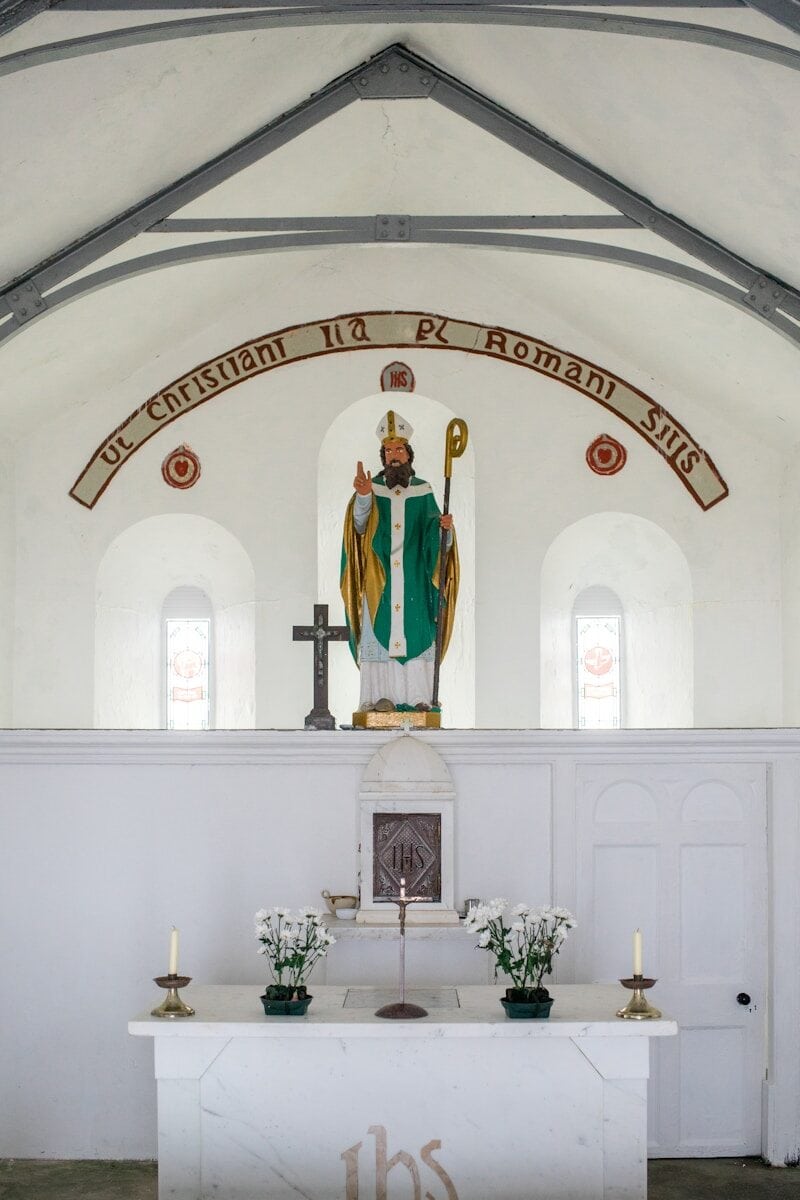
Recent research from the Irish Catholic Bishops’ Conference has revealed that church attendance remains significantly higher in Northern Ireland compared to the Republic of Ireland and the rest of the United Kingdom. The report, titled “The Turning Tide,” highlights a notable religious divide on the island of Ireland, sparking discussions about the implications of these findings.
The study, conducted by researchers Emily Nelson and Stephen Bullivant, indicates that approximately 31% of adults in the Republic of Ireland attend Mass weekly, a figure that contrasts sharply with the 49% of Polish Catholics and 46% of Slovak Catholics. Among young adults aged 16 to 29 in the Republic, attendance drops to just 17%. This decline is particularly stark when compared to historical data, which showed that in 1973, attendance was at a remarkable 91%.
Another striking statistic from the report is that 32% of Irish adults, and 42% of young adults, identify as having no religion. This figure is notably higher than the official census data, which records only 14% non-religious individuals. The discrepancy may arise from the way census data is collected, as parents often register their children as Catholics regardless of their actual beliefs or attendance.
In comparison, Northern Ireland exhibits a much stronger religious affiliation. The report indicates that only 24% of Northern Irish adults identify as having no religion, making it the most religiously affiliated region in the UK. Additionally, the weekly attendance rate in Northern Ireland is reported at 35%, which is three times the UK average of 12%. Specifically, 41% of Catholics in Northern Ireland attend Mass weekly, significantly higher than the UK average of 28%.
The report underscores the unique religious landscape of Northern Ireland, where identity and religion are closely intertwined. In a region where Catholic identity often aligns with a sense of Irish nationalism and Protestant identity with British identity, the interplay of these factors shapes religious observance.
While the report notes a general decline in religious practice across Europe, it also identifies a growth in other Christian denominations within the Republic. Over the past three decades, the Protestant population has increased, and there is a notable emergence of a significant Orthodox community. This growth contrasts sharply with the decline of Protestantism in Northern Ireland, highlighting an ironic twist in the religious narrative on the island.
Interestingly, the report also acknowledges that 18% of Catholics in the Republic of Ireland were born outside of the country. This influx of Catholic immigrants has contributed to a resurgence of attendance in some parishes, which were facing potential decline. Although the report states that attendance levels among immigrants do not differ significantly from those of native Irish Catholics, further research could reveal variations based on the immigrants’ countries of origin.
The findings highlight a potential future for Irish Catholicism, where a smaller, yet more committed group of young Catholics may emerge. Researchers suggest this trend could lead to a “creative minority” effect, where a smaller, cohesive group fosters a vibrant religious community, though the overall decline in cultural Catholicism raises questions about the long-term sustainability of such practices.
The report also addresses gender differences in religious observance. While women generally tend to be more religious than men, the study found similar levels of religiosity among both genders in the Republic of Ireland. This could be attributed to perceptions of how the Catholic Church has treated women, as a significant majority of Irish Catholic women believe the Church does not respect them.
Overall, the report paints a complex picture of faith in Ireland today. With a mix of longstanding traditions, shifting demographics, and emerging trends, the religious landscape is evolving. As debates continue around the implications of these findings, “The Turning Tide” serves as a crucial contribution to understanding the changing nature of faith in both Northern Ireland and the Republic.

Mother Reveals Daughter’s Meningitis Seizure After Night Out

Major Oil Spill Disrupts Traffic in Donegal on March 16, 2026

Discovering Literature: The Joys of Rejoining a Public Library

Ted Season 2 Announced: Release Date & Trailer Updates Revealed

Research Ireland and UKRI Forge New Collaboration Agreement

David McGoldrick’s Impressive Scoring Streak Sparks World Cup Talk

Plane Crash Claims Lives of Publishing Heir, Pregnant Wife, and Pilot

Oscars Snub Brigitte Bardot Sparks Controversy Over In Memoriam

Meta Plans Major Layoffs to Offset Rising AI Investment Costs

Tributes Surge for 9-Year-Old Leon Briody After Cancer Battle

Aimee Osbourne Joins Family for Emotional Tribute to Ozzy

Danny Healy-Rae Considers Complaint After Altercation with Garda

Hawaii Commemorates 80 Years Since Hiroshima Bombing with Ceremony

Ireland Enjoys Summer Heat as Hurricane Erin Approaches Atlantic

Couple Convicted of Murdering Two-Year-Old Grandson in Wales

Gaza Aid Distribution Tragedy: 20 Killed Amid Ongoing Violence

Newcastle West Woman Patricia Foley Found Safe After Urgent Search

Fianna Fáil TDs Urgently Consider Maire Geoghegan-Quinn for Presidency
-
 Top Stories10 months ago
Tributes Surge for 9-Year-Old Leon Briody After Cancer Battle
-
 Entertainment12 months ago
Aimee Osbourne Joins Family for Emotional Tribute to Ozzy
-
 Politics12 months ago
Danny Healy-Rae Considers Complaint After Altercation with Garda
-
 World12 months ago
Hawaii Commemorates 80 Years Since Hiroshima Bombing with Ceremony
-
 Top Stories11 months ago
Ireland Enjoys Summer Heat as Hurricane Erin Approaches Atlantic
-
 World12 months ago
Couple Convicted of Murdering Two-Year-Old Grandson in Wales
-
 World12 months ago
Gaza Aid Distribution Tragedy: 20 Killed Amid Ongoing Violence
-
 Top Stories10 months ago
Newcastle West Woman Patricia Foley Found Safe After Urgent Search
-
 Top Stories12 months ago
Fianna Fáil TDs Urgently Consider Maire Geoghegan-Quinn for Presidency
-

 World12 months ago
Aristocrat Constance Marten and Partner Convicted of Infant Murder
-

 Top Stories11 months ago
Climbing Errigal: A Must-Do Summer Adventure in Donegal
-

 Top Stories11 months ago
Hike Donegal’s Errigal Mountain NOW for Unforgettable Summer Views