
Politics
Dutch PM Calls for EU Reform After Hungary’s Ukraine Loan Veto

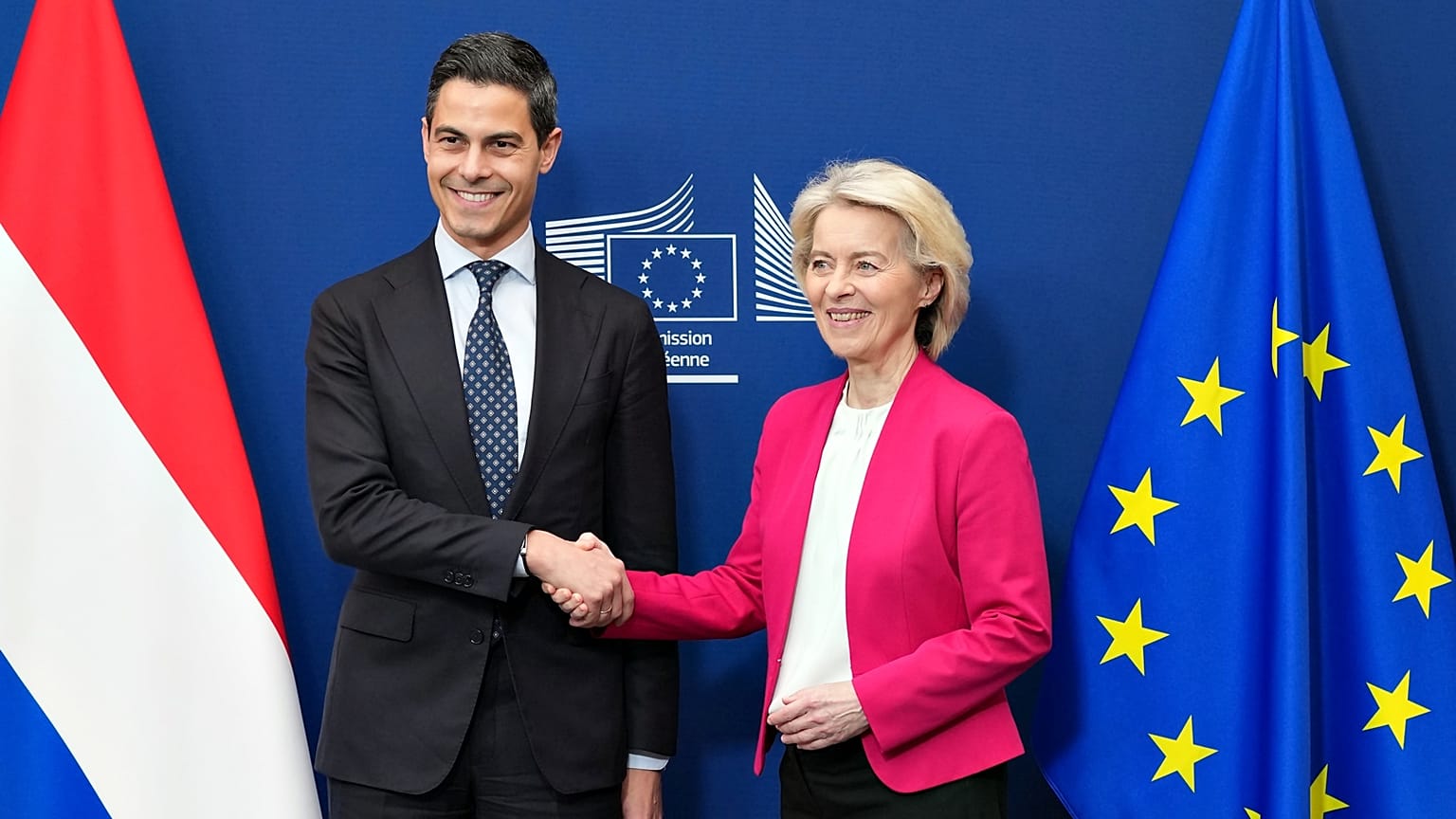
During his inaugural visit to Brussels, newly appointed Dutch Prime Minister Rob Jetten criticized Hungary’s recent veto of a €90 billion loan to Ukraine, emphasizing the necessity for the European Union to reduce its reliance on unanimous decision-making. Jetten’s remarks come as a reflection of ongoing tensions within the EU regarding financial support for Ukraine amidst the ongoing conflict with Russia.
In a media briefing on Tuesday, Jetten stated, “The new Dutch government is in favour of less and less decision-making by unanimity on the European level.” He underscored that Hungary’s last-minute veto exemplifies why such reforms are crucial, particularly in responding to significant issues that impact all member states. Jetten urged his Hungarian counterpart, Viktor Orbán, to adhere to the agreement reached by the 27 EU leaders in December, which aimed to amend EU budget rules while allowing Hungary, Slovakia, and the Czech Republic to remain exempt from joint borrowing.
Calls for Cooperation Amid Tensions
Officials in Brussels have voiced concerns that Orbán’s veto breaches the principle of sincere cooperation, which is vital for the EU’s decision-making process. Jetten emphasized, “If you reach political agreement on the Council level, we expect every member state to uphold that agreement.” He indicated that the European Commission may need to take action to address this breach.
In addition to addressing Hungary’s veto, Jetten’s government has called for a simplification of the Article 7 procedure, which can suspend voting rights for member states that violate the rule of law. Hungary has been under Article 7 scrutiny for several years, but political momentum for enforcement has been lacking. “It is absolutely necessary that we support Ukraine in the months to come to ensure they can continue their fight against Russian aggression,” Jetten stated, highlighting the urgent need for European support as American aid may dwindle.
Orbán’s veto is linked to disruptions in Russian oil supplies via the Druzhba pipeline, which Ukrainian officials claim was targeted by Russian drones on January 27, 2024. Orbán has alleged that Ukrainian President Volodymyr Zelenskyy has intentionally shut down the pipeline for political reasons, coinciding with upcoming Hungarian elections where Orbán is trailing in polls.
In response, the European Commission has requested that Zelenskyy repair the damaged pipeline and that Orbán rescind his veto. Hungary and Slovakia have suggested a fact-finding mission to investigate the pipeline’s status, with Jetten expressing openness to such initiatives, provided they stem from a political agreement.
Future of EU Enlargement and Energy Concerns
Jetten’s leadership also brings scrutiny to the future of EU enlargement, a topic that has historically met resistance from the Netherlands. Zelenskyy has called for a specific date for Ukraine’s accession to the EU, proposing 2027 as an aspirational target. The European Commission has indicated it cannot commit to a fixed date but is exploring legal avenues to streamline the complex accession process and provide clarity for Ukraine’s path forward.
When questioned about enlargement, Jetten noted that the EU must approach the issue from a geopolitical perspective, cautioning against rapid advancements that could undermine the integrity of the European project. “It is too early to set a date for enlargement with Ukraine,” he said, emphasizing the importance of engaging in discussions about supporting Ukraine’s necessary reforms.
Jetten also addressed the escalating tensions related to US-Iranian strikes on Iran, which have implications for global energy markets. He acknowledged that the ongoing conflict could severely impact wholesale gas prices, posing a potential financial burden on Europe as it prepares to replenish its dwindling strategic reserves. “We have to prepare ourselves for any case that this war will continue for many more weeks and impact the strategic reserves in the Netherlands and abroad,” he stated.
With the formation of a new minority government comprising Jetten’s D66 party, the liberal VVD, and the conservative CDA, the Netherlands is signaling its commitment to play a proactive role in EU affairs. Jetten emphasized, “The Netherlands is back at the table to work closely with everyone here in Brussels and our allies.” He reiterated the need for the upcoming Multiannual Financial Framework (MFF) to prioritize defence, technology, and climate initiatives, setting the stage for robust debates as the EU navigates its financial future.
As discussions surrounding the MFF unfold, Jetten has made it clear that the Netherlands will scrutinize the proposed €2 trillion budget closely, advocating for a focused approach that aligns with the continent’s pressing priorities. “A modern MFF doesn’t mean an exploded MFF in terms of numbers,” he remarked, indicating that the Netherlands will be actively involved in shaping the EU’s budgetary landscape in the coming months.

Mother Reveals Daughter’s Meningitis Seizure After Night Out

Major Oil Spill Disrupts Traffic in Donegal on March 16, 2026

Discovering Literature: The Joys of Rejoining a Public Library

Ted Season 2 Announced: Release Date & Trailer Updates Revealed

Research Ireland and UKRI Forge New Collaboration Agreement

David McGoldrick’s Impressive Scoring Streak Sparks World Cup Talk

Plane Crash Claims Lives of Publishing Heir, Pregnant Wife, and Pilot

Oscars Snub Brigitte Bardot Sparks Controversy Over In Memoriam

Meta Plans Major Layoffs to Offset Rising AI Investment Costs

Tributes Surge for 9-Year-Old Leon Briody After Cancer Battle

Aimee Osbourne Joins Family for Emotional Tribute to Ozzy

Danny Healy-Rae Considers Complaint After Altercation with Garda

Hawaii Commemorates 80 Years Since Hiroshima Bombing with Ceremony

Ireland Enjoys Summer Heat as Hurricane Erin Approaches Atlantic

Couple Convicted of Murdering Two-Year-Old Grandson in Wales

Gaza Aid Distribution Tragedy: 20 Killed Amid Ongoing Violence

Newcastle West Woman Patricia Foley Found Safe After Urgent Search

Fianna Fáil TDs Urgently Consider Maire Geoghegan-Quinn for Presidency
-
 Top Stories11 months ago
Tributes Surge for 9-Year-Old Leon Briody After Cancer Battle
-
 Entertainment1 year ago
Aimee Osbourne Joins Family for Emotional Tribute to Ozzy
-
 Politics1 year ago
Danny Healy-Rae Considers Complaint After Altercation with Garda
-
 World1 year ago
Hawaii Commemorates 80 Years Since Hiroshima Bombing with Ceremony
-
 Top Stories12 months ago
Ireland Enjoys Summer Heat as Hurricane Erin Approaches Atlantic
-
 World1 year ago
Couple Convicted of Murdering Two-Year-Old Grandson in Wales
-
 World1 year ago
Gaza Aid Distribution Tragedy: 20 Killed Amid Ongoing Violence
-
 Top Stories11 months ago
Newcastle West Woman Patricia Foley Found Safe After Urgent Search
-
 Top Stories1 year ago
Fianna Fáil TDs Urgently Consider Maire Geoghegan-Quinn for Presidency
-

 World1 year ago
Aristocrat Constance Marten and Partner Convicted of Infant Murder
-

 Top Stories12 months ago
Climbing Errigal: A Must-Do Summer Adventure in Donegal
-

 Top Stories12 months ago
Hike Donegal’s Errigal Mountain NOW for Unforgettable Summer Views