
Politics
Trump Declares Iranian Supreme Leader Khamenei Dead Amid Ongoing Strikes

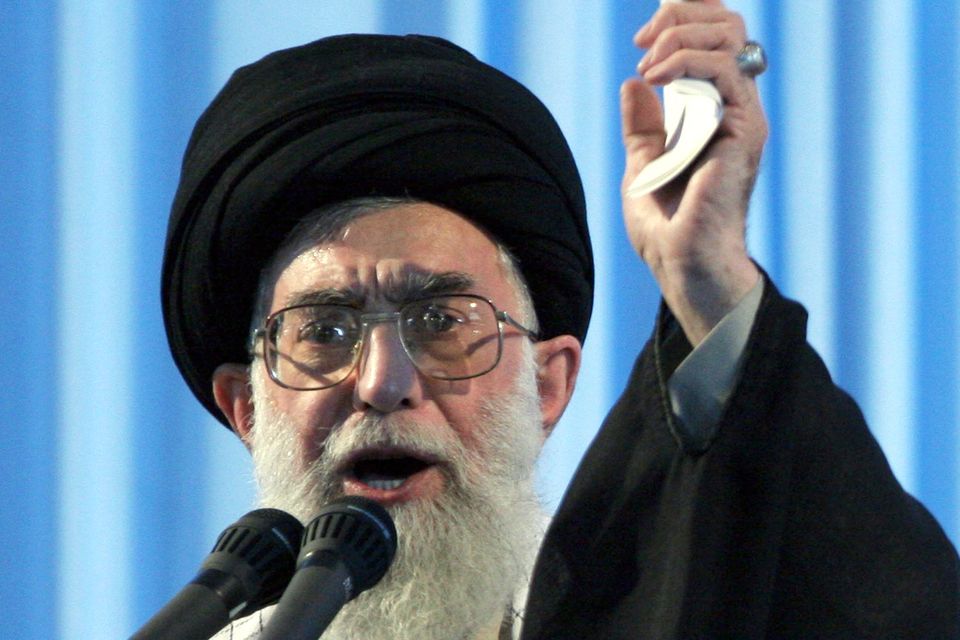
A significant escalation in Middle Eastern tensions occurred as former US President Donald Trump announced the death of Iranian Supreme Leader Ayatollah Ali Khamenei during a military strike by Israel and the United States. The aerial bombardment, targeting Iranian military and governmental sites, has been characterized by Trump as “the single greatest chance for the Iranian people to take back their country.” He indicated that “heavy and pinpoint bombing” would continue “uninterrupted” for the foreseeable future.
The announcement of Khamenei’s death raises concerns over potential retaliatory actions from Iran, particularly as he had no designated successor. Trump described Khamenei as “one of the most evil people in history,” claiming that he was unable to evade US intelligence and tracking systems. Trump’s remarks followed a coordinated attack that reportedly also resulted in the deaths of other high-ranking Iranian officials, including Mohammad Pakpour, the commander of the Iranian Revolutionary Guard Corps, and Aziz Nasirzadeh, Iran’s defense minister.
Escalating Conflict and Global Reactions
In the aftermath of the strikes, reports emerged of celebrations in parts of Tehran, contrasting sharply with international calls for restraint. Irish President Catherine Connolly emphasized the need for “all possible steps” to prevent further escalation in the region, condemning the normalization of military aggression against sovereign states. Connolly stated, “The invasion at will of sovereign states is a path that only leads to destruction and loss of life.”
The conflict has led to widespread travel disruptions across the Middle East. Airspace closures have been reported in countries including Qatar, Bahrain, Jordan, and Kuwait, with these nations intercepting missiles aimed at their territories. Tragically, four individuals died when a missile struck a luxury hotel in Dubai. In response, Irish Foreign Affairs Minister Helen McEntee advised citizens in the region to “shelter in place” and follow local authorities’ directives.
In a dramatic escalation of violence, US military operations in Iran have reportedly resulted in at least 201 fatalities, including significant casualties from a strike on a girls’ school in southern Iran. The US Central Command is currently investigating these reports. Trump urged Iranians to seize control of their government, stating, “When we are finished, take over your government. It will be yours to take.”
Retaliation and Broader Implications
The Iranian Revolutionary Guard has vowed to respond decisively to the attacks, indicating that they have already launched a “first wave” of drones and missiles targeting Israel. Warnings were issued across Israel, underscoring the urgency of the situation. The Iranian Foreign Ministry declared, “The time has come to defend the homeland and confront the enemy’s military assault.”
As the violence escalated, the Israeli military reported multiple missile interceptions, with explosions being heard in various locations, including around the US Navy’s 5th Fleet headquarters in Bahrain and military bases in Qatar. The US military reported no American casualties amidst a barrage of Iranian missile and drone attacks, although incidents of falling shrapnel have been noted in the UAE, resulting in one death.
The ongoing conflict has heightened concerns about regional stability, with nations closing their airspace and preparing for potential fallout. Reports indicate that Iranian-backed groups, such as the Houthis in Yemen, may intensify their attacks on shipping routes and Israel.
Trump, during a recent address, emphasized the necessity of military action to address Iran’s nuclear aspirations and its long-standing grievances against the United States. He acknowledged that military conflicts often result in casualties, recognizing the human cost involved in such operations.
As tensions continue to mount, the international community watches closely, seeking to assess the implications of this rapidly evolving situation in the Middle East. The potential for further escalation remains a critical concern, with calls for diplomatic solutions becoming increasingly urgent amidst the backdrop of violence.

Mother Reveals Daughter’s Meningitis Seizure After Night Out

Major Oil Spill Disrupts Traffic in Donegal on March 16, 2026

Discovering Literature: The Joys of Rejoining a Public Library

Ted Season 2 Announced: Release Date & Trailer Updates Revealed

Research Ireland and UKRI Forge New Collaboration Agreement

David McGoldrick’s Impressive Scoring Streak Sparks World Cup Talk

Plane Crash Claims Lives of Publishing Heir, Pregnant Wife, and Pilot

Oscars Snub Brigitte Bardot Sparks Controversy Over In Memoriam

Meta Plans Major Layoffs to Offset Rising AI Investment Costs

Tributes Surge for 9-Year-Old Leon Briody After Cancer Battle

Aimee Osbourne Joins Family for Emotional Tribute to Ozzy

Danny Healy-Rae Considers Complaint After Altercation with Garda

Hawaii Commemorates 80 Years Since Hiroshima Bombing with Ceremony

Ireland Enjoys Summer Heat as Hurricane Erin Approaches Atlantic

Couple Convicted of Murdering Two-Year-Old Grandson in Wales

Gaza Aid Distribution Tragedy: 20 Killed Amid Ongoing Violence

Newcastle West Woman Patricia Foley Found Safe After Urgent Search

Fianna Fáil TDs Urgently Consider Maire Geoghegan-Quinn for Presidency
-
 Top Stories11 months ago
Tributes Surge for 9-Year-Old Leon Briody After Cancer Battle
-
 Entertainment1 year ago
Aimee Osbourne Joins Family for Emotional Tribute to Ozzy
-
 Politics1 year ago
Danny Healy-Rae Considers Complaint After Altercation with Garda
-
 World1 year ago
Hawaii Commemorates 80 Years Since Hiroshima Bombing with Ceremony
-
 Top Stories12 months ago
Ireland Enjoys Summer Heat as Hurricane Erin Approaches Atlantic
-
 World1 year ago
Couple Convicted of Murdering Two-Year-Old Grandson in Wales
-
 World1 year ago
Gaza Aid Distribution Tragedy: 20 Killed Amid Ongoing Violence
-
 Top Stories11 months ago
Newcastle West Woman Patricia Foley Found Safe After Urgent Search
-
 Top Stories1 year ago
Fianna Fáil TDs Urgently Consider Maire Geoghegan-Quinn for Presidency
-

 World1 year ago
Aristocrat Constance Marten and Partner Convicted of Infant Murder
-

 Top Stories12 months ago
Climbing Errigal: A Must-Do Summer Adventure in Donegal
-

 Top Stories12 months ago
Hike Donegal’s Errigal Mountain NOW for Unforgettable Summer Views