
Politics
Trump’s Board of Peace: A Meeting of Controversial Leaders

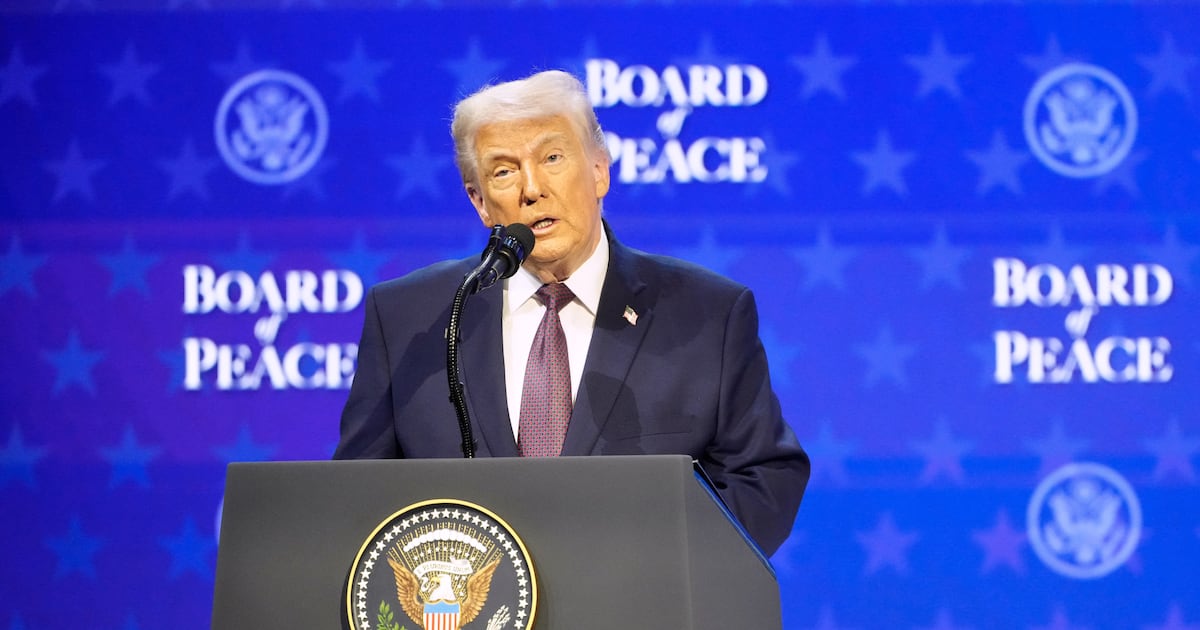
A gathering of authoritarian leaders is set to take place in Washington as the inaugural meeting of Donald Trump’s newly formed Board of Peace approaches. This assembly aims to further Trump’s vision for Gaza following its devastation due to conflict, but has been described by critics as an effort to circumvent the more democratically structured United Nations.
The Board of Peace comprises over 20 members, many of whom lead nations characterized by oppressive regimes. Some governments, including Italy and Greece, will send observers in lieu of official representation. The meeting is scheduled for Thursday, but the exact number of attendees remains uncertain.
This new body, which Trump chairs, has sparked concern among global powers, particularly traditional allies of the United States. Critics argue that it could transform into a fee-paying members’ club, driven by the personal whims of Trump rather than a collective democratic process.
Concerns Over Human Rights Records
The participants include leaders from nations with troubling human rights records, as detailed in the latest report from the democracy watchdog, Freedom House. For instance, Abdel Fattah al-Sisi, the President of Egypt, has led a government notorious for its tight restrictions on civil liberties. Freedom House states that since al-Sisi’s rise to power following a coup in 2013, political opposition has been virtually nonexistent, with dissent often met with severe penalties.
Turkey’s Hakan Fidan will represent his country on the Board, reporting to President Recep Tayyip Erdogan. Freedom House notes that Erdogan has consolidated power through constitutional changes and imprisonment of political dissidents, a trend that casts a shadow over Turkey’s commitment to democratic principles.
In addition, Gideon Sa’ar, representing Israel, will attend the meeting. The situation for Palestinians in the territories occupied by Israel remains dire, according to Freedom House, which highlights severe restrictions on political rights and civil liberties. The report describes the Israeli military’s actions in Gaza as resulting in significant loss of life and displacement.
Cambodia’s political landscape is dominated by the Cambodian People’s Party (CPP) and its leader, Hun Sen, who stepped down in 2023 after a controversial transfer of power to his son. Freedom House describes the CPP as using intimidation and political prosecutions to suppress dissent.
Indonesia, another member of the Board, has pledged to deploy up to 8,000 troops to Gaza for a humanitarian mission. While the nation has made strides in democratic governance since the late 1990s, challenges such as corruption and discrimination against minority groups persist.
Global Implications of the Board
The presence of leaders from Kazakhstan, Pakistan, Uzbekistan, and Vietnam further underscores the authoritarian bent of the Board. Kazakhstan’s Kassym-Jomart Tokayev will attend, although Freedom House has criticized the nation’s electoral processes as lacking fairness. Pakistan’s government operates within a competitive multiparty system, yet the military exerts significant influence over politics.
Meanwhile, Uzbekistan remains an authoritarian state with no legal opposition parties, as noted in Freedom House’s assessments. Vietnam is highlighted for its stringent control over freedom of expression and media, with the government actively censoring dissent.
Albania’s Edi Rama was among the founding members of the Board but stated it would not become a permanent member, which would entail a significant financial commitment of $1 billion. The country is considered “partly free” by Freedom House and faces ongoing issues with corruption.
The European Union is represented by Hungary’s Viktor Orban, a close ally of Trump who has drawn criticism for his anti-migrant and anti-LGBT+ policies.
In South America, Javier Milei, the newly elected president of Argentina, has positioned himself as a close ally of Trump. His government has accused universities of promoting leftist ideologies, raising questions about the future of democratic discourse in Argentina.
As the Board of Peace convenes, the implications of its formation and the nature of its members will likely reverberate through international relations, particularly concerning the Middle East and the state of global democracy. The challenge remains whether this assembly can achieve its stated goals or if it will further complicate an already volatile geopolitical landscape.

Mother Reveals Daughter’s Meningitis Seizure After Night Out

Major Oil Spill Disrupts Traffic in Donegal on March 16, 2026

Discovering Literature: The Joys of Rejoining a Public Library

Ted Season 2 Announced: Release Date & Trailer Updates Revealed

Research Ireland and UKRI Forge New Collaboration Agreement

David McGoldrick’s Impressive Scoring Streak Sparks World Cup Talk

Plane Crash Claims Lives of Publishing Heir, Pregnant Wife, and Pilot

Oscars Snub Brigitte Bardot Sparks Controversy Over In Memoriam

Meta Plans Major Layoffs to Offset Rising AI Investment Costs

Tributes Surge for 9-Year-Old Leon Briody After Cancer Battle

Aimee Osbourne Joins Family for Emotional Tribute to Ozzy

Danny Healy-Rae Considers Complaint After Altercation with Garda

Hawaii Commemorates 80 Years Since Hiroshima Bombing with Ceremony

Ireland Enjoys Summer Heat as Hurricane Erin Approaches Atlantic

Couple Convicted of Murdering Two-Year-Old Grandson in Wales

Newcastle West Woman Patricia Foley Found Safe After Urgent Search

Fianna Fáil TDs Urgently Consider Maire Geoghegan-Quinn for Presidency

Gaza Aid Distribution Tragedy: 20 Killed Amid Ongoing Violence
-
 Top Stories7 months ago
Tributes Surge for 9-Year-Old Leon Briody After Cancer Battle
-
 Entertainment8 months ago
Aimee Osbourne Joins Family for Emotional Tribute to Ozzy
-
 Politics9 months ago
Danny Healy-Rae Considers Complaint After Altercation with Garda
-
 World9 months ago
Hawaii Commemorates 80 Years Since Hiroshima Bombing with Ceremony
-
 Top Stories8 months ago
Ireland Enjoys Summer Heat as Hurricane Erin Approaches Atlantic
-
 World9 months ago
Couple Convicted of Murdering Two-Year-Old Grandson in Wales
-
 Top Stories7 months ago
Newcastle West Woman Patricia Foley Found Safe After Urgent Search
-
 Top Stories9 months ago
Fianna Fáil TDs Urgently Consider Maire Geoghegan-Quinn for Presidency
-
 World9 months ago
Gaza Aid Distribution Tragedy: 20 Killed Amid Ongoing Violence
-

 World9 months ago
Aristocrat Constance Marten and Partner Convicted of Infant Murder
-

 Top Stories8 months ago
Hike Donegal’s Errigal Mountain NOW for Unforgettable Summer Views
-

 Top Stories8 months ago
Climbing Errigal: A Must-Do Summer Adventure in Donegal