
Science
Robotic Hand Crawls, Grabs Objects, and Reattaches with Ease

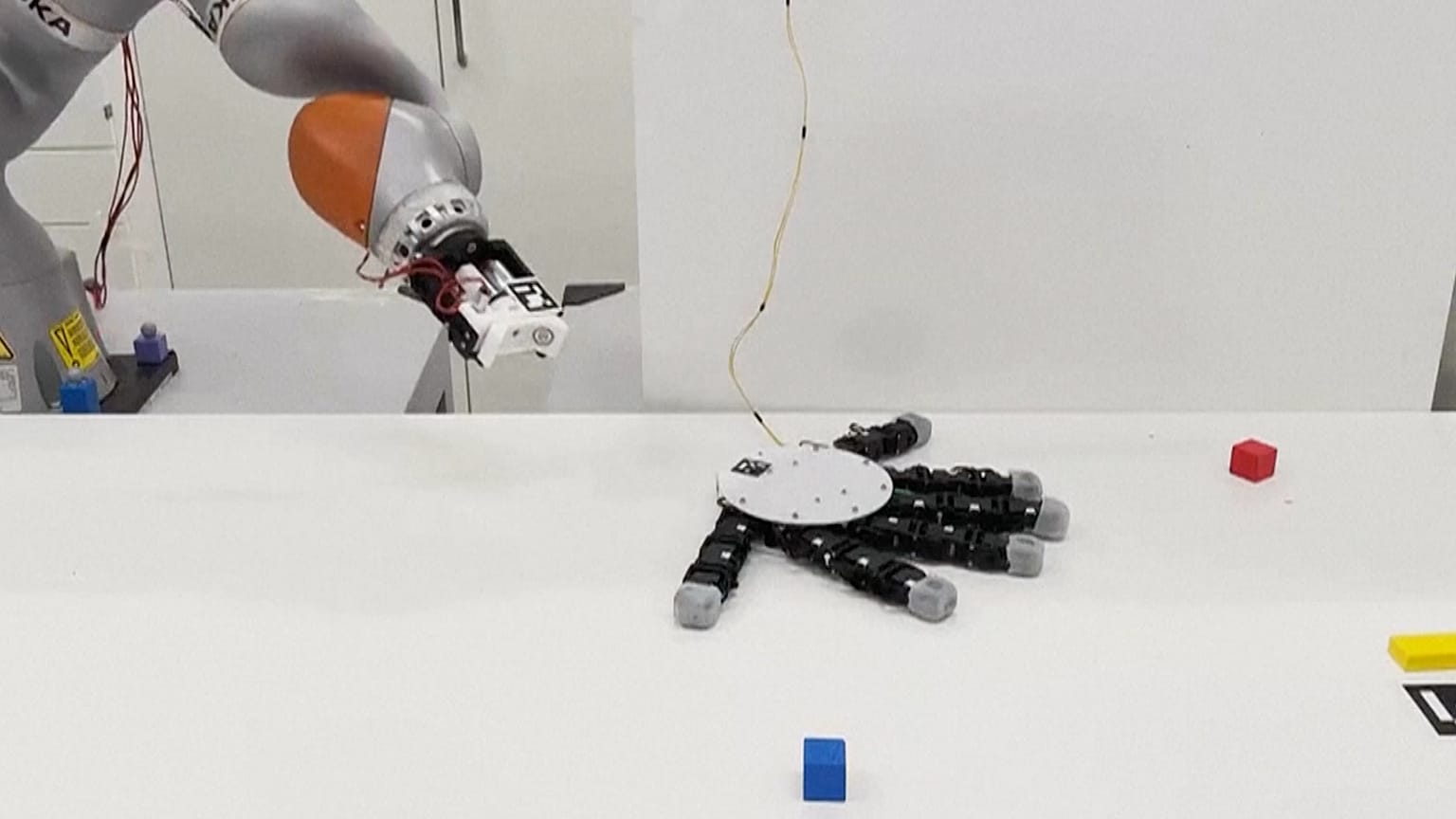
A groundbreaking robotic hand developed by a research team can detach, crawl, and reattach itself while performing versatile tasks. The study, published in Nature Communications this week, showcases a design that allows the hand to mimic the movements of a small multi-legged robot. It can retrieve up to three objects in sequence, demonstrating capabilities beyond standard robotic hands.
The innovative design aims to overcome limitations found in traditional robotic hands, which are typically modeled after human anatomy. According to Kunpeng Yao, an assistant professor at the University of Leeds in the UK, “We think the human hand is not perfect… We have a lack of symmetry in the hand, and the hand can only perform a limited number of tasks due to the structure.” The research team’s goal was to create a robotic hand that exceeds the functional bounds of human hands.
Redefining Dexterity in Robotics
A significant drawback of human hands is their reliance on a single thumb and the ability to grasp from only one side. Co-author Professor Aude Billard from EPFL in Switzerland posed intriguing questions about this limitation. “What if we had two or more thumbs, or any of the fingers could be a thumb?” Billard explained. This flexibility allows for numerous combinations of gripping, enabling the hand to grasp objects with greater dexterity.
The researchers created two versions of the hand—one with five fingers and another with six. Both designs feature a symmetrical structure that facilitates grasping from either side of the palm. During testing, the hand successfully detached from its arm, crawled to retrieve objects, and reattached itself while maintaining a secure grip.
Future Applications and Potential Uses
The implications of this technology extend beyond simple tasks. The team envisions applications in various environments, particularly in confined spaces. Xiao Gao, a co-author based at the School of Robotics at Wuhan University in China, highlighted potential scenarios where this technology could shine. “There are always some confined spaces inside factories where you may need a hand that can detach and navigate through, like in industrial pipelines,” Gao said.
The researchers emphasize that this robotic hand could be particularly useful in rescue situations where access is limited. Future studies will explore these applications further, potentially expanding the technology’s reach in various industries.
This robotic hand represents a significant step forward in robotic design, showcasing the potential to enhance functionality and dexterity beyond what human hands can achieve. As research continues, the team hopes to unlock more possibilities for its use in real-world scenarios.

Mother Reveals Daughter’s Meningitis Seizure After Night Out

Major Oil Spill Disrupts Traffic in Donegal on March 16, 2026

Discovering Literature: The Joys of Rejoining a Public Library

Ted Season 2 Announced: Release Date & Trailer Updates Revealed

Research Ireland and UKRI Forge New Collaboration Agreement

David McGoldrick’s Impressive Scoring Streak Sparks World Cup Talk

Plane Crash Claims Lives of Publishing Heir, Pregnant Wife, and Pilot

Oscars Snub Brigitte Bardot Sparks Controversy Over In Memoriam

Meta Plans Major Layoffs to Offset Rising AI Investment Costs

Tributes Surge for 9-Year-Old Leon Briody After Cancer Battle

Aimee Osbourne Joins Family for Emotional Tribute to Ozzy

Danny Healy-Rae Considers Complaint After Altercation with Garda

Hawaii Commemorates 80 Years Since Hiroshima Bombing with Ceremony

Ireland Enjoys Summer Heat as Hurricane Erin Approaches Atlantic

Couple Convicted of Murdering Two-Year-Old Grandson in Wales

Gaza Aid Distribution Tragedy: 20 Killed Amid Ongoing Violence

Newcastle West Woman Patricia Foley Found Safe After Urgent Search

Fianna Fáil TDs Urgently Consider Maire Geoghegan-Quinn for Presidency
-
 Top Stories11 months ago
Tributes Surge for 9-Year-Old Leon Briody After Cancer Battle
-
 Entertainment1 year ago
Aimee Osbourne Joins Family for Emotional Tribute to Ozzy
-
 Politics1 year ago
Danny Healy-Rae Considers Complaint After Altercation with Garda
-
 World1 year ago
Hawaii Commemorates 80 Years Since Hiroshima Bombing with Ceremony
-
 Top Stories12 months ago
Ireland Enjoys Summer Heat as Hurricane Erin Approaches Atlantic
-
 World1 year ago
Couple Convicted of Murdering Two-Year-Old Grandson in Wales
-
 World1 year ago
Gaza Aid Distribution Tragedy: 20 Killed Amid Ongoing Violence
-
 Top Stories11 months ago
Newcastle West Woman Patricia Foley Found Safe After Urgent Search
-
 Top Stories1 year ago
Fianna Fáil TDs Urgently Consider Maire Geoghegan-Quinn for Presidency
-

 World1 year ago
Aristocrat Constance Marten and Partner Convicted of Infant Murder
-

 Top Stories12 months ago
Climbing Errigal: A Must-Do Summer Adventure in Donegal
-

 Top Stories12 months ago
Hike Donegal’s Errigal Mountain NOW for Unforgettable Summer Views