
Top Stories
2026 Winter Olympics Set to Break New Ground with Unique Structure

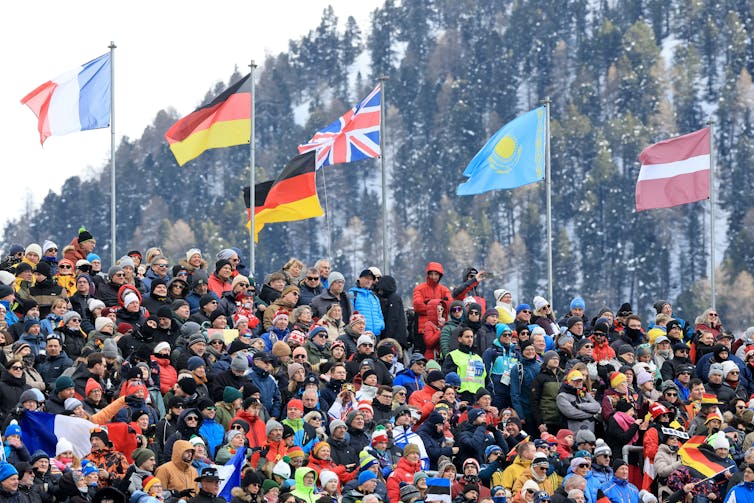
Italy will host the 2026 Winter Olympics, marking the first time the Games will be held in a geographically dispersed format that spans over 22,000 km². Events will take place in major cities like Milan and picturesque towns including Cortina d’Ampezzo, Valtellina, Val di Fiemme, and Livigno. This distribution has been described as the most regionalised Winter Games ever staged, reflecting a significant shift in the strategy employed by the International Olympic Committee (IOC).
The concept of geographical dispersion is not entirely new. Notably, the equestrian events of the 1956 Summer Olympics were held 15,500 km away in Stockholm, Sweden, due to Australia’s quarantine regulations. More recently, the surfing competition for the Paris 2024 Olympics took place in Tahiti, 15,727 km from the French capital, earning the title of “most distant Olympic event ever.”
Strategic Shift Towards Sustainability
The Milano–Cortina model represents a strategic shift towards a “dispersed, multinodal model” of Olympic organisation. This approach involves collaboration across the regions of Lombardy, Veneto, and the autonomous provinces of Trento and Bolzano. More than 90% of the venues used in the Games already exist or are temporary, which aims to reduce both construction costs and environmental impact.
As a sports management specialist with a background in human geography, I have observed that this model can significantly enhance the sustainability and long-term viability of sporting events. The intent is to adapt the Games to the local landscape rather than reshape it, which has been a concern in previous Olympics.
The lessons learned from past events are crucial. The Torino 2006 Winter Olympics faced challenges associated with overbuilding in fragile mountain environments, leading to long-term operational and ecological issues. The current organising committee is focusing on designing venues that can be repurposed by host cities after the Games, as seen in Paris, where 95% of venues were either existing or temporary.
Complexities and Opportunities of a Dispersed Model
While spreading events across various regions makes the Games more accessible to multiple communities, it also introduces challenges. Coordination among diverse municipalities and regional bodies is essential for successful planning and execution. This model can foster greater local engagement, giving communities a sense of ownership over the Games.
However, it also risks creating a fragmented Olympic identity and complicates media coverage. Although this encourages innovation in reporting and storytelling, it could lead to some events receiving more attention than others.
Transport remains the most pressing sustainability challenge. The dispersed model necessitates extensive travel for athletes, officials, media, and spectators. According to the IOC, Milano–Cortina 2026 will rely heavily on trains and shuttle systems to reduce private car usage by 20% compared to Torino 2006. A 2022 study on preparations for the Games highlighted that larger host territories complicate mobility planning.
Infrastructure improvements are central to the Games’ legacy strategy, with upgrades to rail systems and enhanced alpine transit being critical. Long-distance travel by spectators significantly contributes to the carbon footprint of the Games, regardless of whether the events are concentrated or spread out. Research published by the French government indicated that international travel accounted for nearly 50% of the carbon footprint for the Paris 2024 Summer Games.
As the climate crisis intensifies, the sustainability of Olympic Winter Games is increasingly scrutinised. Despite reforms aimed at reducing environmental impacts, some infrastructure projects for Milano–Cortina 2026 reportedly lack thorough environmental assessments. It remains uncertain how the benefits of the geographical dispersion model will balance against its potential drawbacks.
The enthusiasm for the Olympics persists, as many communities look forward to the excitement and opportunities these Games bring. The approach adopted for Milano–Cortina 2026 reflects an essential willingness to adapt to changing environmental conditions and public expectations. As climate challenges grow, the success of this event may hinge on its ability to engage younger generations who are increasingly aware of environmental issues.

Mother Reveals Daughter’s Meningitis Seizure After Night Out

Major Oil Spill Disrupts Traffic in Donegal on March 16, 2026

Discovering Literature: The Joys of Rejoining a Public Library

Ted Season 2 Announced: Release Date & Trailer Updates Revealed

Research Ireland and UKRI Forge New Collaboration Agreement

David McGoldrick’s Impressive Scoring Streak Sparks World Cup Talk

Plane Crash Claims Lives of Publishing Heir, Pregnant Wife, and Pilot

Oscars Snub Brigitte Bardot Sparks Controversy Over In Memoriam

Meta Plans Major Layoffs to Offset Rising AI Investment Costs

Tributes Surge for 9-Year-Old Leon Briody After Cancer Battle

Aimee Osbourne Joins Family for Emotional Tribute to Ozzy

Danny Healy-Rae Considers Complaint After Altercation with Garda

Hawaii Commemorates 80 Years Since Hiroshima Bombing with Ceremony

Ireland Enjoys Summer Heat as Hurricane Erin Approaches Atlantic

Couple Convicted of Murdering Two-Year-Old Grandson in Wales

Gaza Aid Distribution Tragedy: 20 Killed Amid Ongoing Violence

Newcastle West Woman Patricia Foley Found Safe After Urgent Search

Fianna Fáil TDs Urgently Consider Maire Geoghegan-Quinn for Presidency
-
 Top Stories10 months ago
Tributes Surge for 9-Year-Old Leon Briody After Cancer Battle
-
 Entertainment12 months ago
Aimee Osbourne Joins Family for Emotional Tribute to Ozzy
-
 Politics12 months ago
Danny Healy-Rae Considers Complaint After Altercation with Garda
-
 World1 year ago
Hawaii Commemorates 80 Years Since Hiroshima Bombing with Ceremony
-
 Top Stories11 months ago
Ireland Enjoys Summer Heat as Hurricane Erin Approaches Atlantic
-
 World1 year ago
Couple Convicted of Murdering Two-Year-Old Grandson in Wales
-
 World1 year ago
Gaza Aid Distribution Tragedy: 20 Killed Amid Ongoing Violence
-
 Top Stories10 months ago
Newcastle West Woman Patricia Foley Found Safe After Urgent Search
-
 Top Stories1 year ago
Fianna Fáil TDs Urgently Consider Maire Geoghegan-Quinn for Presidency
-

 World1 year ago
Aristocrat Constance Marten and Partner Convicted of Infant Murder
-

 Top Stories12 months ago
Climbing Errigal: A Must-Do Summer Adventure in Donegal
-

 Top Stories12 months ago
Hike Donegal’s Errigal Mountain NOW for Unforgettable Summer Views